China Aviation Cable Manufacturer – 1553B Data Bus & LVDS Cables
When it comes to the complex world of aerospace engineering, the phrase “mission-critical” isn’t just a buzzword—it’s a survival requirement. Behind every successful takeoff, navigation maneuver, and landing lies a sophisticated nervous system of wiring. Yet, many engineers face a persistent headache: finding a reliable aviation cable manufacturer that delivers uncompromising performance without the exorbitant lead times or costs associated with legacy Western suppliers.
Enter the new era of high-performance interconnects. Today, leading Chinese aviation cable manufacturers are setting new benchmarks in the industry, offering technologically superior 1553B Data Bus and LVDS cables. These aren’t just off-the-shelf commodities; they are highly engineered lifelines designed to withstand the harshest environments known to man. Let’s dive deep into the technology that keeps the skies safe and explore why the global aerospace community is pivoting towards these advanced solutions.
The Backbone of Avionics: Mastering the MIL-STD-1553B Data Bus
If the aircraft is a body, the MIL-STD-1553B Data Bus is undoubtedly its central nervous system. Originally developed by the United States Air Force in the 1970s for the F-16 fighter jet, this command/response multiplex data bus remains the gold standard for military and civil aerospace applications today. Its longevity isn’t due to a lack of innovation, but rather its proven deterministic nature and redundant design philosophy.
Why 1553B Still Rules the Skies
Despite the rise of faster protocols, 1553B persists because it offers something modern high-speed buses often struggle with: absolute certainty. In safety-critical systems like flight control and weapons delivery, knowing exactly when a message will arrive is more important than moving massive amounts of non-critical data. The bus architecture allows a Bus Controller (BC) to manage up to 31 Remote Terminals (RTs) with dual-redundant cabling, ensuring that if one path fails, the system stays alive.
The Anatomy of a High-Performance 1553B Cable
Not all 1553B cables are created equal. A true aviation grade cable must strictly adhere to rigorous physical and electrical specifications to prevent signal reflection and data corruption.
- Impedance Stability: The characteristic impedance must be tightly controlled, typically at 78 ohms (ranging between 70-85 ohms). Any deviation causes signal reflections that can crash the bus.
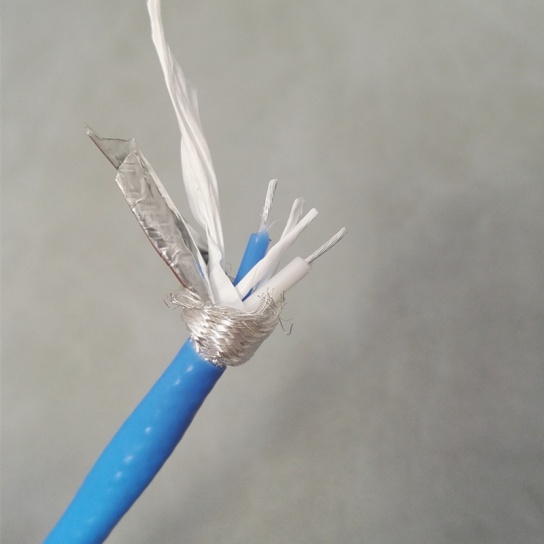
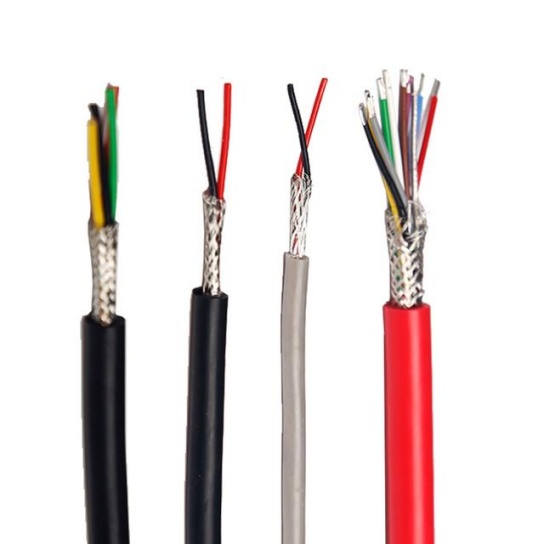
- Shielding Integrity: To survive the electrically noisy environment of an engine nacelle or radar bay, these cables utilize heavy braided shields combined with foil wraps, achieving over 90% optical coverage to block Electromagnetic Interference (EMI).
- Environmental Resilience: Unlike commercial networking cables, aviation 1553B cables must endure extreme temperature fluctuations, hydraulic fluids, and jet fuel without the dielectric breaking down.
Modern Chinese manufacturers have perfected the extrusion and shielding processes to produce cables that rival, and in some cases exceed, the performance of legacy brands like Gore or Raychem, particularly in attenuation consistency and weight reduction.
Seeing is Believing: The Critical Role of LVDS Cables
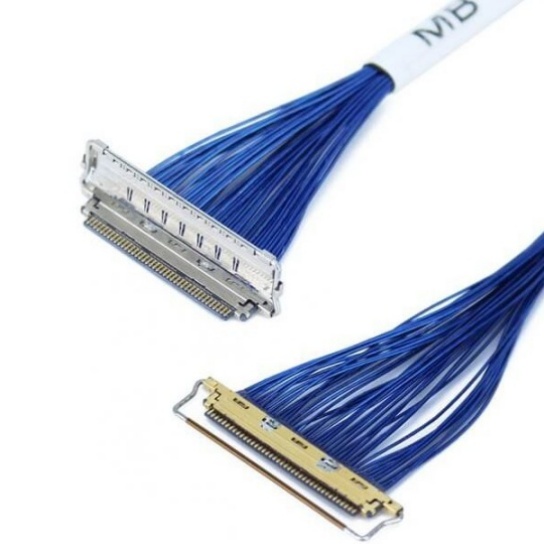
While 1553B handles the “thinking” (control data), Low-Voltage Differential Signaling (LVDS) handles the “seeing.” From cockpit primary flight displays and synthetic vision systems to rear-seat entertainment, LVDS is the go-to standard for high-speed video and sensor data transmission.
The Physics of LVDS in Flight
LVDS operates on a simple yet brilliant principle: sending two identical signals, but inverted, down a pair of wires. The receiver looks only at the differencebetween these two signals. Because external noise generally affects both wires equally (common-mode noise), it cancels itself out at the receiver. This allows LVDS to transmit data at rates exceeding 655 Mbps with incredibly low power consumption and minimal EMI.
Engineering Challenges in Aerospace Environments
Implementing LVDS in an aircraft is far more difficult than in a stationary server room. You are dealing with:
- Skew Management: In multi-pair cables (like those used for RGB video), the timing difference between pairs must be microscopic. Even a nanosecond of skew can blur an image on a pilot’s Heads-Up Display (HUD).
- Impedance Control: Maintaining a strict 100-ohm differential impedance is mandatory. Variations caused by vibration or cable flex can cause eye diagram closures, leading to “snow” on screens or lost sensor data.
- Weight vs. Performance: Every meter of copper adds weight, which burns fuel. Engineers must balance the need for heavy shielding (to protect the signal) with the mandate for lightweight materials (to save fuel).
This is where material science becomes the hero. Advanced manufacturers utilize foamed (cellular) PTFE or expanded PTFE (ePTFE) tapes as insulation. These materials trap air, drastically lowering the dielectric constant (Dk). Lower Dkmeans lower capacitance, which translates to higher speed, lower attenuation, and significantly lighter cables.
The Strategic Advantage of Partnering with a China Aviation Cable Manufacturer
For decades, the aerospace supply chain was bottlenecked by long lead times and premium pricing from traditional European and American suppliers. Today, the landscape has shifted. Partnering with a specialized China Aviation Cable Manufacturer offers a strategic advantage that goes beyond simple cost savings.
1. Agile R&D and Customization
The pace of aerospace development demands agility. Whether you are upgrading a legacy helicopter fleet or developing a new eVTOL (electric Vertical Take-off and Landing) aircraft, you need a partner who can rapidly prototype. Leading manufacturers offer extensive customization—from adjusting jacket materials for specific chemical resistance to designing hybrid cables that combine power, 1553B data, and LVDS video into a single, lightweight assembly. This reduces the number of connectors required, further saving weight and installation time.
2. Uncompromising Material Science
The best cables start with the best raw materials. Top-tier factories utilize silver-plated high-strength copper alloy conductors for superior conductivity and corrosion resistance. For insulation, they employ high-performance fluoropolymers like PTFE, FEP, and PFA. These materials ensure the cables remain flexible in freezing altitudes (-65°C) and structurally sound near hot engine bleed air (up to 260°C).
3. Full Spectrum Compliance
Reliability isn’t just a promise; it’s a paper trail. Reputable manufacturers ensure their products meet or exceed international standards such as SAE AS22759, MIL-DTL-27500, and EN 3475. Furthermore, adherence to AS9100 quality management systems guarantees full traceability of every batch, giving procurement officers peace of mind during audits.
Real-World Applications: Where Theory Meets Reality
To truly appreciate the value of these cables, we must look at where they perform under pressure.
Case Study 1: Modernizing the Glass Cockpit
A regional airline decided to retrofit their aging fleet with modern LCD displays. The original analog video cables were bulky, heavy, and prone to interference. By switching to custom-manufactured LVDS cables with triple-shielded pairs and precision-controlled impedance, they eliminated screen flickering caused by radar interference. The new harness was 40% lighter than the original, contributing directly to reduced fuel burn and lower CO2 emissions per flight hour.
Case Study 2: Mission Success in UAVs
Unmanned Aerial Vehicles (UAVs) rely heavily on real-time telemetry. A defense contractor needed a 1553B data bus solution for a new reconnaissance drone. The challenge? The cable had to survive high-G maneuvers and extreme vibration while maintaining signal integrity over long distances (over 100 meters). The solution involved a high-stranded tinned copper conductor for flexibility and a double-braided shield for maximum EMI protection. Post-flight data logs showed zero bus controller errors, even in the most turbulent conditions.
FRS: Engineering Excellence in Aerospace Interconnects
In the realm of high-stakes aerospace manufacturing, you need a partner who understands that failure is not an option. This is the philosophy driving FRS.
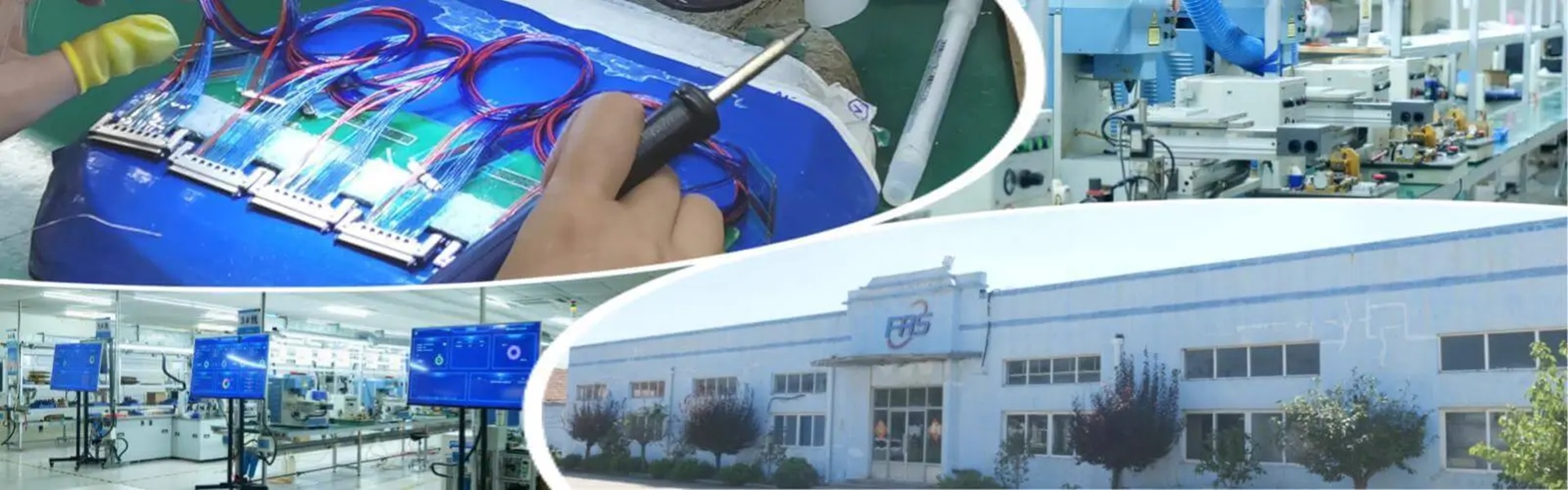
As a premier China Aviation Cable Manufacturer, FRS specializes in the precision engineering of 1553B Data Bus and LVDS Cables. We don’t just manufacture cables; we engineer connectivity solutions. Our facility utilizes imported high-precision braiding machines and laser-based eccentricity monitors to ensure every inch of cable meets strict impedance and attenuation profiles.
Whether you require halogen-free, low-smoke cables for cabin safety, or ultra-lightweight, high-flex cables for moving control surfaces, FRS delivers. Our commitment to AS9100 standards and rigorous in-house testing—including thermal shock, flammability (FAR 25.853), and altitude simulation—ensures that when you choose FRS, you are choosing a partner dedicated to the safety and success of your mission.
Conclusion
The evolution of aerospace technology waits for no one. As aircraft become smarter, more electric, and more connected, the demands on the underlying cabling infrastructure will only intensify. Understanding the nuances of MIL-STD-1553B determinism and LVDS high-speed signaling is crucial for any engineer designing the next generation of flight systems.
By leveraging the advanced manufacturing capabilities, material innovations, and engineering agility found in today’s top Chinese suppliers, the aerospace industry can achieve new levels of efficiency, safety, and performance. Don’t let outdated supply chains clip your wings—explore the future of flight connectivity today.