Why Aviation Multi-Conductor Cables Are Critical for Modern Avionics Systems
Modern avionics are essentially flying supercomputers. To keep them running smoothly, you need more than just standard wires. You need aviation multi-conductor cables that are tough, lightweight, and immune to interference. Let’s break down exactly why these cables are the backbone of modern flight systems.
Why Multi-Conductor Cables Matter for Avionics
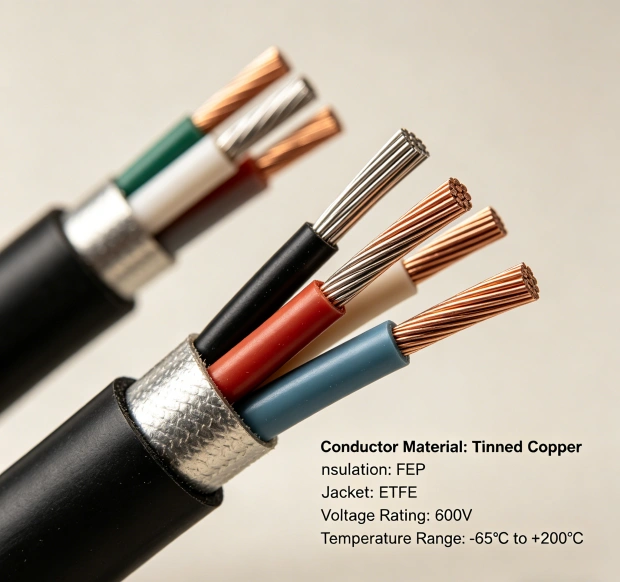
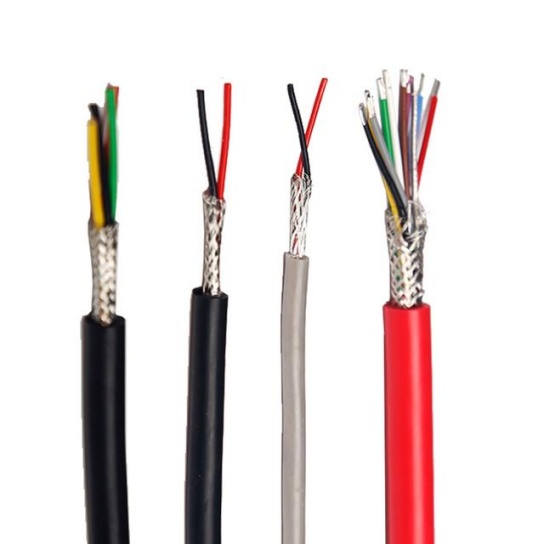
Modern aircraft are packed with sensors, flight computers, and radar systems. All these devices need to talk to each other instantly. That’s where aviation multi-conductor cables come in. They bundle multiple wires into one tough, shielded unit. This keeps signals clean, saves space in tight avionics bays, and cuts down on the total weight of the aircraft. Less weight means better fuel efficiency and lower operating costs.
Key Specs You Need to Know
When sourcing cables for avionics, you cannot afford vague requirements. Precision is everything. Here are the critical specs to look for:
- Temperature Tolerance: Aircraft move from freezing altitudes to scorching engine bays. Look for cables rated from -65°C up to +260°C. PTFE and ETFE insulation are industry standards for handling these extremes .
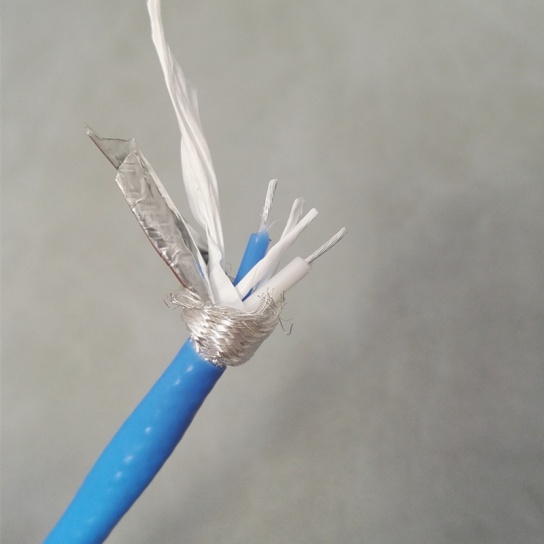
- EMI Shielding: Avionics generate massive electromagnetic interference (EMI). Without proper shielding, your data turns to noise. Always specify cables with high-coverage braided shields (85%+) or foil shields to protect sensitive signals .
- Weight and Flexibility: Every extra pound costs money. Seek out lightweight constructions like expanded PTFE. These cables offer a smaller diameter and tighter bend radius, making them much easier to route through complex airframes .
- Industry Standards: Stick to the gold standards. MIL-DTL-27500 is the go-to military spec, while SAE AS22759 covers high-performance fluoropolymer wires. If it isn’t on the Qualified Products List (QPL), don’t risk it .
Where These Cables Actually Go
You’ll find these cables working hard in the most critical parts of the plane:
- Flight Control Computers: They link the pilot’s yoke to the control surfaces. Any signal delay here is unacceptable, so high-integrity cables are a must .
- Radar and Comms: High-frequency signals for weather radar and radios need coaxial or shielded twisted pairs to stay clear of static and cross-talk .
- Engine Monitoring: Sensors near the engine send vital data back to the cockpit. These cables must resist extreme heat, oil, and hydraulic fluids without failing .
- In-Flight Entertainment: Yes, even the Wi-Fi and movies rely on high-speed data cables like Cat6A or Quadrax to handle massive bandwidth .
Common Mistakes to Avoid
Even the best cable fails if installed poorly. Watch out for these common pitfalls:
- Ignoring the Bend Radius: Forcing a cable around a sharp corner damages the internal conductors and insulation. Always respect the minimum bend radius (usually 4x to 10x the cable diameter) to avoid hidden stress fractures .
- Bad Shielding Grounding: A shield is useless if it isn’t grounded correctly. Ensure 360-degree termination to the connector backshell. A floating shield actually acts as an antenna, increasinginterference .
- Skipping the Chafing Gear: Vibration is the enemy. If a cable rubs against a metal bracket, the jacket will eventually wear through, leading to a short circuit. Always use protective sleeving or cushioned clamps in high-vibration zones .
- Overloading Circuits: Just because a wire fits doesn’t mean it can handle the current. Factor in the ambient heat of the bay. A wire rated for 20 amps in open air might only handle 15 amps when bundled tightly with others .
Actionable Sourcing Checklist
Use this quick list to streamline your procurement process:
- Define the Environment: List the exact temperature range, exposure to fluids, and vibration levels for the installation zone .
- Match the Standards: Explicitly request MIL-DTL-27500 or SAE AS22759 compliance. Do not accept generic “aerospace grade” descriptions .
- Verify the Source: Ask suppliers for the QPL certification and lot traceability documents before placing a bulk order .
- Plan the Route: Get the cable dimensions and bend radius specs early. Share these with your harness designers to prevent installation headaches later .
Final Thoughts
Investing in premium aviation multi-conductor cables isn’t just about meeting specs—it’s about ensuring the absolute reliability of the aircraft. By prioritizing high-temp materials, robust EMI shielding, and strict adherence to MIL-SPEC standards, you build a foundation that prevents costly downtime and enhances flight safety. Don’t let a $5 cable be the weak link in a multi-million dollar machine.