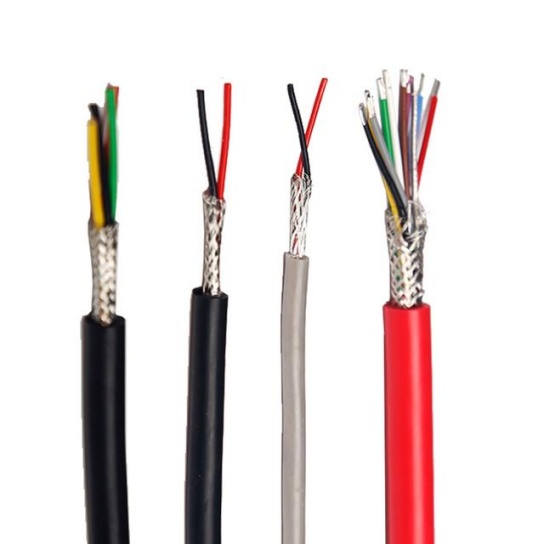
High-Performance Aviation Cable | Lightweight, Flexible, for Aircraft Ground Test & Internal Connection
In the high-stakes theater of modern aviation, where a single millisecond of data latency or a gram of excess weight can dictate mission success, the unsung hero of the aircraft is undoubtedly its nervous system: the wiring harness. Yet, too often, procurement and engineering teams settle for “standard” cables, unaware that the transition to High-Performance Aviation Cabletechnology is not merely an upgrade—it is a paradigm shift.
Whether you are an avionics engineer battling electromagnetic interference (EMI) in a crowded cockpit, a maintenance crew performing ground tests on a fighter jet, or a designer striving to shave kilograms off a new airframe, the choice of cable defines the limits of your system. This guide dives deep into the technical anatomy of high-performance cables, exploring why lightweight flexibility and superior shielding are the bedrock of modern aerospace connectivity.
The Physics of Flight: Why “Standard” Cables Fail
To understand the value of a high-performance solution, we must first dissect the hostile environment of an aircraft. Unlike industrial settings, aviation imposes a “perfect storm” of stressors that degrade standard cabling rapidly.
1. The Weight vs. Performance Paradox
In aviation, physics is unforgiving. The rule of thumb suggests that for every pound of weight saved in the airframe, operators save thousands of dollars in fuel costs over the aircraft’s lifecycle. Traditional cables, often burdened by thick PVC jackets and heavy copper braids, contribute significantly to “zombie weight.” High-performance variants solve this by utilizing advanced fluoropolymers and optimized stranding, offering superior electrical specs with a fraction of the mass .
2. The Invisible Warfare: EMI and Crosstalk
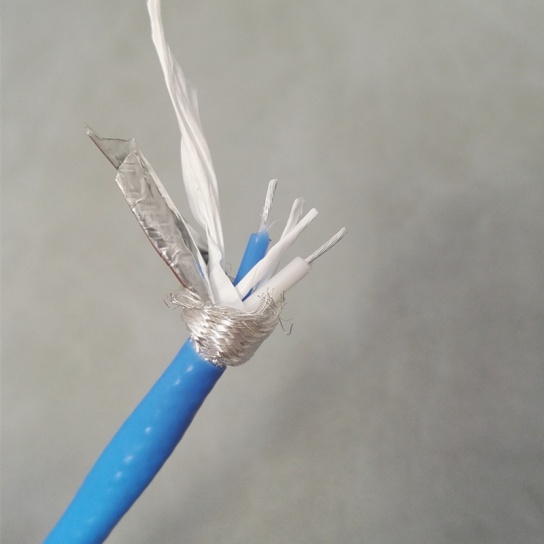
Modern aircraft are essentially flying Wi-Fi routers surrounded by radar, satcom, and navigation systems. The electromagnetic environment is chaotic. Standard cables with poor shielding allow signals to bleed in and out, leading to the “ghost signals” that plague avionics. High-performance cables employ sophisticated shielding architectures—such as dual-braid, foil-over-braid, or triaxial designs—to create a literal Faraday cage around the signal path .
3. Mechanical Stress: Vibration and Flex Fatigue
From the low-frequency rumble of a turboprop to the high-frequency whine of a turbofan, vibration is a killer of rigid cables. Furthermore, the constant thermal cycling (from -65°C at cruise altitude to +200°C near engine nacelles) causes materials to expand and contract, leading to microfractures in stiff insulation. Flexibility here is not a convenience; it is a survival mechanism .
Engineering Deep Dive: Anatomy of a High-Performance Aviation Cable
What separates a premium cable from the rest? It comes down to the materials science applied to three critical components.
1. Conductors: Beyond Solid Copper
While solid copper is conductive, it is heavy and prone to work hardening (breaking) under vibration. High-performance cables utilize:
Silver-Plated Copper (SPC):The industry gold standard. Silver plating prevents oxidation (which increases resistance) and ensures signal integrity at high frequencies (Skin Effect) .
High-Strength Alloys:For applications requiring extreme tensile strength without adding bulk, copper alloy conductors provide the perfect balance .
2. Dielectrics: The Insulation Revolution
The insulator separating the conductor from the shield is crucial for signal speed (Velocity of Propagation).
Expanded PTFE (ePTFE):Unlike solid Teflon, expanded PTFE traps air bubbles, drastically reducing the dielectric constant. This results in lower capacitance and lower signal loss (attenuation), allowing data to travel faster and further .
XLETFE (Cross-linked ETFE):Offers the best strength-to-weight ratio, providing a tough, abrasion-resistant skin that survives the rough-and-tumble of installation .
3. Shielding: The Art of Containment
To achieve the “High-Performance” moniker, shielding must be near-perfect.
Spiral Wraps vs. Braids:While braids are flexible, they leave gaps. Spiral-wrapped shields (serpentine wraps) offer 100% coverage, blocking high-frequency interference that braids might miss .
Triaxial Designs:For ultra-sensitive ground test equipment, a third layer of shielding (often grounded separately) isolates the signal from ground loop noise entirely .
Scenario Analysis: Ground Test vs. Internal Connection
While the core technology overlaps, the applicationdictates the specific cable architecture. Understanding these nuances ensures you specify the right tool for the job.
Scenario A: Aircraft Ground Test Cables
Ground testing is the diagnostic phase where technicians validate the aircraft’s health before flight. The cables used here act as the bridge between the plane and the test rack.
Key Requirements:
Ruggedized Exteriors:These cables are dragged across concrete, stepped on, and coiled tightly. They require thick, abrasion-resistant jackets (often polyurethane or heavy-duty PVC) that internal cables don’t need.
High-Flex Life:Technicians constantly connect and disconnect these leads. The cable must withstand thousands of flex cycles without the conductor breaking or the shield unraveling .
Safety Shutdowns:In ground support (GSE), cables like those conforming to SAE AS25481are critical. They often integrate “Hospital Grade” plugs or specific safety interlocks to ensure power cannot surge unexpectedly during engine startup tests .
Common Pitfall:Using thin-walled internal cables for ground testing. The friction of daily handling will wear through the jacket in weeks, exposing live wires—a recipe for disaster.
Scenario B: Aircraft Internal Connection
Once inside the airframe, the priorities shift from brute force to precision and weight saving.
Key Requirements:
SWaP Optimization (Size, Weight, and Power):Internal cables must be as thin as possible. Technologies like Quadraxcables allow four signals to travel through a single, tiny connector pin, saving massive amounts of space and weight compared to older “twinax” or bulky coaxial setups .
Fire Resistance (FAR 25.853):This is non-negotiable. Internal cables must be Low Smoke Zero Halogen (LSZH). In the event of a fire, the cable must not emit toxic fumes that incapacitate passengers or crew .
Tight Bend Radius:Space behind an instrument panel is at a premium. High-performance cables utilize stranded conductors and flexible dielectrics to bend sharply without damaging the internal geometry, ensuring the signal remains pure .
Technical Comparison: Standard vs. High-Performance
To visualize the difference, refer to the comparison below. Note how the High-Performance variant excels in the metrics that matter most to modern avionics.
High Speed(Gigabit Ethernet, Fiber Optic compatible)
Installation
Difficult to route in tight spots
Easy Routing(Small O.D., high mechanical stability)
Installation Best Practices: Maximizing ROI
Buying the best cable is only half the battle; installing it incorrectly can negate its advantages. Here are three critical rules for maintenance teams:
Respect the Bend Radius:High-performance cables are flexible, but they have limits. Bending a cable tighter than its specified minimum bend radius (usually 5x or 10x the outer diameter) permanently deforms the dielectric, changing the impedance and ruining the signal. Always check the datasheet.
360-Degree Shielding Termination:The shield is useless if it doesn’t connect to the connector shell properly. Use connectors with “full-crimp” rear bodies or conductive backshells. A gap in the shield at the termination point acts as an antenna, radiating EMI into the cockpit .
Thermal Management:Even high-temp cables have limits. Keep data cables away from hydraulic lines and engine bleed air ducts. If routing near heat sources is unavoidable, use high-temperature sleeving (e.g., fiberglass or silicone-impregnated fiberglass) .
Future-Proofing: The eVTOL and UAV Challenge
As the industry pivots toward Electric Vertical Takeoff and Landing (eVTOL) aircraft and high-endurance UAVs, the demands on cables are intensifying. These platforms operate at higher voltages (400V to 800V systems) and higher frequencies than traditional planes.
High-performance cables are evolving to meet this. We are seeing the rise of hybrid cablesthat combine high-voltage power lines and high-speed data lines in a single, shielded jacket. This reduces the part count but requires impeccable isolation to prevent the power “noise” from corrupting the data signals. For companies entering the eVTOL space, specifying cables with superior dielectric strength and isolation is the first step toward a certified aircraft .
Conclusion: The Strategic Advantage
Specifying a High-Performance Aviation Cableis not an exercise in excess; it is a strategic decision to enhance safety, reduce fuel burn, and ensure data integrity in an increasingly connected sky. By prioritizing lightweight materials, flexible designs, and robust EMI shielding, you are not just buying wire—you are investing in the reliability of the flight itself.
Whether for the rigorous demands of the flight line or the intricate pathways inside the fuselage, the right cable makes the system invisible, allowing pilots and engineers to focus on what matters most: the mission.
Designed to meet the rigorous demands of modern aviation and defense systems, Lightweight MIL-SPEC Aviation Wiring Cables represent the pinnacle of reliability, durability, and performance. Engineered to comply with stringent military sp.
Premium Aviation Cables for Aircraft Systems: Elevating Safety and Performance
In the demanding world of aviation, reliability and precision are non-negotiable. Premium Aviation Cables for Aircraft Systems are engineered to meet the r.
From commercial airliners to military drones, aviation cables are the unsung heroes ensuring reliable power, data, and signal transmission in the skies. These specialized cables are engineered to withstand extreme conditions—think turbule.
Product Overview: aviation cable
Machine vision cables are specialized components designed to ensure high-speed, stable data transmission and signal integrity in automated imaging systems. Key features include:
Technical Specifica.
When it comes to aviation safety and performance, every component must meet the highest standards—especially electrical systems. High-Temp Resistant Aviation Electrical Cables are engineered to deliver unparalleled durability and reliabi.