What Specifications Must Aviation Cable for C919 Aircraft Meet
As China’s first large jet civil aircraft with independent intellectual property rights, the C919 has opened a new chapter in the country’s aviation industry. Every component of this sophisticated piece of machinery is engineered to the highest standards, and aviation cables—often referred to as the “nervous system” of the aircraft—are no exception. These cables are responsible for transmitting electrical signals, powering critical systems, and ensuring seamless communication between various on-board components. Given the harsh operating environment of civil aviation and the strict safety requirements of air travel, aviation cables for the C919 must comply with a series of rigorous specifications. This article delves into the core technical requirements that these cables must meet, covering aspects such as material performance, electrical characteristics, environmental adaptability, safety standards, and mechanical durability.
1. Material Specifications: High-Temperature Resistance and Flame Retardancy
The material composition of aviation cables for the C919 is the foundation of their reliability, as they must withstand extreme temperatures, resist flame spread, and avoid releasing toxic gases in emergency situations. Unlike ordinary industrial cables, C919’s aviation cables use specialized materials that meet strict aerospace-grade standards.
First, the insulation and sheath materials must have excellent high-temperature resistance. During the operation of the C919, cables in different parts of the aircraft are exposed to varying temperature ranges: those near the engine or auxiliary power unit (APU) may face continuous high temperatures of up to 150°C, while cables in the cabin or cargo hold typically operate in environments between -55°C and 125°C. To cope with these conditions, the cables often use cross-linked polyethylene (XLPE), polytetrafluoroethylene (PTFE), or perfluoroalkoxy alkane (PFA) as insulation materials. These materials not only maintain stable electrical and mechanical properties at extreme temperatures but also have good resistance to aging, ensuring a service life of more than 20 years, which matches the design life of the C919.
Second, flame retardancy is a non-negotiable requirement. In the event of an in-flight fire, aviation cables must not contribute to the spread of flames, and must limit the release of smoke and toxic gases. The C919’s aviation cables comply with the flame retardancy standards specified in SAE AS 4087 (Aerospace Cable, Electrical, Flame-Resistant) and EN 3475-601 (Aerospace Series – Cables, Electrical, for Aircraft Use – Part 601: Requirements for Flame Retardant Cables). These standards require that cables pass the vertical flame test, where the flame is applied for 60 seconds and the cable must self-extinguish within 60 seconds after the flame is removed, with no dripping of flaming material that could ignite other components. Additionally, the smoke density and toxicity of the cables must meet the requirements of ASTM E662 (Standard Test Method for Specific Optical Density of Smoke Generated by Solid Materials) and BSS 7239 (Boeing Specification for Smoke and Toxicity), ensuring that in the event of a fire, the smoke does not obscure the crew’s vision and the toxic gases do not harm passengers and crew.
2. Electrical Performance Specifications: Stability and Anti-Interference
Aviation cables for the C919 are tasked with transmitting various electrical signals—including control signals for flight systems, communication signals, and power supply for on-board equipment. Any deviation in electrical performance could lead to system malfunctions, endangering flight safety. Therefore, these cables must meet strict electrical specifications.
One of the core requirements is low and stable electrical resistance. The conductor of the cable is usually made of high-purity oxygen-free copper, which has excellent electrical conductivity. The cross-sectional area of the conductor is designed according to the current-carrying capacity requirements of different systems: for example, power cables for large equipment such as air conditioning and landing gear have a larger cross-sectional area (up to 50 mm²), while signal cables for avionics systems use smaller cross-sections (as small as 0.5 mm²) but require higher signal transmission accuracy. The resistance value of the conductor must be within the range specified by GB/T 18380 (Aerospace Electrical Cables) and IEC 60228 (Conductors of Insulated Cables), ensuring minimal power loss during transmission.
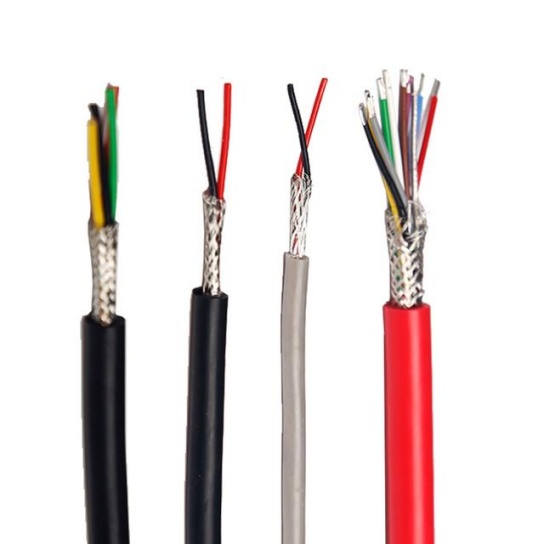
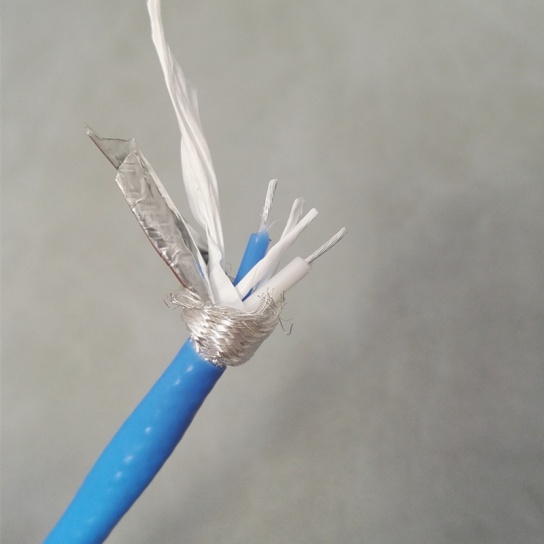
Another key requirement is strong anti-electromagnetic interference (EMI) capability. The C919 is equipped with a large number of electronic devices, including radar systems, navigation equipment, and communication radios, which generate complex electromagnetic fields. If the aviation cables are not shielded effectively, they may pick up interference signals, affecting the normal operation of the aircraft’s systems. To address this, C919’s signal cables typically adopt double-shielding structures—such as a tinned copper braid shield plus an aluminum foil shield. The shielding effectiveness must meet the requirements of MIL-DTL-81714 (Military Specification for Cables, Electrical, Shielded, for General Purpose) and SAE AS 22759 (Aerospace Cable, Electrical, Shielded), ensuring that the cables can suppress both external EMI and internal signal leakage. Additionally, the characteristic impedance of signal cables (such as coaxial cables used for communication) must be strictly controlled—usually 50Ω or 75Ω—to ensure matching with the connected equipment and avoid signal reflection and distortion.
Furthermore, the insulation resistance and dielectric strength of the cables must be sufficient. The insulation resistance, measured between the conductor and the shield or between different conductors, must be no less than 100 MΩ·km at 20°C, as specified in GB/T 18380. This prevents current leakage and ensures electrical safety. The dielectric strength, which refers to the ability of the insulation material to withstand high voltage without breakdown, must meet the requirement of withstanding a 1-minute AC voltage test of 15 kV/mm (for XLPE insulation) or 20 kV/mm (for PTFE insulation), ensuring that the cables do not fail under transient high-voltage conditions such as lightning strikes or power surges.
3. Environmental Adaptability Specifications: Resistance to Harsh Conditions
Civil aircraft such as the C919 operate in a wide range of harsh environments, including high altitude, humidity, vibration, and exposure to chemicals. Aviation cables must be able to adapt to these conditions without compromising their performance.
High-altitude resistance is a critical requirement. At an altitude of 10,000 meters (the typical cruising altitude of the C919), the air pressure is only about 26% of that at sea level, which can cause ordinary cables to expand, contract, or even rupture. C919’s aviation cables are designed to withstand low-pressure environments, with insulation and sheath materials that have good airtightness and resistance to outgassing. Outgassing refers to the release of volatile organic compounds (VOCs) from the material in a low-pressure environment, which can form deposits on sensitive electronic components (such as avionics displays) and affect their performance. The cables must comply with the outgassing requirements of NASA SP-R-0022A (NASA Standard for Outgassing Test for Materials in Vacuum), ensuring that the total mass loss (TML) is less than 1% and the collected volatile condensable materials (CVCM) is less than 0.1%.
Humidity and corrosion resistance are also essential. During takeoff and landing, the aircraft may pass through humid air layers or encounter rain, and the cargo hold may be exposed to moisture from transported goods. Additionally, the cables near the aircraft’s exterior may be exposed to salt spray in coastal areas. To resist these conditions, the sheath materials of the cables are usually made of halogen-free flame-retardant polyolefin or PTFE, which have good water resistance and corrosion resistance. The cables must pass the salt spray test specified in ASTM B117 (Standard Practice for Operating Salt Spray (Fog) Apparatus) and the humidity test specified in IEC 60068-2-78 (Environmental Testing – Part 2-78: Tests – Test Cab: Damp Heat, Steady State), ensuring that their electrical and mechanical properties do not degrade after prolonged exposure to humid or corrosive environments.
Vibration and shock resistance are another key aspect. The C919 experiences continuous vibration during flight (especially during takeoff and landing) and may be subjected to sudden shocks (such as turbulence or hard landing). The aviation cables must be able to withstand these mechanical stresses without breaking or losing contact. The cables are tested according to MIL-STD-810G (Military Standard for Environmental Engineering Considerations and Laboratory Tests), including random vibration tests (frequency range: 10-2000 Hz, acceleration: 10-20 g) and shock tests (peak acceleration: 50-100 g, duration: 11 ms). The conductor and insulation layers are designed with flexibility in mind—for example, using stranded conductors instead of solid conductors—to absorb vibration energy and prevent fatigue failure.
4. Safety and Reliability Specifications: Compliance with Airworthiness Standards
Airworthiness is the core requirement for all civil aircraft components, and aviation cables for the C919 must comply with strict airworthiness standards set by regulatory authorities such as the Civil Aviation Administration of China (CAAC), the European Union Aviation Safety Agency (EASA), and the Federal Aviation Administration (FAA).
First, the cables must pass a series of reliability tests to ensure that they can operate stably under normal and abnormal conditions. These tests include accelerated aging tests (exposing the cables to high temperature, humidity, and oxygen for an extended period to simulate 20 years of service life), bend tests (to verify the flexibility of the cables during installation and use), and abrasion tests (to ensure that the sheath can resist wear from contact with other components in the aircraft). The failure rate of the cables must be less than 1×10⁻⁹ failures per hour, meeting the requirements of the C919’s overall reliability target.
Second, the cables must have good compatibility with other on-board materials. This includes compatibility with hydraulic fluids, fuel, lubricants, and cleaning agents commonly used in the aircraft. The insulation and sheath materials must not dissolve, swell, or degrade when in contact with these substances. For example, the cables must pass the compatibility test specified in SAE AS 50881 (Aerospace Fluids, Compatibility of Materials), where they are immersed in jet fuel (JP-8) or hydraulic fluid (MIL-PRF-83282) at 125°C for 72 hours, with no more than 10% change in volume or tensile strength.
Additionally, the cables must be marked with clear and durable identification. Each section of the cable must have a label indicating the cable type, conductor cross-sectional area, temperature rating, and manufacturer information. The label must be resistant to friction, moisture, and high temperatures, ensuring that it remains legible throughout the service life of the aircraft. This is crucial for maintenance and replacement work, allowing technicians to quickly identify the correct cable.
5. Mechanical Durability Specifications: Withstanding Installation and Service Stresses
Aviation cables for the C919 are subjected to various mechanical stresses during installation and service, including tension, compression, bending, and torsion. Therefore, they must have excellent mechanical durability to ensure that they do not fail under these stresses.
The tensile strength of the cables is a key requirement. During installation, the cables may need to be pulled through narrow ducts or around corners, so they must be able to withstand a tensile force of at least 150 N (for small cross-sectional cables) or 500 N (for large cross-sectional cables) without breaking or causing damage to the insulation. The tensile strength test is specified in GB/T 18380, where the cable is pulled at a constant speed of 50 mm/min until it breaks, with the minimum breaking force meeting the standard requirements.
Bending radius is another important mechanical specification. The cables must be able to be bent to a certain radius without damaging the insulation or affecting the electrical performance. The minimum bending radius for C919’s aviation cables is typically 6-10 times the outer diameter of the cable (depending on the cable type and cross-sectional area). For example, a cable with an outer diameter of 10 mm must have a minimum bending radius of 60 mm. This ensures that the cables can be installed in the tight spaces of the aircraft (such as between the fuselage and the wings) without causing fatigue or breakage.
Furthermore, the cables must have good abrasion resistance. During flight, the cables may rub against metal brackets, ducts, or other components due to vibration. The sheath material must be able to withstand this abrasion, with a wear resistance test specified in IEC 60811-2-1 (Insulated Cables and Cords – Test Methods – Part 2-1: Mechanical Tests – Abrasion Test). The test uses a rotating drum with abrasive paper to rub the cable, and the cable must not show any exposure of the conductor after a specified number of rubs (usually 100 cycles).
Conclusion
Aviation cables for the C919 aircraft are subject to extremely strict specifications, covering material performance, electrical characteristics, environmental adaptability, safety standards, and mechanical durability. These specifications are not only based on international aerospace standards (such as SAE, IEC, and MIL-STD) but also tailored to the specific operating conditions and reliability requirements of the C919. By complying with these specifications, the aviation cables ensure the safe, stable, and reliable operation of the aircraft’s “nervous system,” laying a solid foundation for the airworthiness and operational safety of the C919.
For manufacturers of aviation cables for the C919, adhering to these specifications requires advanced material technology, precise manufacturing processes, and strict quality control systems. For maintenance personnel, understanding these specifications is crucial for correctly selecting, installing, and maintaining the cables, ensuring the long-term service life of the aircraft. As the C919 continues to enter commercial operation and expand its fleet, the demand for high-quality aviation cables that meet these strict specifications will continue to grow, driving the development of China’s aerospace cable industry.