What Shielding Effectiveness Is Required for UAV Aviation Signal Cables Against EMI
Unmanned Aerial Vehicles (UAVs), commonly known as drones, have revolutionized industries ranging from aerial photography and agriculture to military surveillance and infrastructure inspection. As UAV technology advances, the complexity of their onboard systems continues to grow—particularly the communication and data transmission systems that rely on aviation signal cables. These cables are the lifeline of UAV operations, carrying critical signals for navigation, flight control, payload communication, and data transfer. However, the aviation environment is rife with Electromagnetic Interference (EMI), a pervasive threat that can disrupt signal integrity, compromise flight safety, and even lead to UAV malfunction. Shielding of UAV aviation signal cables is therefore not a luxury but a necessity, and understanding the required shielding effectiveness (SE) against EMI is fundamental for manufacturers, engineers, and operators alike.
In this article, we will delve into the key concepts of EMI in the UAV context, define the critical shielding effectiveness requirements for UAV aviation signal cables, explore the factors that influence these requirements, and examine industry standards and best practices. By the end, you will have a comprehensive understanding of why specific SE levels are mandated and how they contribute to reliable UAV performance.
1. Understanding EMI and Its Impact on UAV Aviation Signal Cables
Before addressing shielding effectiveness requirements, it is essential to grasp what EMI is and how it affects UAV signal cables. Electromagnetic Interference refers to the disruption of an electronic device or system caused by electromagnetic radiation from external sources (intentional or unintentional) or internal sources within the UAV itself.
1.1 Sources of EMI in UAV Environments
UAVs operate in diverse environments, exposing their signal cables to a wide range of EMI sources. These can be categorized into two main types: external EMI and internal EMI.
External EMI sources include: – Radio Frequency (RF) signals from ground-based communication towers, radar systems, and other wireless devices (e.g., smartphones, Wi-Fi routers). – Atmospheric electromagnetic phenomena, such as lightning and static electricity. – EMI from nearby aircraft, industrial equipment, and power lines. – Intentional jamming signals, a significant concern in military and security applications.
Internal EMI sources within the UAV include: – Onboard electronic components, such as motors, ESCs (Electronic Speed Controllers), batteries, and navigation systems. – High-frequency switching circuits in power management units. – Cross-talk between adjacent signal cables carrying different signal types (e.g., power cables and data cables).
1.2 The Consequences of Unshielded or Poorly Shielded Signal Cables
For UAVs, the impact of EMI on unshielded or inadequately shielded signal cables can be catastrophic. Critical flight systems rely on precise, uninterrupted signals to function correctly. When EMI disrupts these signals, the following issues can occur: – Navigation errors: Disruption of GPS or inertial navigation system (INS) signals can cause the UAV to deviate from its flight path, leading to loss of control. – Flight control failure: Interference with signals between the flight controller and motors/actuators can result in unstable flight, sudden maneuvers, or complete loss of thrust. – Payload malfunction: For UAVs used in photography, surveying, or surveillance, EMI can corrupt data from cameras, sensors, or other payloads, rendering mission data useless. – Communication breakdown: Loss of communication between the UAV and the ground control station (GCS) can lead to the UAV becoming unresponsive, potentially resulting in crashes or lost assets. – Component damage: In severe cases, high-intensity EMI can cause voltage spikes that damage sensitive electronic components in the signal path.
Given these risks, shielding effectiveness for UAV aviation signal cables is not a one-size-fits-all metric. It must be tailored to the specific EMI environment, the type of signals being transmitted, and the criticality of the system relying on those signals.
2. Key Definitions: Shielding Effectiveness (SE) for Signal Cables
Shielding Effectiveness is a measure of a cable’s ability to attenuate (reduce) electromagnetic radiation passing through its shield. It is typically expressed in decibels (dB), with higher dB values indicating better shielding performance. Mathematically, SE is defined as the ratio of the electromagnetic field strength without the shield (E₀) to the field strength with the shield (Eₛ), expressed in decibels: SE (dB) = 20 log₁₀ (E₀ / Eₛ).
For UAV aviation signal cables, SE is evaluated across three primary mechanisms of EMI coupling: – Conducted EMI: Interference that travels through the cable’s conductors (e.g., via power lines or signal lines). – Radiated EMI: Interference that travels through the air and is picked up by the cable as an antenna. – Capacitive and inductive coupling: Interference transferred between adjacent cables or components via electric or magnetic fields.
A cable’s shielding must address all three mechanisms to ensure comprehensive EMI protection. The required SE level depends on the frequency of the interfering signal, as shielding performance varies with frequency—most shielding materials are more effective at higher frequencies than lower ones (e.g., below 1 MHz).
3. Required Shielding Effectiveness Levels for UAV Aviation Signal Cables
There is no universal SE requirement for all UAV aviation signal cables. Instead, requirements are determined by several factors, including the UAV’s application (civil vs. military), the frequency range of the signals being transmitted, the severity of the EMI environment, and compliance with industry standards (e.g., RTCA DO-160, MIL-STD-461). Below is a breakdown of typical SE requirements based on common UAV use cases and signal types.
3.1 Civilian UAV Applications
Civilian UAVs (e.g., consumer drones, agricultural drones, commercial inspection drones) operate in relatively controlled EMI environments compared to military UAVs. However, they still require adequate shielding to protect against RF interference from ground-based communication systems, Wi-Fi, and other wireless devices. The primary standard governing EMI for civilian aviation (including UAVs) is RTCA DO-160, “Environmental Conditions and Test Procedures for Airborne Equipment.”
According to RTCA DO-160, signal cables for civilian UAVs typically require the following SE levels: – For low-frequency signals (e.g., power signals, analog sensors, 0–1 MHz): SE of 40–60 dB. This range protects against inductive coupling from motors and ESCs, which are common internal EMI sources in civilian UAVs. – For high-frequency signals (e.g., GPS, telemetry, video transmission, 1 MHz–6 GHz): SE of 60–80 dB. GPS signals, in particular, are weak (typically -130 dBm at the receiver), making them highly susceptible to EMI. A minimum SE of 60 dB is required to ensure GPS signal integrity, while video and telemetry signals (which carry more data) may require 70–80 dB to prevent signal degradation. – For critical flight control signals (e.g., between flight controller and ESCs, inertial measurement unit (IMU) signals): SE of 70–90 dB. These signals are mission-critical, and even minor interference can lead to flight instability. RTCA DO-160 Category E (severe EMI environment) requires SE up to 90 dB for these signals.
For example, a consumer drone’s GPS antenna cable would need an SE of at least 60 dB to reject interference from nearby Wi-Fi routers (operating at 2.4 GHz or 5 GHz). An agricultural drone’s sensor cable (transmitting soil moisture data) might require 40–50 dB of SE to protect against EMI from the drone’s electric motors.
3.2 Military UAV Applications
Military UAVs (e.g., reconnaissance drones, combat drones) operate in harsh EMI environments, including battlefields with intentional jamming, radar systems, and other high-power electromagnetic sources. As a result, their signal cables require significantly higher SE levels than civilian UAVs. The primary standard governing military UAV EMI is MIL-STD-461, “Electromagnetic Interference Control Requirements for Systems.”
MIL-STD-461 mandates the following SE levels for military UAV aviation signal cables: – For low-frequency signals (0–1 MHz): SE of 80–100 dB. Military UAVs often have more powerful motors and power systems, generating stronger internal EMI. Higher SE is required to prevent conducted interference from these sources. – For high-frequency signals (1 MHz–18 GHz): SE of 100–120 dB. Military UAVs rely on secure, long-range communication systems (e.g., SATCOM, encrypted telemetry) and precision navigation (e.g., military GPS, INS). These signals are prime targets for intentional jamming, requiring robust shielding to maintain signal integrity. – For mission-critical signals (e.g., weapons control, real-time video surveillance, flight control): SE of 120+ dB. In combat scenarios, even a brief disruption of these signals can have life-threatening consequences. MIL-STD-461 Category J (extreme EMI environment) requires SE levels exceeding 120 dB for these cables.
For instance, a military reconnaissance drone’s SATCOM cable would need an SE of at least 110 dB to resist jamming attempts at 10 GHz. A combat drone’s weapons control cable would require SE of 120+ dB to ensure reliable operation in the presence of high-power radar and jamming signals.
3.3 Specialized UAV Applications
Some UAV applications have unique EMI challenges, requiring tailored SE requirements: – Industrial inspection UAVs (e.g., inspecting power plants, oil refineries): These operate near high-voltage power lines and industrial equipment, generating strong EMI. Signal cables require SE of 80–100 dB to protect against high-voltage transients and RF interference. – Medical UAVs (e.g., delivering medical supplies to remote areas): These may carry sensitive medical equipment (e.g., temperature-controlled vaccines) with electronic monitoring systems. Signal cables require SE of 60–80 dB to ensure accurate data transmission and equipment reliability. – Research UAVs (e.g., atmospheric research, wildlife tracking): These may carry specialized sensors (e.g., spectrometers, acoustic sensors) that are highly sensitive to EMI. Signal cables require SE of 70–90 dB to prevent interference from both internal and external sources.
4. Factors Influencing Shielding Effectiveness Requirements
When determining the required SE for UAV aviation signal cables, several key factors must be considered. These factors influence the severity of the EMI environment and the sensitivity of the signals being transmitted, ultimately dictating the minimum SE needed.
4.1 Signal Sensitivity
Weak signals (e.g., GPS, low-power sensor signals) are more susceptible to EMI than strong signals (e.g., power cables, high-power telemetry). For example, GPS signals at the receiver are extremely weak (-130 dBm), so even small amounts of EMI can disrupt them. This requires higher SE (60+ dB) compared to power cables, which carry stronger signals and can tolerate lower SE (40–50 dB).
4.2 EMI Source Strength
The strength of the EMI source directly impacts the required SE. High-power EMI sources (e.g., radar, intentional jammers, high-voltage power lines) generate stronger electromagnetic fields, requiring higher SE to attenuate the interference. For example, a military radar system can generate EMI fields of up to 100 V/m, requiring SE of 100+ dB to protect signal cables. In contrast, a consumer Wi-Fi router generates EMI fields of ~1 V/m, requiring SE of 60–70 dB.
4.3 Frequency Range
Shielding performance varies with frequency. Most shielding materials (e.g., copper, aluminum) are more effective at high frequencies (above 1 MHz) than low frequencies (below 1 MHz). At low frequencies, magnetic fields are more penetrating, requiring thicker or specialized shielding (e.g., mu-metal) to achieve adequate SE. For example, a cable carrying a 50 Hz power signal (low frequency) may require SE of 60 dB, while a cable carrying a 2.4 GHz Wi-Fi signal (high frequency) may require SE of 70 dB to achieve the same level of interference rejection.
4.4 Cable Length and Routing
Longer cables act as better antennas, picking up more EMI than shorter cables. Additionally, cables routed near EMI sources (e.g., motors, power lines) are more exposed to interference. For long cables or those routed in high-EMI areas, higher SE is required. For example, a 5-meter GPS cable routed near a UAV’s motor would need SE of 80 dB, while a 1-meter GPS cable routed away from EMI sources might only need 60 dB.
4.5 Regulatory and Industry Standards
Compliance with standards such as RTCA DO-160 and MIL-STD-461 is mandatory for most UAVs. These standards specify minimum SE requirements based on the UAV’s intended use and environment. For example, RTCA DO-160 Category D (moderate EMI) requires lower SE than Category E (severe EMI). Manufacturers must ensure their signal cables meet these standards to gain certification and market access.
5. Common Shielding Materials and Their SE Performance
The choice of shielding material plays a critical role in achieving the required SE for UAV aviation signal cables. Different materials have varying SE performance, cost, weight, and flexibility—factors that are particularly important for UAVs, where weight and size are constrained.
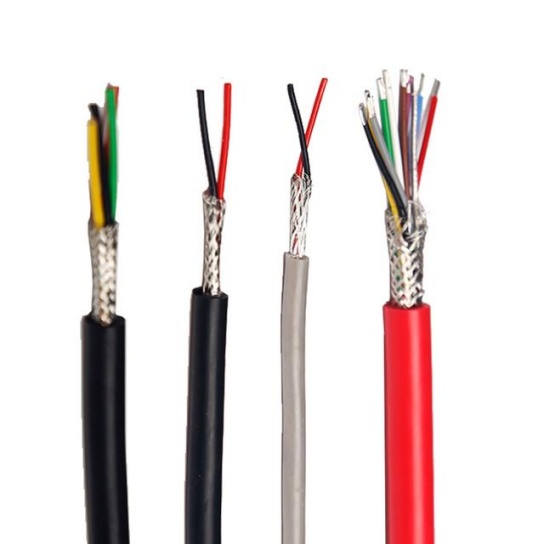
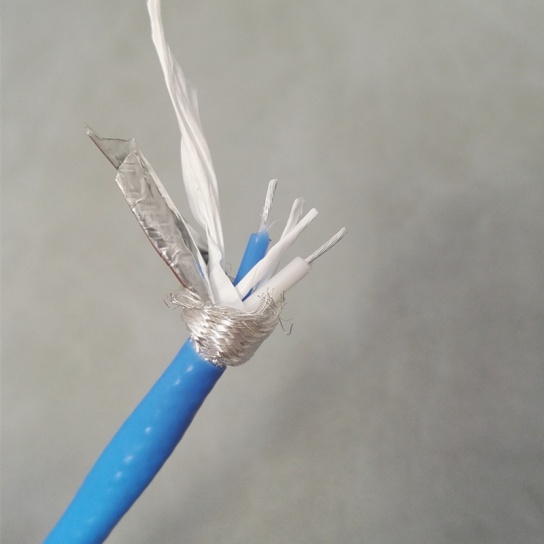
Below are the most common shielding materials used in UAV aviation signal cables and their typical SE performance: – Copper: Copper is the most widely used shielding material due to its excellent electrical conductivity. It provides SE of 60–100 dB across 1 MHz–10 GHz. Copper shielding is available in braided, foil, or solid forms. Braided copper (typically 70–95% coverage) offers good flexibility and SE of 60–80 dB, making it suitable for most civilian UAV applications. Foil copper (100% coverage) provides higher SE (80–100 dB) but is less flexible, ideal for high-frequency signals in military UAVs. – Aluminum: Aluminum is lighter and less expensive than copper but has slightly lower conductivity. It provides SE of 50–90 dB across 1 MHz–10 GHz. Aluminum foil shielding is commonly used in lightweight civilian UAVs where weight is a critical factor. – Mu-metal: Mu-metal is a nickel-iron alloy with high magnetic permeability, making it ideal for shielding against low-frequency magnetic fields (below 1 MHz). It provides SE of 40–80 dB at low frequencies, complementing copper or aluminum shielding for mixed-frequency EMI environments. Mu-metal is often used in military UAVs and industrial inspection UAVs operating near high-power motors or power lines. – Silver-plated copper: Silver has the highest electrical conductivity of any metal, providing SE of 80–120 dB across 1 MHz–18 GHz. Silver-plated copper shielding is lightweight and offers excellent high-frequency performance, making it suitable for mission-critical military UAV signals (e.g., SATCOM, weapons control). However, it is more expensive than other materials. – Conductive polymers: Conductive polymers (e.g., carbon-filled plastics) are lightweight, flexible, and cost-effective. They provide SE of 40–70 dB across 1 MHz–6 GHz, making them suitable for low-cost civilian UAV applications (e.g., consumer drones, agricultural drones).
6. Testing and Validation of Shielding Effectiveness
To ensure that UAV aviation signal cables meet the required SE levels, rigorous testing and validation are essential. Testing methods are specified by industry standards such as RTCA DO-160 and MIL-STD-461, ensuring consistency and reliability across different manufacturers and applications.
Common SE testing methods for UAV aviation signal cables include: – ASTM D4935: This standard specifies a method for measuring the SE of electromagnetic shielding materials using a coaxial transmission line. It is widely used for testing cable shielding across 30 MHz–1.5 GHz, making it suitable for high-frequency signals (e.g., GPS, telemetry). – MIL-STD-285: This standard defines a method for measuring the SE of shielded enclosures and cables using a reverberation chamber. It is used for testing SE across 200 MHz–18 GHz, ideal for military UAV cables operating in high-frequency EMI environments. – IEC 61000-4-3: This standard specifies testing methods for radiated EMI immunity, including cable shielding. It uses an anechoic chamber to simulate real-world RF interference, measuring the cable’s ability to attenuate radiated EMI across 80 MHz–6 GHz. – Low-frequency magnetic field testing: For low-frequency EMI (below 1 MHz), specialized testing methods (e.g., using a Helmholtz coil) are used to measure the cable’s SE against magnetic fields. This is critical for testing cables carrying power signals or operating near motors.
Testing typically involves measuring the EMI field strength before and after the cable is shielded, calculating the SE in dB. If the measured SE meets or exceeds the required level, the cable is deemed compliant. Manufacturers must maintain test records to demonstrate compliance with regulatory standards.
7. Conclusion: The Importance of Tailored Shielding Effectiveness for UAV Aviation Signal Cables
Shielding effectiveness is a critical parameter for UAV aviation signal cables, directly impacting flight safety, mission success, and compliance with industry standards. The required SE level varies significantly based on the UAV’s application (civilian vs. military), the type of signals being transmitted, the severity of the EMI environment, and regulatory requirements.
For civilian UAVs, SE requirements typically range from 40–90 dB, with higher levels for critical flight control and high-frequency signals. Military UAVs, operating in harsh EMI environments, require SE levels of 80–120+ dB to resist intentional jamming and high-power electromagnetic sources. Specialized applications (e.g., industrial inspection, medical delivery) have unique requirements tailored to their specific EMI challenges.
To ensure optimal shielding performance, manufacturers must carefully select shielding materials based on the required SE, frequency range, weight constraints, and cost. Rigorous testing and validation against standards such as RTCA DO-160 and MIL-STD-461 are essential to confirm compliance and reliability.
As UAV technology continues to evolve, with increasingly complex onboard systems and operation in more challenging environments, the demand for high-performance shielding solutions will only grow. Understanding and meeting the required shielding effectiveness for UAV aviation signal cables will remain a key focus for engineers and manufacturers, ensuring that UAVs can operate reliably and safely in the presence of EMI.