What Materials Are Used to Manufacture High-Quality Radiation Resistant Aviation Cables
Key Radiation Environments for Aviation Cables
- High-Altitude Flight:At 10–15 km, cosmic rays and secondary particles are more intense. Cables in avionics bays and radomes require stable insulation and shielding.
- Spaceflight (LEO to GEO):Low Earth Orbit (LEO) faces ~10³ Gy total ionizing dose (TID), while Geostationary Orbit (GEO) reaches ~10⁵ Gy. Deep-space missions need designs for 10⁵–10⁶ Gy or higher.
- Nuclear or Nuclear-Powered Aircraft:Exposure to gamma rays, neutrons, and prompt radiation demands materials with TID tolerance from 10⁴ Gy (reactor plant cabling) to >10⁹ Gy (reactor core sensors).
Radiation-Resistant Core Materials
1. Conductors: Silver-Plated or Nickel-Plated Copper
- Why Not Bare Copper?While pure copper has high conductivity, its surface oxidizes, increasing contact resistance. Silver or nickel plating provides a stable, low-resistance contact surface, crucial for high-reliability aerospace systems.
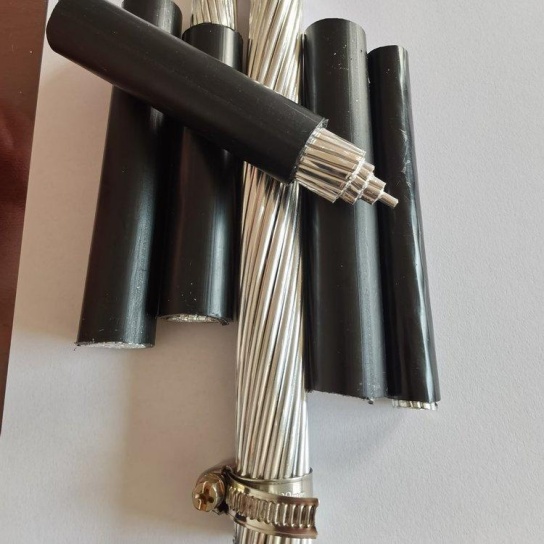
- Aluminum & Composites:Lighter than copper, aluminum alloys are used in power distribution. However, they require larger cross-sections for the same current and are prone to creep. Carbon-fiber-reinforced conductors are an emerging option for ultra-lightweight, high-current applications.
- Pro Tip:For new designs, default to silver-plated copperfor signal and control cables. Use aluminum only for power distribution where weight is critical, and always perform a weight vs. current-carrying-capacity trade-off.
2. Insulation: Fluoropolymers & Polyimides
- Fluoropolymers (PTFE, FEP, PFA, ETFE):These are the industry standard for high-temperature aircraft cables. Radiation cross-linking (XL) enhances their performance, allowing thin walls for weight savings.
- XL-ETFE Example:Offers a wide operating range (-65°C to 200°C), high flexibility, and a radiation tolerance of at least 5×10⁷ Rad, meeting NASA-SP-R-0022 standards.
- Polyimide (Kapton®):Known for its extreme thermal stability(-269°C to 400°C) and excellent radiation resistance (up to 10⁷ Gy). It’s often used as a thin film or tape wrap in satellites and spacecraft. Its main drawback is brittleness after long-term aging or moisture exposure.
- Pro Tip:For cables needing thin walls, high flexibility, and >10⁵ Gy radiation tolerance, XL-ETFE is the most practical choice. Use polyimideas an added layer for extreme thermal or vacuum environments.
3. Jacket & Sheath: Modified ETFE & Advanced Composites
- Modified ETFE:To combat corrosive outgassing from standard ETFE, modified versions use a fourth monomer and additives to reduce fluoride emissions to below 2 μg/g, making them safer for sensitive avionics.
- Advanced Composites:For missions exceeding 10⁶ Gy, jackets may incorporate ceramic fibers, mica tape, or nano-oxide-doped layersto absorb and scatter radiation.
- Pro Tip:For missions over 10 years or beyond LEO, specify “low-outgassing, modified ETFE or equivalent”and request outgassing data (TML <1%, CVCM <0.1%) for critical programs.
Shielding & Structural Materials
1. Shielding: Silver-Plated Copper Braid & Foils
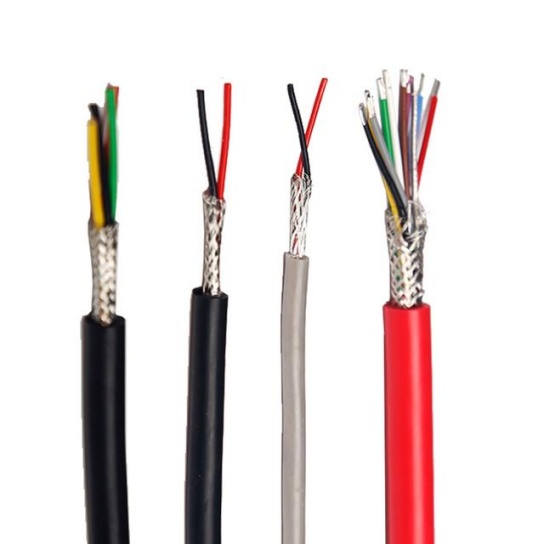
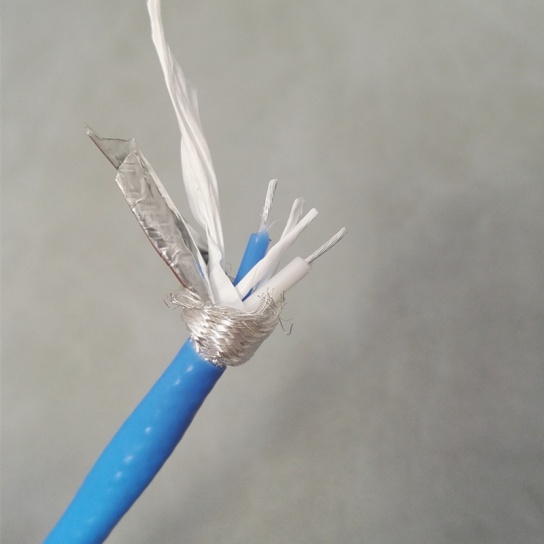
- Construction:A common high-reliability design uses a silver-plated copper braid (≈90% coverage) over a PTFE-insulated core, sometimes with an additional Kapton® tape wrap and a PFA outer jacket.
- Function:This provides excellent EMI shielding and some secondary protection against charged particles. For higher radiation, a tungsten alloy braidcan be used, though it adds significant weight.
2. Metal Sheath Options
- Mineral-Insulated (MI) Cables:These use a metal sheath (stainless steel, Inconel) filled with magnesium oxide. They offer unmatched radiation tolerance (>10⁹ Gy) and can withstand temperatures over 1000°C. Their main downsides are rigidity and high cost.
- Pro Tip:Use MI cables only for fire-safe, high-reliability links(e.g., nuclear safety systems). For flight-critical avionics, stick with flexible fluoropolymer cables and heavy shielding.
Practical Material Selection Guide
1. Define the Radiation Environment First
- Short-Term LEO (Days/Weeks):10³–10⁴ Gy. Standard XL-ETFE or polyimideconstructions are usually sufficient.
- Long-Term GEO or Deep Space (Years):10⁵–10⁶ Gy. Specify high-purity XL-ETFE, radiation-stabilized polyimide, or hybrid constructions.
- Nuclear or Reactor Proximity:>10⁶ Gy. Consider MI cables, ceramic-fiber jackets, or tungsten shielding.
2. Balance Weight, Flexibility & Reliability
- High Flex (e.g., UAVs):Prioritize fine-stranded conductors with PTFE/FEP/ETFE insulation and a flexible braid.
- Tight Spaces (e.g., Satellites):Use thin-wall XL-ETFE and flat or micro-coaxial cables to save space.
- Pro Tip:Always check the bend radius vs. temperaturespecs. Radiation aging can make materials brittle, so design with a safety margin.
3. Don’t Overlook Outgassing & Flammability
- Outgassing:For spacecraft, specify materials that meet NASA outgassing standards(TML <1%, CVCM <0.1%). PTFE and PEEK are good low-outgassing candidates.
- Flammability:In aircraft, meet standards like FAR 25.853. Modified ETFE and fluoropolymer blends can provide both low flame spread and good radiation resistance.
4. Verify with Real Test Data
- Request Data:Ask for TID test curves (e.g., 10⁴–10⁶ Gy) and post-irradiation electrical data (insulation resistance, capacitance, voltage breakdown).
- Worst-Case Testing:For long-life programs, test cables under combined stresses: radiation + thermal cycling + vibration. This is the only way to guarantee 10+ year reliability.
Quick Material Specification Template
Use this as a starting point for RFQs or internal specs:
- Conductor:Silver-plated copper, stranded, 19/0.18 mm (adjust per AWG).
- Insulation:Radiation-crosslinked ETFE (XL-ETFE), wall thickness 0.10–0.15 mm.
- Shield:90% minimum coverage silver-plated copper braid + optional foil.
- Jacket:Modified low-outgassing ETFE, 0.20–0.30 mm wall.
- Operating Temp.:-65°C to +200°C.
- Radiation Requirement:≥1×10⁶ Gy (Si) total ionizing dose, with post-irradiation IR ≥1×10¹² Ω·cm.
- Outgassing:TML ≤1%, CVCM ≤0.1% (per NASA SP-R-0022A if space-rated).
- Standards:Meets or exceeds SAE AS22759 / EN 3475 / MIL-W-22759 as applicable.
Professional Summary
Selecting the right materials for high-quality radiation resistant aviation cablesrequires a systems-level approach. It’s not just about picking a “radiation-resistant” label; it’s about integrating the conductor, insulation, shielding, and jacketing into a solution that meets the specific demands of the operational environment.
For most modern aerospace programs, a silver-plated copper conductor, XL-ETFE insulation, and a robust shielding systemprovide the optimal balance of performance, weight, and reliability. For missions in higher radiation zones, such as GEO satellites or nuclear applications, the strategy shifts towards advanced polyimides, ceramic or metal sheathing, and comprehensive shieldingto ensure mission success.
By clearly defining the radiation dose, temperature profile, weight constraints, and outgassing requirements upfront, and by demanding verifiable test data, engineers and procurement teams can avoid common pitfalls. This ensures the specified radiation resistant aviation cablewill perform reliably for the entire service life of the aircraft or spacecraft.