What materials are optimal for aviation cable assembly custom in extreme conditions
When we talk about aviation cable assembly customfor extreme conditions, we’re not just choosing a wire and a connector. We’re engineering a system that must survive temperature extremes, high vibration, aggressive chemicals, radiation, and long-term flexing—all while remaining as light and compact as possible. The materials you select are the single biggest factor determining whether your cable performs reliably for thousands of flight hours or fails prematurely.
Below is a detailed look at optimal materials for aviation cable assembly customin the most demanding aerospace environments, from engine bays to deep-space probes.
1. Defining “Extreme Conditions” in Aviation
“Extreme” means different things in different parts of an aircraft or spacecraft. A custom aviation cable assembly must be designed for the specific combination of stressors it will face. Key environmental categories include:
- High and Low Temperatures
- Engine zones & near propulsion:Sustained 200–300 °C, with peaks >500 °C for short durations.
- Cryogenic systems:LNG/LOX lines at –150 °C to –196 °C.
- High-altitude flight:–55 °C ambient with rapid thermal cycling.
- Vibration, Shock, and Flexing
- Takeoff, landing, turbulence, and rotorcraft dynamics create continuous vibration and mechanical shock.
- Flight control cables and UAV wing harnesses undergo millions of flex cycles.
- Electromagnetic Interference (EMI) and High-Frequency Signals
- Avionics, radar, and satellite links require shielding against strong EMI/RFI.
- High-speed data buses (Ethernet, Fibre Channel, ARINC 429, MIL-STD-1553) need stable impedance and low loss.
- Chemicals, Moisture, and Corrosion
- Exposure to jet fuel, hydraulic fluid, de-icing agents, salt spray, and humidity.
- Marine patrol or coastal aircraft demand high corrosion resistance.
- Radiation and Vacuum (for Space and High-Altitude Platforms)
- Low Earth Orbit (LEO) and deep-space missions involve total ionizing dose (TID) and atomic oxygen.
- Outgassing must be controlled per NASA and ESA standards.
A proper aviation cable assembly customproject starts by mapping these exact conditions, then selecting conductor, insulation, shielding, and jacketing materials accordingly.
2. Conductor Materials: Balancing Conductivity, Strength, and Weight
a. High-Purity Oxygen-Free Copper (OFHC)
- Use Cases:General aircraft wiring, avionics, power distribution.
- Pros:Excellent conductivity, ductile, easy to terminate.
- Cons:Heavier than alternatives; limited in high-temperature (>200 °C) environments without special plating or alloying.
- Enhancements:Silver or nickel plating improves corrosion resistance and high-temperature stability.
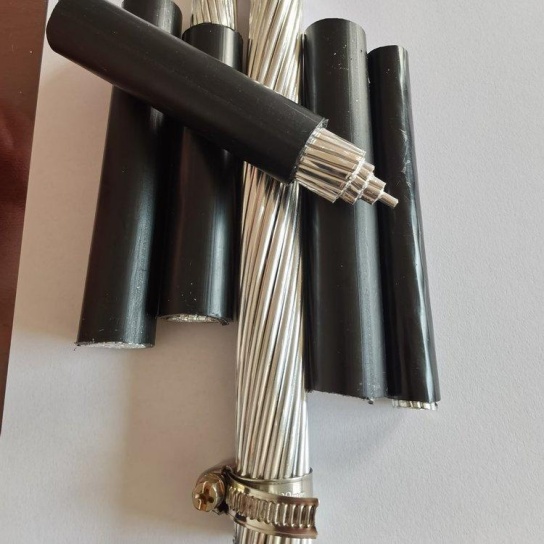
b. Aluminum and Aluminum Alloys
- Use Cases:Aircraft power distribution, where weight is critical.
- Pros:~30–40% lighter than copper for the same conductance.
- Cons:Lower conductivity requires larger cross-sections; more prone to mechanical damage and requires careful termination design.
c. Copper-Clad Aluminum (CCA) and Copper-Clad Steel
- Use Cases:Weight-sensitive applications needing a compromise between conductivity and strength.
- Pros:Lighter than pure copper; stronger than aluminum.
- Cons:Not suitable for high-flex or high-current aerospace applications due to potential bond failures.
d. High-Temperature Alloys (Nickel, Inconel, Copper-Nickel)
- Use Cases:Engine sensors, exhaust thermocouples, fire zones.
- Pros:Maintain strength and conductivity at 200–600 °C.
- Cons:More expensive; lower conductivity than copper, requiring larger cross-sections.
e. Specialty Conductors (Stranded with Foil, Carbon Nanotube Composites)
- Use Cases:Advanced UAVs, space systems, and high-flex applications.
- Pros:Ultra-lightweight, high flexibility, and excellent fatigue life.
- Cons:High cost and limited standardization; typically used in custom R&D projects.
3. Insulation Materials: Surviving Temperature and Radiation
a. PTFE (Polytetrafluoroethylene)
- Temp Range:–55 °C to +200 °C continuous.
- Pros:Excellent chemical resistance, low dielectric constant, very stable.
- Cons:Softer; requires support in high-flex or crush-prone areas.
b. FEP (Fluorinated Ethylene Propylene)
- Temp Range:–55 °C to +200 °C.
- Pros:More flexible than PTFE, better abrasion resistance.
- Cons:Slightly higher dielectric loss than PTFE.
c. ETFE (Ethylene Tetrafluoroethylene)
- Temp Range:–65 °C to +150 °C.
- Pros:Tough, abrasion-resistant, good mechanical strength.
- Cons:Less radiation-resistant than PTFE or PEEK.
d. Polyimide (PI) Films
- Temp Range:–269 °C to +400 °C.
- Pros:Excellent thermal stability, radiation resistance, and mechanical toughness.
- Cons:More difficult to process; higher cost.
e. PEEK (Polyether Ether Ketone)
- Temp Range:Up to +250 °C continuous.
- Pros:High strength, excellent chemical and radiation resistance.
- Cons:Expensive; limited suppliers for aerospace-grade PEEK.
f. Inorganic Composites (for >600 °C)
- Use Cases:Rocket nozzles, engine sensor wiring.
- Pros:Withstand 600–800 °C with stable electrical properties.
- Cons:Rigid; require specialized termination techniques.
4. Shielding Materials: Defending Against EMI/RFI
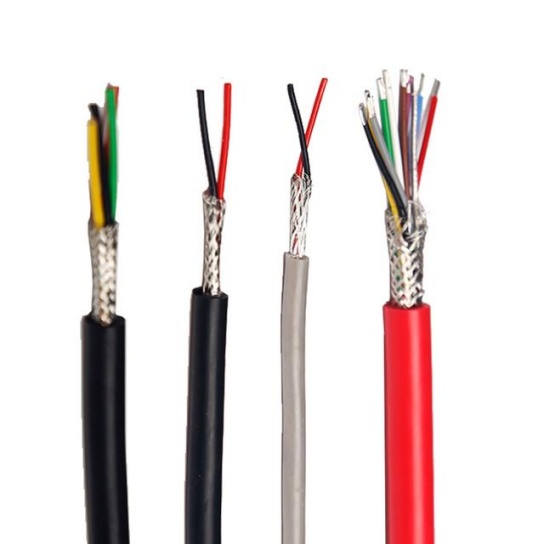
a. Braided Copper
- Pros:Excellent EMI shielding, good flexibility, easy to terminate.
- Cons:Adds weight; coverage is typically 85–90%.
b. Braided Silver-Plated Copper
- Pros:Superior shielding at high frequencies and lower contact resistance.
- Cons:Very high cost; mainly for high-reliability defense/aerospace.
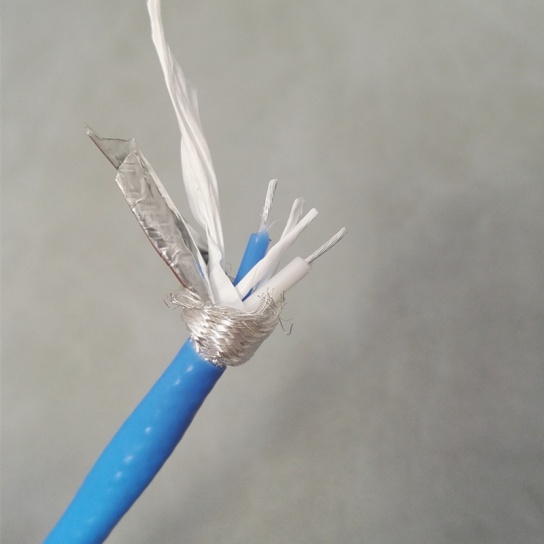
c. Aluminum Foil + Drain Wire
- Pros:Provides 100% coverage, excellent for low-frequency EMI.
- Cons:Less flexible than braids; requires careful folding to avoid stress points.
d. Conductive Fabrics and Metallized Films
- Pros:Very lightweight; flexible; good for tight-radius applications.
- Cons:Lower shielding effectiveness than metal braids; used in combination with other shields.
e. Hybrid Shielding (Braided + Foil + Conductive Layer)
- Pros:Maximizes shielding across a broad frequency spectrum.
- Cons:Heavier and more complex to manufacture.
5. Jacketing and Protective Materials: Resisting the Elements
a. Fluoropolymers (FEP, PFA, ETFE)
- Pros:Excellent chemical and UV resistance, wide temperature range.
- Cons:Can be relatively soft; may require external abrasion protection in high-wear zones.
b. Polyurethane (PUR)
- Pros:Very tough, excellent abrasion resistance, flexible at low temperatures.
- Cons:Limited high-temperature performance (>90 °C).
c. Silicone Rubber
- Pros:Excellent flexibility and wide temperature range (–60 °C to +200 °C).
- Cons:Lower abrasion resistance; often used with an overjacket.
d. Thermoplastic Elastomers (TPE)
- Pros:Good balance of flexibility, chemical resistance, and cost.
- Cons:Performance must be carefully specified for aerospace use.
e. Ceramic-Fiber or Inorganic Sleeving
- Use Cases:Fire zones, engine bays.
- Pros:Maintains integrity at very high temperatures.
- Cons:Rigid; used as an external layer over a flexible core.
6. Customization Strategies for Specific Extreme Environments
a. Engine Proximity / High-Temperature Zones
- Conductor:Nickel-plated copper or high-temp alloy.
- Insulation:PTFE, polyimide, or ceramic composites.
- Shielding:Silver-plated copper braid + foil.
- Jacket:High-temp fiberglass or ceramic sleeving.
b. Rotorcraft and High-Vibration Platforms
- Conductor:Fine-strand, high-flex copper or copper alloy.
- Insulation:PTFE or ETFE with a flexible inner layer.
- Shielding:Braided copper with a drain wire.
- Jacket:Abrasion-resistant PUR or TPE with anti-kink boots.
c. Marine / Coastal Aircraft
- Conductor:Tinned copper or silver-plated copper.
- Insulation:PTFE or ETFE.
- Shielding:Braided copper with additional moisture barrier.
- Jacket:Polyurethane or fluoropolymer with salt-spray resistant formulation.
d. Space / High-Altitude Platforms
- Conductor:Silver-plated copper or high-purity copper with special plating.
- Insulation:Polyimide film or PTFE with radiation-resistant fillers.
- Shielding:Multi-layer shielding (braid + foil + conductive film).
- Jacket:Low-outgassing PTFE or PEEK with NASA-acceptable fillers.
7. Testing and Qualification: Proving Material Performance
Selecting the right materials is only half the battle. For aviation cable assembly custom, you must validate performance through rigorous testing:
- Thermal Cycling:Simulates temperature extremes and rapid changes.
- Vibration and Mechanical Shock:Ensures performance under flight loads.
- EMI/EMC Testing:Verifies shielding effectiveness.
- Chemical and Fluid Exposure:Tests resistance to fuels, oils, and de-icers.
- Radiation and Vacuum Tests:For space-rated cables.
- Flex and Bend Testing:For cables in moving assemblies.
Partnering with a manufacturer that has in-house testing capabilities and experience with standards like AS9100, MIL-STD-810, and RTCA/DO-160 is crucial for a reliable custom solution.
Partner with FRS for Your Extreme-Environment Aviation Cables
Designing a reliable aviation cable assembly customfor extreme conditions is complex. You need a partner with deep materials expertise, engineering know-how, and a track record of delivering flight-worthy solutions.
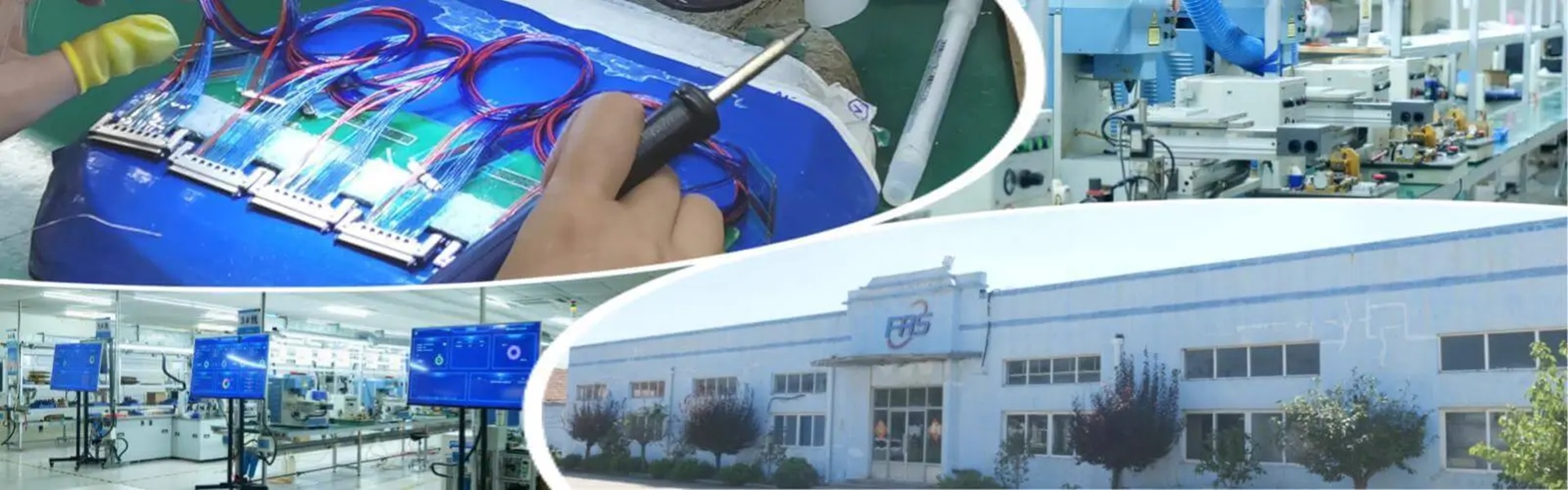
FRSis an AS9100-certified aviation cable factory with extensive experience in custom cable assemblies for commercial, military, and UAV platforms. We help aircraft manufacturers and integrators select the optimal conductor, insulation, shielding, and jacketing materials for their specific environmental challenges.
From initial concept and prototyping to full-scale production and testing, FRS provides end-to-end support to ensure your cables perform reliably, even in the harshest conditions.
Contact FRS todayto discuss your next aviation cable assembly customproject and discover how our material expertise can enhance the safety and performance of your aircraft.
Contact Us Right Now:
E-MAIL: sales@custom-cable-assemblies.com