What makes aviation Ethernet cable 1000 Base-T suitable for aircraft in-flight entertainment systems?
In the modern aviation industry, in-flight entertainment (IFE) systems have evolved from simple audio broadcasts to sophisticated platforms offering high-definition video streaming, interactive gaming, real-time internet access, and personalized content. Behind this seamless user experience lies a robust and reliable network infrastructure, with aviation Ethernet cable 1000 Base-T emerging as a cornerstone component. But what specific attributes make this type of cable uniquely suited to the demanding environment of aircraft IFE systems? This article delves into the key characteristics of 1000 Base-T aviation Ethernet cables, exploring how they address the stringent requirements of airborne applications—from mechanical durability and electromagnetic compatibility to bandwidth efficiency and compliance with aviation safety standards, including parallels to fire-resistant benchmarks like EN 2267 for aviation cables.
1. High Bandwidth Capacity: Meeting the Demands of Modern IFE Systems
The primary function of any Ethernet cable in an IFE system is to transmit large volumes of data quickly and reliably. 1000 Base-T, also known as Gigabit Ethernet, is designed to deliver a maximum data transfer rate of 1 gigabit per second (Gbps) over four pairs of twisted copper wires. This bandwidth is critical for supporting the multi-device, high-resolution content that defines contemporary IFE systems.
Modern aircraft typically feature multiple seatback displays per passenger, each capable of streaming 4K video, running cloud-based games, or accessing real-time social media. A single 4K video stream requires approximately 25-50 Mbps of bandwidth, meaning a 1 Gbps 1000 Base-T cable can simultaneously support 20-40 such streams—more than enough for even large commercial airliners with hundreds of passengers. Additionally, the cable’s ability to handle full-duplex communication (transmitting and receiving data simultaneously) ensures that there is no lag or buffering during content playback, a key factor in passenger satisfaction.
Unlike older Ethernet standards like 100 Base-TX (Fast Ethernet), which only supports 100 Mbps, 1000 Base-T eliminates bandwidth bottlenecks that would otherwise limit the functionality of IFE systems. This scalability is also future-proof: as IFE technology advances—with emerging trends like virtual reality (VR) in-flight experiences requiring even higher data rates—1000 Base-T’s gigabit capacity provides a flexible foundation that can adapt to evolving demands.
2. Robust Mechanical Durability: Withstanding the Rigors of Airborne Environments
Aircraft operate in some of the harshest environments on Earth, with extreme temperatures, vibration, pressure changes, and physical stress posing constant threats to onboard components. Aviation-grade 1000 Base-T Ethernet cables are engineered to meet strict mechanical durability standards that far exceed those of commercial off-the-shelf (COTS) Ethernet cables.
One of the key mechanical features of these cables is their ruggedized jacket and shielding. The jacket is typically made from high-performance materials like fluorinated ethylene propylene (FEP) or perfluoroalkoxy alkane (PFA), which offer exceptional resistance to abrasion, chemicals (such as hydraulic fluids and cleaning agents), and extreme temperatures ranging from -55°C to 150°C. This ensures that the cable remains intact and functional whether the aircraft is flying at high altitudes (where temperatures plummet) or on the ground in hot, humid climates.
Vibration resistance is another critical attribute. During takeoff, landing, and turbulence, aircraft experience significant mechanical vibration that can loosen connections or damage cable conductors. Aviation 1000 Base-T cables feature twisted pairs with precise lay lengths and reinforced connectors (such as MIL-DTL-38999 or EN 3645-compliant connectors) that lock securely into place, preventing signal loss or interruptions. Additionally, the cables are often tested to withstand repeated bending and flexing—essential for installations in tight spaces, such as between seat frames or in overhead compartments.
Pressure changes are also a concern: as an aircraft climbs to cruising altitude, the cabin pressure drops, which can cause COTS cables to expand or contract, leading to insulation cracks. Aviation-grade 1000 Base-T cables are designed to handle these pressure fluctuations without compromising their structural integrity, ensuring long-term reliability in the airborne environment.
3. Electromagnetic Compatibility (EMC): Avoiding Interference with Critical Avionics
Aircraft are filled with sensitive electronic systems, including flight control computers, navigation equipment, and communication radios. These systems operate on specific frequency bands, and any electromagnetic interference (EMI) from other onboard electronics—including IFE networks—could potentially disrupt their functionality, posing a safety risk. 1000 Base-T aviation Ethernet cables are designed with strict electromagnetic compatibility (EMC) in mind, minimizing both EMI emissions and susceptibility to external interference.
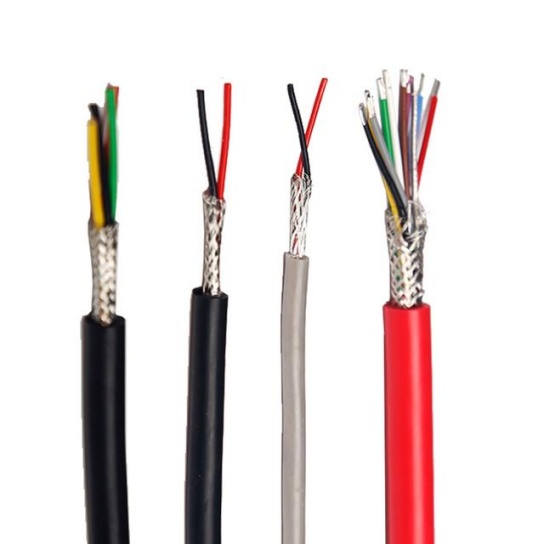
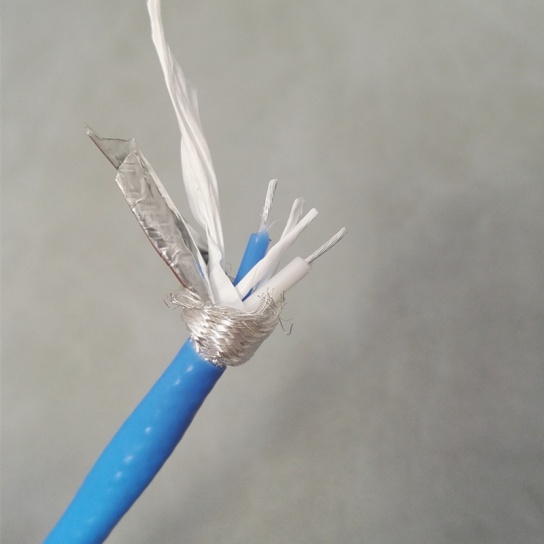
The twisted-pair design of 1000 Base-T cables is fundamental to their EMC performance. By twisting the copper conductors in pairs, the cable cancels out most of the electromagnetic radiation generated by the current flowing through the wires. This reduces EMI emissions, preventing the IFE network from interfering with critical avionics systems. Additionally, many aviation-grade 1000 Base-T cables feature additional shielding, such as foil shielding (F/UTP) or braided shielding (S/UTP), which further blocks external EMI from sources like radar systems, power lines, or other onboard electronics.
Compliance with aviation EMC standards—such as RTCA DO-160, which specifies environmental conditions and test procedures for airborne equipment—is mandatory for 1000 Base-T cables used in IFE systems. RTCA DO-160 includes rigorous EMI testing, ensuring that the cable does not emit excessive electromagnetic radiation and can operate reliably in the presence of external interference. This EMC performance is not just a safety requirement; it also ensures that the IFE system itself remains stable, with no signal degradation or data loss caused by interference from other onboard systems.
4. Fire Resistance and Safety: Aligning with Aviation Safety Standards
Fire safety is a paramount concern in aviation, and all onboard components—including cables—must meet strict fire-resistant standards to minimize the risk of fire propagation and toxic smoke emission in the event of an emergency. While the core keyword here focuses on fire-resistant aviation cable EN 2267, 1000 Base-T aviation Ethernet cables are designed to comply with similar rigorous fire safety standards, such as EN 45545 (the European standard for fire safety in railway and aviation applications) and FAR 25.853 (the Federal Aviation Administration’s standard for cabin materials).
EN 45545 classifies materials based on their fire performance, including parameters like flame spread, heat release rate, and smoke density. Aviation-grade 1000 Base-T cables typically meet the highest EN 45545 classes (such as HL3 or HL2) for cabin applications, ensuring that they do not contribute significantly to fire growth or produce toxic fumes when exposed to high temperatures. This is achieved through the use of flame-retardant jacket materials and low-smoke, zero-halogen (LSZH) insulation. LSZH materials are critical because, in the event of a fire, they release minimal smoke and no halogenated gases (which are toxic and corrosive), protecting passengers and crew and ensuring that emergency exits remain visible.
Similarly, FAR 25.853 requires that all materials used in the aircraft cabin pass flammability tests, including the vertical flame test and the smoke density test. 1000 Base-T aviation Ethernet cables are rigorously tested to meet these standards, ensuring that they can withstand fire conditions without compromising the safety of the aircraft’s occupants. This fire-resistant performance is particularly important for IFE cables, which are routed throughout the cabin—often in close proximity to passengers and critical safety systems.
5. Weight Efficiency: Contributing to Fuel Savings and Operational Efficiency
Weight is a critical factor in aviation, as every additional pound increases fuel consumption and reduces operational efficiency. Aircraft operators are constantly seeking ways to reduce weight without compromising safety or functionality, and 1000 Base-T aviation Ethernet cables offer significant weight advantages over alternative data transmission solutions.
Compared to fiber optic cables (which are sometimes used in high-bandwidth aviation applications), 1000 Base-T copper cables are lighter and more flexible. Fiber optic cables require additional hardware (such as transceivers and connectors) that add weight, while 1000 Base-T cables use standard RJ45 connectors (or aviation-specific variants) that are lightweight and compact. Additionally, the twisted-pair copper design of 1000 Base-T cables allows for thinner conductors than traditional coaxial cables, further reducing weight.
The weight savings from using 1000 Base-T cables can be substantial, especially in large commercial aircraft with extensive IFE systems. For example, a single 787 Dreamliner has over 100 miles of cable onboard, and switching to lighter 1000 Base-T cables can reduce the aircraft’s total weight by hundreds of pounds. Over the lifetime of the aircraft, this translates to significant fuel savings—lowering operational costs for airlines and reducing environmental impact.
6. Easy Installation and Maintenance: Reducing Downtime and Costs
Aviation maintenance is a complex and costly process, and any component that simplifies installation or reduces downtime is highly valuable to airlines. 1000 Base-T aviation Ethernet cables are designed with ease of installation and maintenance in mind, offering several advantages over specialized aviation data cables.
First, the twisted-pair design of 1000 Base-T cables is flexible, allowing them to be routed through tight spaces in the aircraft cabin and fuselage—such as between seat tracks, under floor panels, and in overhead bins. This flexibility reduces the need for custom fittings or extensive modifications to the aircraft’s structure, speeding up installation times.
Second, 1000 Base-T cables use standardized connectors, which are familiar to maintenance technicians. Unlike some proprietary aviation cables that require specialized tools or training to terminate, 1000 Base-T connectors can be terminated using standard Ethernet crimping tools, reducing the time and cost of maintenance. Additionally, the standardized nature of Gigabit Ethernet means that troubleshooting is simpler: technicians can use common network testing tools (such as cable testers and network analyzers) to identify and resolve issues quickly, minimizing aircraft downtime.
Finally, 1000 Base-T cables are highly reliable, with a long service life that reduces the frequency of replacements. This reliability is backed by rigorous testing to aviation standards, ensuring that the cables can operate for decades without failure—even in the harsh airborne environment.
7. Compliance with Aviation Standards: Ensuring Safety and Reliability
Beyond the specific characteristics mentioned above, 1000 Base-T aviation Ethernet cables must comply with a range of global aviation standards to be approved for use in commercial aircraft. These standards ensure that the cables meet the highest levels of safety, reliability, and performance.
Key standards include RTCA DO-160 (Environmental Conditions and Test Procedures for Airborne Equipment), which covers testing for temperature, humidity, vibration, EMI, and fire resistance. Additionally, cables must comply with EN 2267, a European standard specifically for fire-resistant aviation cables, which specifies requirements for flame propagation, smoke emission, and toxicity. Compliance with EN 2267 ensures that the cables can withstand fire conditions without contributing to the spread of flames or the release of harmful gases—critical for protecting passengers and crew in an emergency.
Other important standards include MIL-DTL-17 (Military Specification for Flexible Electrical Cables) and EN 3645 (Aerospace Series—Cables, Electrical, for General Purpose), which define requirements for mechanical strength, insulation resistance, and conductor quality. By meeting these standards, 1000 Base-T aviation Ethernet cables demonstrate their suitability for use in the safety-critical aviation environment.
Conclusion: Why 1000 Base-T Is the Ideal Choice for IFE Systems
Aviation in-flight entertainment systems demand a data transmission solution that is high-performance, reliable, safe, and durable—all while meeting the strict constraints of the airborne environment. 1000 Base-T aviation Ethernet cables deliver on all these fronts, combining gigabit bandwidth to support modern IFE content, robust mechanical design to withstand extreme conditions, EMC performance to avoid interference with critical avionics, fire resistance aligned with standards like EN 2267, weight efficiency to reduce fuel costs, and ease of installation to minimize downtime.
As IFE systems continue to evolve—with more advanced content, greater personalization, and higher data demands—1000 Base-T aviation Ethernet cables will remain a critical component of the airborne network infrastructure. Their ability to balance performance, safety, and efficiency makes them the ideal choice for airlines looking to enhance the passenger experience while maintaining the highest standards of aviation safety and reliability.
For aircraft operators, maintenance teams, and IFE system integrators, understanding the unique attributes of 1000 Base-T aviation Ethernet cables is key to selecting the right components for their systems. By choosing cables that meet the rigorous standards of the aviation industry, they can ensure that their IFE systems operate seamlessly, safely, and efficiently for years to come.