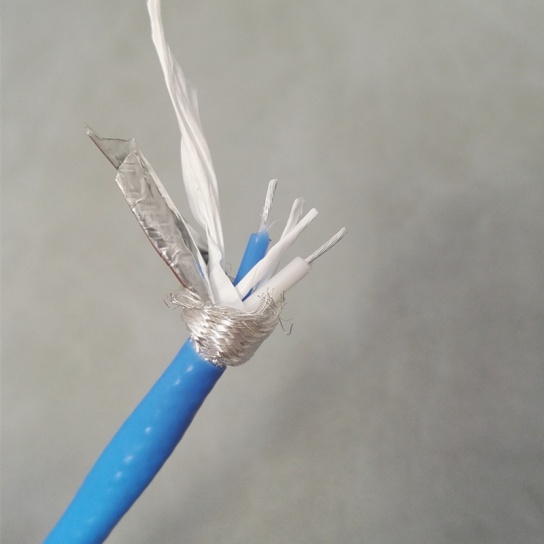
What is the maximum transmission distance of aviation Ethernet cable 1000 Base-T
The 100 m Rule for Standard 1000BASE-T
For standard 1000BASE-T (IEEE 802.3ab) over twisted-pair copper cable, the maximum transmission distance is 100 meters (328 ft). This is a hard limit defined by the standard, not a suggestion.
This distance is measured from the port of one device to the port of the other, including:
Patch cables at both ends
The horizontal or backbone cable run
Any fixed connectors or wall outlets in the path
Key Specifications:
Cable Type:4-pair UTP (Cat5e or better)
Data Rate:1 Gbit/s, full-duplex
Application:The vast majority of industrial and aviation Ethernet links that use standard RJ45 connectors and twisted-pair copper.
Why Aviation Ethernet Cables Often Fall Short of 100 m
In aircraft, helicopters, UAVs, and other aerospace platforms, 1000BASE-T links are often shorter than 100 meters due to several factors:
Cable Construction:Aviation-grade cables prioritize weight, flexibility, and shielding over the pure electrical performance needed for maximum copper distance.
Environmental Stress:Exposure to vibration, temperature extremes, and tight bend radii can degrade the signal, effectively shortening the reliable link distance.
Connector Losses:Ruggedized MIL-DTL-38999 or circular connectors have higher insertion loss than commercial RJ45 jacks, consuming a portion of the 100 m budget.
EMI/EMC Requirements:Heavy shielding, which is crucial for EMI control in aircraft, can increase cable capacitance and attenuation, reducing the maximum reach.
Power over Ethernet (PoE):Injecting power (especially PoE++ / 802.3bt Type 3/4) increases cable temperature and attenuation, further reducing the reliable distance.
1000BASE-T vs. 1000BASE-T1: A Critical Distinction
A common point of confusion is the difference between the two main automotive/aerospace single-pair Ethernet standards. Using the wrong one can lead to a non-functional design.
Feature
1000BASE-T (Standard)
1000BASE-T1 (Single-Pair)
Cable Pairs
4-pair UTP
1 twisted pair
Standard
IEEE 802.3ab
IEEE 802.3bp
Max. Distance
100 m
~40 m(with up to 4 in-line connectors)
Typical Use
Ground-based networks, labs, some aircraft backbone
Automotive, aircraft intra-chassis, sensor links
Connector
RJ45
Custom automotive/aerospace (e.g., TE MATEnet)
Key Takeaway:If your project specifies 1000BASE-T, you must use a 4-paircable. If it specifies 1000BASE-T1, you must use a single-paircable and design for a much shorter distance.
How to Accurately Calculate Your Link Budget
To ensure a reliable connection, calculate the total channel loss and compare it to your cable’s specifications.
1. Account for All Losses:
Cable Attenuation:Provided in dB/100m by the manufacturer. Remember to adjust for your actual cable length.
Connector Loss:A rule of thumb is 0.2–0.5 dB per mated pair. For a link with four connectors (two on each end), budget 1–2 dB.
Splice/In-line Adapter Loss:If applicable, add 0.1–0.3 dB per splice.
PoE Impact:High-power PoE can add 0.5–1 dB of extra loss.
2. Compare to Cable Capabilities:
1000BASE-T:The total channel loss at 100 MHz must typically be ≤ 24 dB.
1000BASE-T1:The total channel loss budget is much smaller, often around ~20 dBfor a 40 m run.
3. Quick Calculation Example:
Run Length:60 m of a Cat6a F/UTP cable (spec: 19 dB/100m @ 100 MHz).
Cable Loss:(60 m / 100 m) * 19 dB = 11.4 dB.
Connector Loss:4 connectors * 0.3 dB = 1.2 dB.
Total Loss:11.4 dB + 1.2 dB = 12.6 dB.
In this example, the loss is well within the 24 dB budget, leaving ample margin for splices or minor cable quality variations.
Practical Tips for B2B Buyers & Engineers
Design for 80–90 m:Don’t plan to use the full 100 m, especially on aircraft. Aiming for 80-90% of the spec provides a safety margin for aging, vibration, and temperature effects.
Match the Standard to the Connector:A ruggedized MIL-DTL-38999 connector is overkill for a 1000BASE-T1 link and adds unnecessary loss. Conversely, a simple RJ45 jack won’t meet the ingress protection needs of an aircraft.
Specify Performance, Not Just Distance:In your RFQ, state the required data rate, distance, and environmental conditions. Ask the manufacturer for the cable’s guaranteed attenuation at 100 MHz and insertion loss per connector.
Beware of “100 m” Marketing Claims:A cable that achieves 100 m in a lab might only manage 60-70 m in a vibrating aircraft environment. Always get data for your specific operating conditions.
Choose the Right Standard for the Job:
For short, lightweight links(e.g., avionics boxes, sensors): 1000BASE-T1is often the better choice.
For longer backbone or cabin distribution: 1000BASE-Tover a 4-pair shielded cable is more suitable, provided you can meet the distance budget.
Quick Reference: Maximum Distances at a Glance
Standard 1000BASE-T (4-pair copper):100 mmaximum.
1000BASE-T1 (single-pair automotive/aerospace):~40 mmaximum with multiple connectors.
Fiber-Based 1000BASE-SX/LX:220 m to 10+ km, depending on fiber type and transceivers. Ideal for long backbone runs where copper is impractical.
Professional Summary
For standard 1000BASE-T over twisted-pair copper, the maximum transmission distance is 100 meters. In aerospace applications, however, physical constraints, connector losses, and environmental factors typically reduce this to 60–80 metersin practice. The key is to perform a link budget analysis using the manufacturer’s data for attenuation and connector loss, rather than relying on the theoretical maximum.
For new aircraft or UAV designs, especially for short, ruggedized links, 1000BASE-T1 single-pair Ethernetis often a better fit, as it is specifically engineered for these environments with a maximum reach of approximately 40 meters. By clearly defining your data rate, distance, and environmental requirements in your procurement specifications, you can ensure you select the right aviation Ethernet cablefor a reliable and certifiable system.
Product Overview: aviation cable
Machine vision cables are specialized components designed to ensure high-speed, stable data transmission and signal integrity in automated imaging systems. Key features include:
Technical Specifica.
Designed to meet the rigorous demands of modern aviation and defense systems, Lightweight MIL-SPEC Aviation Wiring Cables represent the pinnacle of reliability, durability, and performance. Engineered to comply with stringent military sp.
When it comes to aviation safety and performance, every component must meet the highest standards—especially electrical systems. High-Temp Resistant Aviation Electrical Cables are engineered to deliver unparalleled durability and reliabi.
From commercial airliners to military drones, aviation cables are the unsung heroes ensuring reliable power, data, and signal transmission in the skies. These specialized cables are engineered to withstand extreme conditions—think turbule.
Premium Aviation Cables for Aircraft Systems: Elevating Safety and Performance
In the demanding world of aviation, reliability and precision are non-negotiable. Premium Aviation Cables for Aircraft Systems are engineered to meet the r.