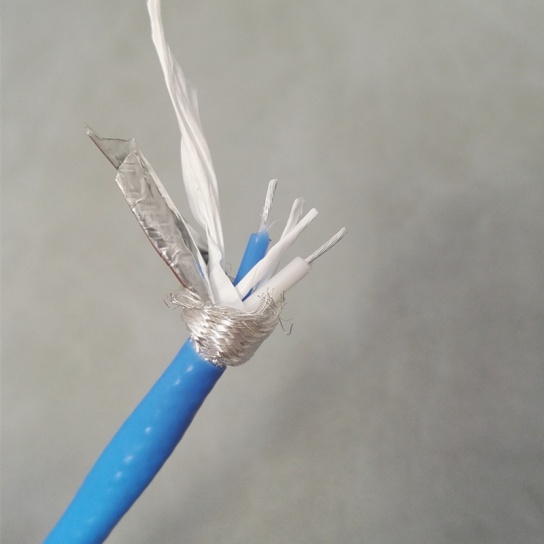
What is the core performance of aviation coaxial cable for radar?
Radar systems serve as the “eyes and ears” of aviation, whether in commercial air traffic control, military surveillance, or meteorological monitoring. At the heart of these critical systems lies a component often overlooked but indispensable: aviation coaxial cables. Unlike standard coaxial cables used in consumer electronics or industrial applications, aviation coaxial cables for radar must operate flawlessly in extreme and unpredictable environments while ensuring the integrity of high-frequency radio frequency (RF) signals. The core performance of these cables directly determines the detection range, target accuracy, and overall reliability of radar systems. This article delves into the key performance attributes that define high-quality aviation coaxial cables for radar, exploring why each characteristic is critical and how advanced engineering meets the stringent demands of the aviation industry.
1. Low Insertion Loss: Preserving Signal Strength Across High Frequencies
Insertion loss, the reduction in signal power as it travels through the cable, is one of the most critical performance metrics for aviation coaxial cables used in radar. Radar systems operate across a wide frequency spectrum, from lower microwave bands for long-range surveillance to millimeter-wave frequencies (27–75 GHz) for high-resolution imaging and targeting in modern military radar. As frequencies increase, signals naturally attenuate more rapidly, making low insertion loss essential to maintain signal strength from the transmitter to the antenna and from the antenna back to the receiver.
High insertion loss can lead to reduced radar detection range, blurred target imaging, and increased susceptibility to noise. To minimize insertion loss, manufacturers use high-conductivity materials for the cable’s center conductor—typically silver-plated copper or copper-clad aluminum—and optimize the dielectric material. Expanded polytetrafluoroethylene (ePTFE) and foam fluoropolymers are preferred dielectrics due to their low dielectric constant (εr, typically 2.3–2.7) and excellent uniformity, which reduce signal dispersion and energy loss. For example, GORE® coaxial cables are engineered to deliver ultra-low loss up to 6 GHz, ensuring reliable signal transmission even in challenging conditions. In millimeter-wave applications, precision manufacturing tolerances are critical to avoid impedance mismatches, which can exacerbate insertion loss and degrade signal integrity.
2. Controlled Impedance: Ensuring Signal Integrity and Minimizing Reflections
Impedance, the opposition a cable offers to the flow of alternating current (AC) signals, must be tightly controlled in aviation coaxial cables for radar. Most radar systems specify either 50-ohm or 75-ohm cables, with 50 ohms being the standard for military and high-power radar applications, and 75 ohms common in video and high-definition signal transmission for avionics displays. Any deviation from the specified impedance—caused by irregularities in conductor diameter, dielectric thickness, or manufacturing defects—can lead to signal reflections, measured by the Voltage Standing Wave Ratio (VSWR).
A low VSWR (ideally close to 1:1) indicates minimal signal reflection, ensuring that most of the signal power is transmitted rather than bounced back. High VSWR can cause signal distortion, reduce transmitter efficiency, and even damage sensitive radar components. Advanced aviation coaxial cables, such as those from Collins Aerospace and Gore, maintain controlled impedance through precision extrusion of dielectric materials and consistent conductor geometry. These cables undergo rigorous testing with vector network analyzers to ensure VSWR stability across the entire operating frequency range, up to 20 GHz for some high-performance models.
3. Superior Shielding Effectiveness: Protecting Against Electromagnetic Interference
Aviation environments are filled with electromagnetic interference (EMI) from a variety of sources, including other avionics systems, communication radios, and external RF signals. For radar systems, which rely on detecting weak return signals, even minor EMI can corrupt data and lead to false readings or missed targets. Shielding effectiveness—the cable’s ability to block external EMI and prevent internal signal leakage—is therefore a non-negotiable core performance attribute.
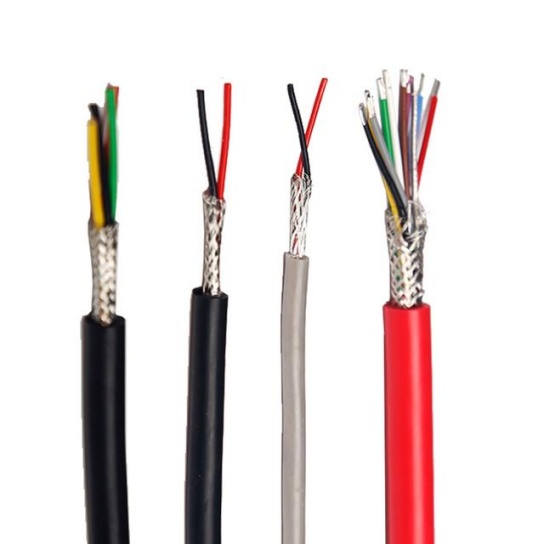
High-performance aviation coaxial cables for radar use multi-layer shielding designs to achieve shielding effectiveness greater than 90 dB, and often exceeding 100 dB at frequencies up to 2 MHz. A typical shielding configuration includes a helically wrapped silver-plated copper outer conductor and a braided shield, providing dual protection against both electric and magnetic field interference. The outer jacket, made from rugged fluoropolymers or ETFE, further enhances shielding by preventing physical damage to the inner shielding layers. For example, Smiths Interconnect’s Lab-Flex® series offers shielding effectiveness greater than 100 dB/ft, ensuring that radar signals remain pure and uncorrupted in the crowded electromagnetic environment of an aircraft.
4. Phase Stability: Critical for Phased-Array Radar Performance
Modern radar systems, particularly Active Electronically Scanned Array (AESA) radars, rely on precise phase control to steer the radar beam electronically. In AESA architectures, signals are sent to hundreds or thousands of radiating elements, and small variations in the phase of these signals can significantly degrade beamforming accuracy, leading to direction-finding errors and reduced target tracking precision. Phase stability—the ability of the cable to maintain consistent phase characteristics under varying conditions—is therefore a core performance requirement for aviation coaxial cables used in these advanced radar systems.
Phase stability is affected by temperature changes, mechanical stress, and material aging. To address this, manufacturers use dielectric materials with low thermal coefficients of phase (TCP), which minimize phase drift when exposed to extreme temperatures. Foam fluoropolymers and ePTFE are ideal for this purpose, as they resist expansion and contraction under thermal cycling. Additionally, cables are engineered to minimize the “bend effect”—phase changes caused by bending or flexing—allowing for easy routing in the tight spaces of an aircraft’s airframe. Smiths Interconnect’s Lab-Flex® T series, for example, virtually eliminates the bend effect at room temperature and maintains phase stability with a tolerance of ±1 degree/GHz, making it ideal for AESA radar applications.
5. Extreme Environmental Durability: Surviving the Aviation Operating Environment
Aviation coaxial cables for radar must withstand some of the harshest environments on Earth—and beyond, for satellite-based radar systems. From extreme temperatures and rapid pressure changes to vibration, shock, and exposure to hazardous chemicals, these cables must maintain performance without degradation throughout the aircraft’s service life.
Temperature resistance is a key aspect of environmental durability. Aircraft coaxial cables typically operate in a temperature range of -65°C to +200°C, with some models rated for even wider ranges. This is critical for cables routed in unpressurized areas of the aircraft, where temperatures can plummet to -55°C or lower, and in engine compartments or near avionics where temperatures can rise sharply. The outer jacket and dielectric materials must remain flexible and stable at these extremes—fluoropolymers and ETFE are preferred for their high-temperature resistance and resistance to thermal aging.
Mechanical durability is equally important. Cables must withstand vibration from the aircraft’s engines and airframe, shock from turbulence or landing, and physical stress during installation and maintenance. Ruggedized designs, such as Gore’s engineered fluoropolymer outer jacket and braided shielding, provide excellent abrasion resistance and prevent kinking, even when routed around sharp edges in crowded avionics bays. Additionally, cables must be resistant to aviation fluids such as Skydrol (hydraulic fluid), fuel, and cleaning agents—Collins Aerospace’s PFLX cables, for example, are specifically designed to resist hydraulic fluids and kinking.
For military and satellite-based radar systems, additional environmental challenges include salt fog, UV radiation, and radiation in space. Cables like Smiths Interconnect’s SpaceNXT™ QT series feature ETFE radiation防护护套 and meet NASA/ESA’s volatile specifications, ensuring reliable performance in low Earth orbit (LEO) and deep space applications.
6. Lightweight and Compact Design: Optimizing SWaP for Aviation Applications
In aviation, every pound of weight matters—reducing weight improves fuel efficiency, increases payload capacity, and extends range. Size, Weight, and Power (SWaP) optimization is therefore a critical consideration for all