What Is Radiation Resistant Aviation Cable and Why Is It Critical for Aerospace Applications?
The aerospace industry operates in some of the harshest environments known to humanity—from the extreme cold of high altitudes to the intense heat of atmospheric re-entry, and most notably, the pervasive radiation fields of space. Among the countless components that enable safe and reliable aerospace operations, radiation resistant aviation cables stand as unsung heroes. These specialized cables are not mere conductors of power and data; they are critical safeguards that ensure the integrity of communication, navigation, and life-support systems in environments where standard cables would fail catastrophically. In this article, we delve into the definition, key characteristics, materials, and applications of radiation resistant aviation cables, while exploring why they are indispensable to modern aerospace missions.
What Is Radiation Resistant Aviation Cable?
Radiation resistant aviation cable, also referred to as radiation-hardened or radiation-tolerant aviation cable, is a specialized type of wiring engineered to maintain consistent electrical performance and structural integrity when exposed to high levels of ionizing and non-ionizing radiation. Unlike standard commercial or even industrial cables, which are designed for mild, controlled environments, these cables are built to withstand the extreme radiation conditions encountered in aerospace applications—including cosmic radiation, solar flares, gamma rays, X-rays, and proton radiation.
At its core, the defining feature of radiation resistant aviation cable is its ability to resist radiation-induced degradation (RID). RID occurs when radiation interacts with a cable’s materials, causing molecular damage that impairs electrical properties (such as increased signal attenuation or reduced insulation resistance) and mechanical strength (such as brittleness or cracking). Radiation resistant cables mitigate this damage through advanced material selection, specialized manufacturing processes, and optimized structural design, ensuring they remain functional even after prolonged exposure to radiation doses that would render standard cables useless.
The Radiation Challenge in Aerospace Environments
To understand the importance of radiation resistant aviation cables, it is first critical to grasp the severity and complexity of the radiation environment in aerospace. Unlike on Earth, where the atmosphere and magnetic field provide natural shielding, aerospace vehicles—from commercial airliners at high altitudes to satellites, space shuttles, and interplanetary probes—operate in unprotected radiation fields that vary in intensity and composition.
There are two primary categories of radiation that threaten aerospace systems:
- Ionizing Radiation: This is the most damaging type of radiation for cables, as it has sufficient energy to displace electrons from atoms, creating ions and free radicals that disrupt molecular structures. Ionizing radiation in aerospace includes cosmic rays (high-energy particles from outer space), solar energetic particles (SEPs) from solar flares, gamma rays, and X-rays. For example, satellites in low Earth orbit (LEO) are exposed to cosmic rays and trapped radiation in the Van Allen belts, while deep-space missions face even higher doses of galactic cosmic rays.
- Non-Ionizing Radiation: While less destructive than ionizing radiation, non-ionizing radiation (such as radio frequency radiation from aerospace communication systems) can still cause thermal damage or interference if cables are not properly shielded.
The impact of radiation on standard cables is severe. Radiation-induced attenuation (RIA) increases signal loss, disrupting communication and sensor data transmission. Insulation materials may become brittle and crack, leading to short circuits or electrical arcing. Conductors can degrade, increasing resistance and reducing power delivery efficiency. In the worst cases, this degradation can cause critical system failures—such as loss of navigation data, engine control malfunctions, or failure of life-support systems—putting missions and lives at risk. For example, a satellite with non-radiation-resistant cables might experience complete communication blackout after exposure to a solar flare, rendering it inoperable.
Key Characteristics of High-Quality Radiation Resistant Aviation Cables
Radiation resistant aviation cables are engineered to meet the stringent demands of aerospace applications, incorporating several key characteristics that set them apart from standard cables:
1. Exceptional Radiation Tolerance
The most critical characteristic is the ability to withstand high radiation doses. These cables are typically rated to endure doses ranging from 100 Mrad (megarads) to 7000 Mrad, depending on the application and materials used. For example, cables used in deep-space missions may require higher radiation tolerance than those used in LEO satellites. Manufacturers test radiation resistance in accordance with standards such as TIA/EIA 455-64, which measures RIA to ensure cables remain functional under radiation exposure.
2. Wide Temperature Range Resilience
Aerospace environments are not only high-radiation but also extreme in temperature. Radiation resistant aviation cables must operate reliably in temperatures ranging from -55°C (-67°F) to 260°C (500°F) or higher. For instance, cables near a spacecraft’s engines may face intense heat, while those in the outer hull experience freezing cold. Materials such as PTFE (Teflon®) and ETFE (Tefzel®) enable this resilience, maintaining insulation integrity and flexibility across extreme temperature fluctuations.
3. Low Signal Attenuation
In aerospace applications, signal integrity is paramount. Radiation resistant cables are designed with low dielectric loss to minimize signal attenuation, ensuring that data (such as GPS coordinates, sensor readings, and communication signals) is transmitted accurately even over long distances. This is particularly critical for satellite communication and deep-space missions, where signal loss can lead to mission failure.
4. Mechanical Durability
Aerospace vehicles are subject to intense vibration, shock, and flexing during launch, flight, and re-entry. Radiation resistant cables must具备 high mechanical strength, including resistance to abrasion, vibration, and bending. Stranded conductors (such as nickel-clad or silver-plated copper) enhance flexibility, while reinforced jackets and shielding provide abrasion resistance. Some cables, such as GORE® Spaceflight Cables, are engineered to retain pliability even after high radiation exposure, ensuring they can withstand the mechanical stresses of aerospace operations.
5. Lightweight and Compact Design
Weight and space are critical constraints in aerospace design—every gram adds to launch costs, and space within vehicles is limited. Radiation resistant cables are therefore designed to be lightweight and compact. For example, Specialty Cable Corporation’s FLIGHT SAFE 260XL® aircraft wire is up to 33% lighter and 50% smaller than older standard cables, without compromising performance.
6. Resistance to Chemicals and Vacuum Outgassing
Spacecraft and aircraft operate in environments where they may be exposed to aviation fuels, hydraulic fluids, and other chemicals. Radiation resistant cables must be resistant to these substances to prevent insulation degradation. Additionally, in vacuum environments (such as space), cables must meet low outgassing requirements (per NASA standards) to avoid releasing volatile compounds that can contaminate sensitive equipment, such as optical lenses and sensors.
Core Materials: The Foundation of Radiation Resistance
The radiation resistance of aviation cables is largely determined by the materials used in their construction. Manufacturers select and optimize materials based on their ability to withstand radiation-induced molecular damage. Key materials include:
1. Conductors
Conductors in radiation resistant cables are typically made of high-purity, corrosion-resistant metals. Nickel-clad copper and silver-plated copper are common choices, as they offer high electrical conductivity, resistance to corrosion (critical in humid or salty aerospace environments), and compatibility with radiation-resistant insulators. For high-strength applications, nickel-coated high-strength copper alloys are used, meeting military specifications such as ASTM 8624.
2. Insulation Materials
Insulation is the most vulnerable part of a cable to radiation damage, so selecting the right insulation material is crucial. Common radiation-resistant insulation materials include:
- PTFE (Polytetrafluoroethylene): A high-performance polymer with excellent radiation resistance, high-temperature tolerance, and chemical inertness. PTFE is widely used in aerospace cables for its ability to maintain insulation integrity under extreme conditions.
- ETFE (Ethylene-Tetrafluoroethylene Copolymer): A lightweight, flexible polymer that offers good radiation resistance and high-temperature performance (up to 155°C). ETFE is often used in radiation-resistant cables due to its low outgassing properties, making it suitable for space applications.
- Polyimide: A thermoset polymer with exceptional radiation resistance (up to 7000 Mrad) and high-temperature tolerance (up to 250°C). Polyimide is used in high-radiation environments, such as nuclear-powered spacecraft and deep-space missions.
- PEEK (Polyether Ether Ketone): A high-performance thermoplastic with excellent radiation resistance, chemical resistance, and mechanical strength. PEEK is suitable for extreme-temperature and high-radiation applications, such as aerospace engines and nuclear instrumentation.
Manufacturers also use irradiation crosslinking technology to enhance material performance. This process uses high-energy electron beams to convert linear polymer molecules into a three-dimensional crosslinked structure, improving heat resistance, radiation resistance, and mechanical strength. For example, TST Cables uses crosslinked polyolefins (XLPE/XLPO) in their radiation-resistant cables to achieve enhanced durability.
3. Shielding and Jacketing
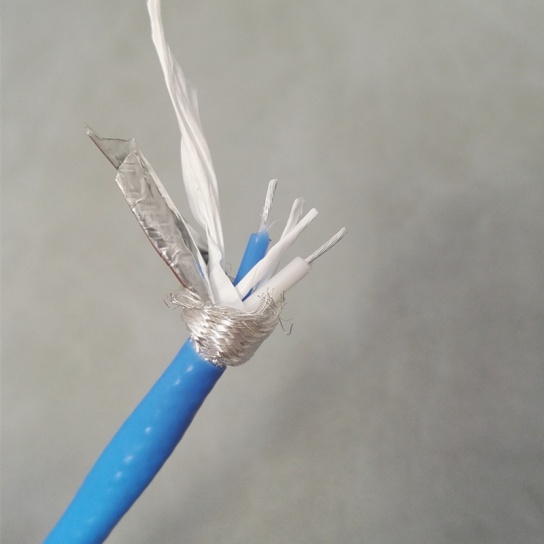
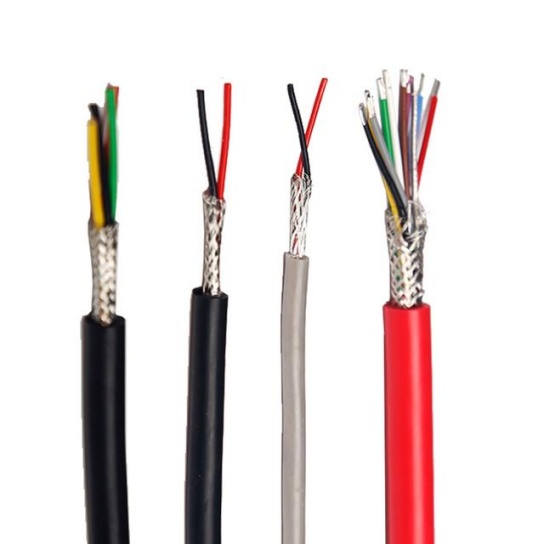
Shielding is critical for protecting cables from electromagnetic interference (EMI) and radiation. Radiation resistant cables often feature dual-layer shielding (aluminum foil + copper braid) with 85–90% coverage to block EMI from engines, radios, and lightning strikes. Jackets are typically made of radiation-resistant materials such as ETFE or PTFE, providing an additional barrier against radiation, abrasion, and chemicals. Some cables, such as GORE® Spaceflight Cables, use Tefzel® radiation-resistant jackets to ensure structural integrity during radiation exposure.
Why Radiation Resistant Aviation Cables Are Critical for Aerospace Applications
The importance of radiation resistant aviation cables in aerospace cannot be overstated. They are the lifelines of every aerospace vehicle, enabling the seamless operation of critical systems. Here are the key reasons why they are indispensable:
1. Ensuring Mission Success and Safety
Aerospace missions—whether commercial flights, satellite deployments, or deep-space exploration—rely on uninterrupted power and data transmission. Radiation resistant cables prevent system failures caused by radiation-induced cable degradation, ensuring that navigation systems, engine controls, communication networks, and life-support systems operate reliably. For example, in a commercial airliner flying at 40,000 feet, high-altitude radiation can damage standard cables, leading to loss of communication with air traffic control. Radiation resistant cables mitigate this risk, safeguarding passenger safety.
2. Enabling Deep-Space Exploration
Deep-space missions, such as those to Mars or beyond, face extreme radiation levels that far exceed those in LEO. Without radiation resistant cables, spacecraft would be unable to transmit scientific data back to Earth, control their trajectory, or maintain life-support systems for astronauts. For instance, the Mars rovers rely on radiation-resistant wiring to transmit images and sensor data across millions of miles, enabling groundbreaking scientific discoveries.
3. Meeting Stringent Aerospace Standards
The aerospace industry is governed by strict standards to ensure safety and reliability. Radiation resistant aviation cables must comply with military and aerospace specifications, such as MIL-W-25038 (for aircraft wire), MIL-PRF-49291 (for radiation-hardened fibers), and IEEE-383 (for nuclear and aerospace cables). Compliance with these standards is mandatory for aerospace manufacturers, and radiation resistant cables are engineered to meet or exceed these requirements. For example, FindLight’s radiation-hard multimode fibers are approved by the U.S. Defense Supply Center, Columbia (DSCC) and comply with ITU G.651, G.652, and IEC standards.
4. Reducing Maintenance and Replacement Costs
Aerospace vehicles are expensive to maintain, and replacing cables in space or high-altitude environments is impractical or impossible. Radiation resistant cables have a longer service life than standard cables, reducing the need for maintenance and replacement. This not only lowers costs but also minimizes the risk of mission disruption due to cable failure.
5. Supporting Advanced Aerospace Technologies
As aerospace technology advances—with the development of electric aircraft, reusable space vehicles, and autonomous spacecraft—the demand for reliable, high-performance cables increases. Radiation resistant cables enable these technologies by providing the power and data transmission infrastructure needed to support their complex systems. For example, electric aircraft require lightweight, high-temperature-resistant cables to transmit power from batteries to engines, and radiation resistant cables meet these requirements while ensuring reliability.
Key Applications of Radiation Resistant Aviation Cables
Radiation resistant aviation cables are used in a wide range of aerospace applications, including:
- Commercial and Military Aircraft: Used in engine controls, navigation systems, communication networks, and life-support systems. For example, FLIGHT SAFE 260XL® wire is used in aircraft for its high-temperature and radiation resistance, ensuring reliability during flight.
- Satellites and Spacecraft: Critical for power distribution, data transmission, and sensor connectivity. GORE® Spaceflight Cables are widely used in satellites due to their radiation resistance and low outgassing properties.
- Deep-Space Missions: Used in rovers, landers, and orbiters to withstand the extreme radiation of deep space. Radiation-hardened fibers enable high-bandwidth data transmission from these missions back to Earth.
- Nuclear-Powered Aerospace Vehicles: Used in nuclear reactors and associated systems, where radiation levels are extremely high. Polyimide and PEEK-insulated cables are ideal for these applications due to their exceptional radiation resistance.
Conclusion
Radiation resistant aviation cables are a critical component of modern aerospace technology, engineered to withstand the harshest radiation environments while ensuring reliable power and data transmission. Their unique combination of radiation tolerance, temperature resilience, mechanical durability, and signal integrity makes them indispensable for aerospace missions—from commercial flights to deep-space exploration. As the aerospace industry continues to push the boundaries of exploration and innovation, the demand for high-performance radiation resistant cables will only grow. By understanding the importance of these cables, we can appreciate the intricate engineering that goes into making safe, successful aerospace missions possible.
In summary, radiation resistant aviation cables are not just wires—they are the backbone of aerospace safety and reliability. Without them, the wonders of modern aviation and space exploration would remain out of reach.