What Is Polyimide Aviation Cable and Where Is It Used?
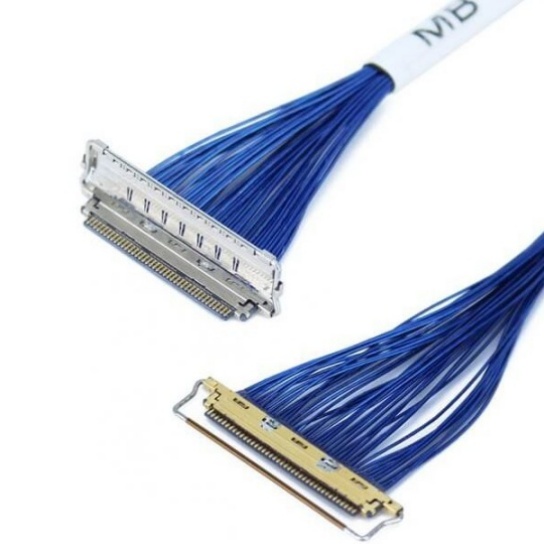
Polyimide aviation cable is a specialized wire that uses polyimide (PI) as its primary insulation or as a key component within a multi-layer insulation system. It is engineered for aircraft, spacecraft, and other aerospace platforms where failure is not an option.
💡 What Makes Polyimide Special?
Polyimide is a high-performance polymer known for its exceptional properties:
Extreme Temperature Resistance: It can operate reliably from cryogenic temperatures up to 250–300 °C for long periods, with short-term survivability beyond 400 °C. Its properties remain stable across a wide range, from approximately -269 °C to 400 °C.
Exceptional Electrical Insulation: It features high dielectric strength (100–300 kV/mm), low dielectric constant (~3.4), and low dielectric loss, making it ideal for high-frequency signal integrity.
Robust Mechanical & Chemical Properties: It offers high tensile strength, excellent flexibility at low temperatures, outstanding abrasion and cut resistance, and strong resistance to fuels, lubricants, and most chemicals.
Radiation & Outgassing Resistance: It performs well in high-radiation environments and has low outgassing, which is critical for preventing contamination in the vacuum of space or sensitive avionics.
Lightweight & Thin-Walled: PI films are extremely thin yet strong, enabling smaller, lighter cables that save critical weight and space on aircraft and spacecraft.
🔩 Construction of Polyimide Aviation Cables
There are two primary construction methods, each with its own advantages:
Feature
Film-Wrapped (Tape-Wrapped)
Extruded
Process
Polyimide film is precisely wrapped around the conductor and then sintered to form a continuous, void-free layer.
Molten polyimide is extruded directly onto the conductor, creating a homogeneous, one-piece insulation.
Advantages
Excellent cut-through and abrasion resistance; proven long-term reliability in aerospace.
Superior flexibility, smoother surface, better scratch resistance, and more consistent electrical properties.
Common Use
High-reliability aerospace and defense applications.
Applications requiring tight bend radii, dense packaging, or high flex life.
Conductor Materials
To match the performance of the insulation, conductors are typically made from high-purity oxygen-free or silver-plated copper alloys. These are often plated (e.g., tin for ~150 °C, silver for ~200 °C, nickel for ~260 °C) to enhance high-temperature performance and solderability.
Multi-Layer Designs
For critical systems, polyimide is often combined with other materials in a layered approach:
PI + Fluoropolymer (FEP, PTFE, ETFE): This combines PI’s mechanical toughness with the chemical resistance and arc-tracking resistance of fluoropolymers. A common structure is a silver-plated copper conductor, polyimide (PI) tape, PTFE tape, and an overall fluoropolymer jacket.
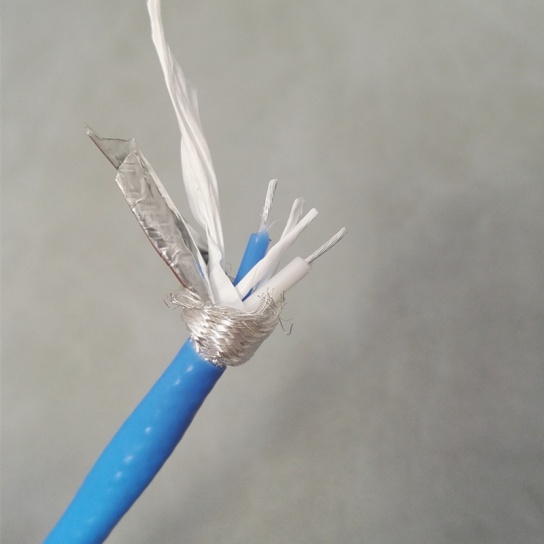
Complex Aerospace Cables: These may include an inner fluoropolymer layer, a polyimide film layer, an outer fluoropolymer layer, a metal braid for shielding, and additional protective layers. This design ensures high reliability in harsh environments, including resistance to atomic oxygen in space.
📍 Where Is Polyimide Aviation Cable Used?
Its unique properties make it indispensable in various high-performance applications.
✈️ Aircraft Electrical Wiring
In aircraft, polyimide-insulated wires are used in areas with elevated temperatures or where long-term reliability is paramount. This includes engine bays, APU compartments, and high-temperature zones near brakes or exhaust. They are also common in flight-critical avionics, fire detection, and emergency systems due to their ability to maintain performance during a fire, aiding in safe landing.
🛰️ Spacecraft & Launch Vehicles
For satellites, deep-space probes, and launch vehicles, PI cables are vital for surviving the extreme conditions of space. They are used in solar array cables, data/command lines, and stage separation connectors. Their resistance to radiation, atomic oxygen, and thermal cycling is crucial for missions lasting years in harsh environments.
🚀 High-Performance Military Aircraft
In fighter jets and UAVs, where weight and reliability are critical, polyimide cables are used for engine sensors, radar, and flight control systems. Their high cut-through resistance and low smoke/fume characteristics are essential for safety in combat and emergency situations.
🔬 Specialized & Emerging Applications
The reliability of PI cables extends to:
High-Temperature Industrial Equipment: Used in sensors and control wiring for turbines and industrial furnaces.
Medical Devices: Found in imaging systems and surgical robots where precision and reliability are non-negotiable.
Next-Generation Aerospace: Being explored for use in more electric aircraft (MEA) and advanced propulsion systems, where cables must handle higher voltages and temperatures.
✅ Key Selection & Qualification Considerations
Selecting the right polyimide aviation cable involves evaluating several critical factors:
Operating Temperature: Ensure the chosen cable meets or exceeds the maximum continuous operating temperature of your application (e.g., 200 °C, 260 °C).
Voltage Rating & Insulation Thickness: Determine the required voltage (e.g., 600V, 1kV) and ensure the cable’s insulation thickness and construction meet safety margins.
Mechanical Stress: For applications involving tight bends or vibration, prioritize cables with high flex life and abrasion resistance, such as extruded PI or PI/fluoropolymer constructions.
Environmental Resistance: Verify the cable’s resistance to relevant chemicals (fuels, oils), moisture, and radiation for your specific environment.
Flammability & Smoke: For aircraft interiors, ensure the cable meets standards like FAR 25.853 and EN 45545-2 for low smoke and toxicity (LSOH).
Standards & Qualification: Always specify cables that meet recognized aerospace standards (e.g., MIL-DTL-22759, AS22759, GJB 76.5A-2021) and have a proven flight history or qualification data.
From commercial airliners to military drones, aviation cables are the unsung heroes ensuring reliable power, data, and signal transmission in the skies. These specialized cables are engineered to withstand extreme conditions—think turbule.
Designed to meet the rigorous demands of modern aviation and defense systems, Lightweight MIL-SPEC Aviation Wiring Cables represent the pinnacle of reliability, durability, and performance. Engineered to comply with stringent military sp.
When it comes to aviation safety and performance, every component must meet the highest standards—especially electrical systems. High-Temp Resistant Aviation Electrical Cables are engineered to deliver unparalleled durability and reliabi.
Product Overview: aviation cable
Machine vision cables are specialized components designed to ensure high-speed, stable data transmission and signal integrity in automated imaging systems. Key features include:
Technical Specifica.
Premium Aviation Cables for Aircraft Systems: Elevating Safety and Performance
In the demanding world of aviation, reliability and precision are non-negotiable. Premium Aviation Cables for Aircraft Systems are engineered to meet the r.