
Best

aviation cable factory

What is GJB 773 aerospace cable and where is it used

GJB 773 aerospace cable refers to a family of wires and cables specified by the Chinese national military standard GJB 773A-2000. This standard governs fluoropolymer-insulated wires and cables for aerospace applications, ensuring they meet the demanding requirements of aircraft, spacecraft, and other high-performance vehicles.

📜 The GJB 773 Standard

  • Full Name: General specification of fluoropolymer insulated wires and cables for aerospacecraft.
  • Replaced: The earlier GJB 773.1–89 series.
  • Applicable Materials: Covers wires and cables using various fluoropolymer insulations like PTFE (F4), FEP (F46), ETFE (F40), XETFE (F40J), PFA, and combinations like PTFE/glass (F44).
  • Detailed Specifications: The standard is supported by a series of detailed specs (e.g., GJB 773A/3A-2000, GJB 773A/21-2000) that define the performance of specific cable types.

🔬 Construction & Materials

GJB 773 cables are built with a focus on performance and weight savings:

  • Conductors: Options include tinned copper (JX), silver-plated copper (JY), nickel-plated copper (JN), and aluminum (JL). Silver and nickel plating are used for high-temperature and harsh-environment resistance.
  • Insulation: Primarily fluoropolymers like PTFE (F4) and FEP (F46), known for high-temperature stability and chemical resistance.
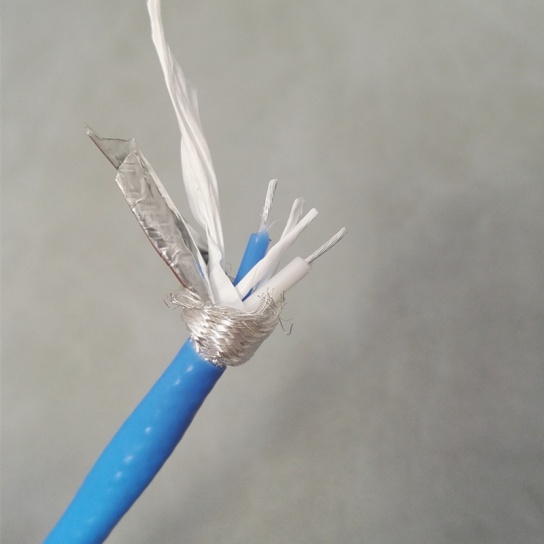
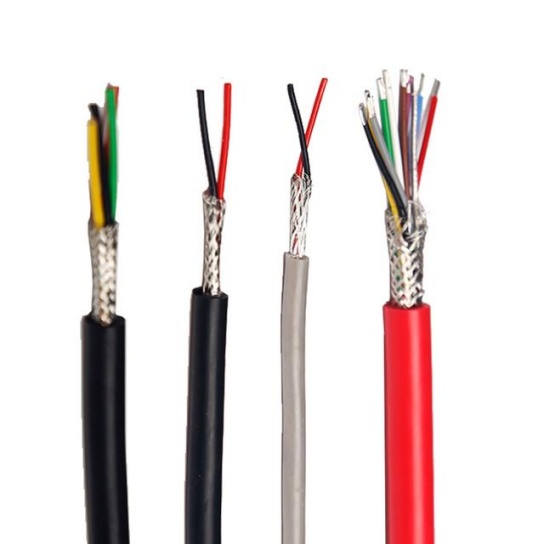
  • Shielding: Often features a braided shield (P21/P31) made of tinned, silver-plated, or nickel-plated copper with a coverage of 85-90% to protect against electromagnetic interference (EMI).
  • Sheath: A protective outer layer (e.g., H3 for FEP, H5 for PTFE tape) that provides mechanical, chemical, and flame resistance.
  • Lightweight Design: Many cables are designated as “light-duty” (Q), using thinner walls and optimized constructions to reduce weight, a critical factor in aircraft design.

📊 Key Performance Parameters

  • Voltage Rating: Typically 600 Vfor power and control circuits, with some signal cables at 250 V.
  • Operating Temperature: A wide range from -65 °C to +200 °C, depending on the specific construction. Some specialized versions can reach up to +260 °C.
  • Environmental Resistance: Must withstand exposure to aviation fuels, lubricants, hydraulic fluids, moisture, salt spray, and fungus, as tested per GJB 150 and related standards.
  • Flame Resistance: Must be self-extinguishing and meet low-smoke, low-toxicity requirements typical of aerospace fire safety standards.

📍 Where GJB 773 Aerospace Cables Are Used

These cables are the “nerves and blood vessels” of aerospace platforms, used in critical systems where failure is not an option.

  • Aircraft Electrical Systems: Power distribution for avionics, flight controls, lighting, and environmental controls. Signal transmission for sensors and communication systems.
  • Aerospace Propulsion & Power: Wiring for engine sensors, ignition systems, generators, and high-temperature zones near turbines.
  • Satellites & Spacecraft: Internal harnesses for power, data, and control lines. Cables for launchers and service modules that must survive launch vibrations and the space environment.
  • Military & Defense Platforms: Used in missiles, UAVs, radars, and other defense systems that require high reliability and resistance to harsh conditions.

🔍 How GJB 773 Differs from Other Cables

GJB 773 cables are designed for the most demanding environments. Here’s a comparison with other common cable types:

FeatureGJB 773 Aerospace CableCommercial Aircraft Cable (e.g., AS/EN)Industrial Cable (e.g., PVC)
Operating Temp-65 °C to +200/+260 °C-65 °C to +150/+200 °C-20 °C to +70/+105 °C
WeightVery lightweight, optimizedLightweightHeavier construction
EnvironmentFuel, oil, radiation, vibrationFuel, moistureGeneral industrial
StandardsChinese National Military (GJB)AS/EN, MIL-DTLIEC, UL, CSA
ReliabilityExtremely high, long service lifeHighModerate

🏭 Common GJB 773 Cable Models

The standard uses a structured code to identify different cable types. Here are some common examples:

  • FF46-2: Silver-plated copper core, FEP (F46) insulation. A common general-purpose wire.
  • FF46P21-2: FF46 insulation with a silver-plated copper braided shield (P21) for EMI protection.
  • FF4-2Q: Silver-plated copper core, PTFE (F4) insulation, in a lightweight (Q) construction.
  • FF44-3: A PTFE/glass (F44) insulated cable with a nickel-plated copper shield, rated for high temperatures (up to 260 °C).

✅ Selecting the Right GJB 773 Cable

Engineers typically follow these steps to choose the correct cable:

  1. Define Requirements: Determine voltage, current, signal type, operating temperature, and environmental conditions (e.g., fuel exposure).
  2. Consult Standards: Review GJB 773A-2000 and its detailed specifications (e.g., GJB 773A/3A-2000) to find suitable constructions.
  3. Check Compatibility: Ensure the cable’s materials are compatible with all aircraft fluids and that its weight and flexibility meet the installation’s space and bend-radius constraints.
  4. Verify Qualification: Confirm the manufacturer’s quality system and that the cable has passed the necessary tests, including those specified in GJB 150 for environmental stress.

More aviation cable related Products

High-Temp Resistant Aviation Electrical Cables: Powering Reliability in Extreme Conditions

When it comes to aviation safety and performance, every component must meet the highest standards—especially electrical systems. ​High-Temp Resistant Aviation Electrical Cables are engineered to deliver unparalleled durability and reliabi.

More information
Lightweight MIL-SPEC Aviation Wiring Cables

Designed to meet the rigorous demands of modern aviation and defense systems, ​Lightweight MIL-SPEC Aviation Wiring Cables represent the pinnacle of reliability, durability, and performance. Engineered to comply with stringent military sp.

More information
Aviation Cable: The Lifeline of Modern Aircraft and Aerospace Systems

From commercial airliners to military drones, aviation cables are the unsung heroes ensuring reliable power, data, and signal transmission in the skies. These specialized cables are engineered to withstand extreme conditions—think turbule.

More information
aviation cable products

‌Product Overview: aviation cable Machine vision cables are specialized components designed to ensure high-speed, stable data transmission and signal integrity in automated imaging systems. Key features include: ‌Technical Specifica.

More information
Premium Aviation Cables for Aircraft Systems | High-Performance & Reliable Solutions

Premium Aviation Cables for Aircraft Systems: Elevating Safety and Performance In the demanding world of aviation, reliability and precision are non-negotiable. ​Premium Aviation Cables for Aircraft Systems are engineered to meet the r.

More information