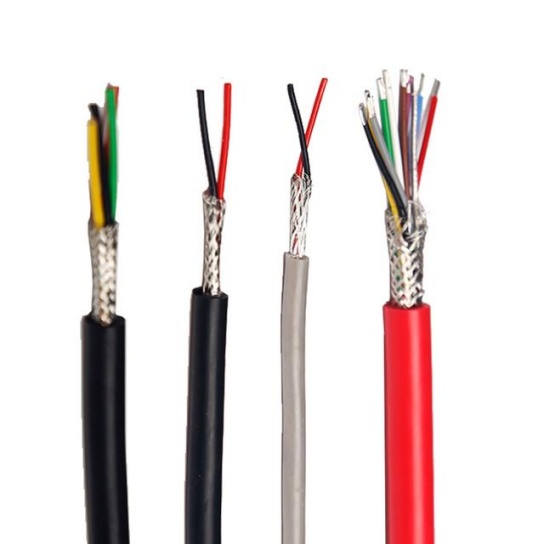
What is a high speed aviation data cable and how does it differ from standard aviation cable?
Modern aircraft rely on a vast internal network of cables to connect flight control computers, navigation systems, sensors, cameras, in-flight entertainment (IFE), and broadband connectivity. As these systems generate and consume more data, traditional avionics wiring is no longer sufficient. This is where the high speed aviation data cablebecomes essential—it is specifically engineered to handle high-bandwidth digital signals in the harsh airborne environment.
This article explains what a high speed aviation data cable is, its key performance parameters, how it differs from other aviation cables, and how to choose the right one for your application.
📡 What Is a High Speed Aviation Data Cable?
A high speed aviation data cableis a specialized cable designed to transmit high-bandwidth digital data—such as Ethernet, Fibre Channel, video, or sensor data—between avionics systems in aircraft. Unlike traditional aircraft wires that carry low-level power or analog signals, these cables are optimized for high data rates over specific distanceswhile withstanding the aerospace environment.
They are commonly used for:
Avionics networks: 100BASE-TX / 1000BASE-T Ethernet, ARINC 664, Fibre Channel, and other high-speed links between Line Replaceable Units (LRUs).
In-flight entertainment (IFE): Connecting seatback displays, wireless access points, and media servers.
Sensor and camera links: High-resolution video or imaging data from EO/IR sensors or flight recorders.
Data acquisition and monitoring: High-speed links for real-time health monitoring and diagnostics.
These cables are almost always differential pair cables(e.g., twinax or shielded twisted pair), which are ideal for high-speed data transmission due to their superior signal integrity and noise immunity.
🔧 Key Design Features
High speed aviation data cables are built with several critical characteristics to ensure reliable performance in the air:
Differential Pair Geometry Pairs of insulated conductors are twisted together to minimize electromagnetic interference (EMI) and crosstalk. Precise control of twist pitchis vital for maintaining impedance and reducing signal loss at high frequencies.
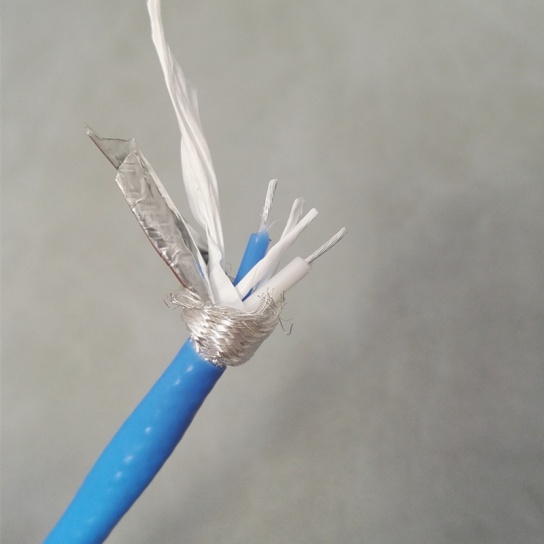
Multi-Layer Shielding To combat the intense EMI/RFI in aircraft, these cables employ robust shielding, such as:
Individual pair shielding: Each twisted pair is wrapped in foil.
Overall shielding: A braided shield (e.g., tinned copper) surrounds all pairs.
Double shielding: Some designs, like those compliant with BS EN 3375-007, use a dual braid for enhanced performance, achieving a transfer impedance of ≤15 mΩ/m at 1 MHz.
Controlled Impedance Impedance is tightly controlled to match system requirements (e.g., 77 Ω for some RF/video links, 100 Ω for Ethernet). Standards like BS EN 3375-007specify impedance tolerances as tight as 77 ± 7 Ω @ 1 MHz, a significant improvement over older versions.
Wide Temperature Range They must operate reliably in extreme conditions, from the cold of high altitudes to the heat near engines. Performance is specified across a wide range, such as –65 °C to +200 °C.
Lightweight & Small Diameter To reduce aircraft weight and save space, these cables use high-performance insulation and shielding materials that offer excellent performance without excessive bulk.
Flame Resistance & Low Smoke Safety is paramount. Cables must meet stringent flammability standards (e.g., EN 3475 / ABD0031 / FAR 25.853) to ensure they do not propagate fire and produce minimal toxic smoke.
Mechanical Robustness They are built to withstand the physical stresses of flight, including vibration, bending, and tension. This includes meeting dynamic bend tests and having a defined minimum bend radius.
📊 Performance Comparison
High speed aviation data cables are designed to meet the most demanding avionics standards. Here is a comparison of key parameters for a high-performance cable (e.g., an aerospace-grade Cat5e/6 type) versus a general-purpose cable:
Parameter
High Speed Aviation Data Cable
General-Purpose Cable
Data Rate
100 Mbps to 10 Gbps (1–100 m)
10/100 Mbps typical
Frequency Range
Up to several hundred MHz
Up to ~100 MHz
Impedance
Tightly controlled (e.g., 100 ± 15 Ω)
Looser tolerance
Shielding
Multi-layer (foil + braid, or double braid)
Single foil or minimal braid
Operating Temp.
–55 °C to +125 °C (or wider)
0 °C to +70 °C typical
Weight
Optimized for low weight
Heavier construction
Standards
RTCA/DO-160, EN 3475, BS EN 3375-007
TIA/EIA, IEC, UL
Flame/Smoke
Stringent (low smoke, low toxicity)
Varies; often not aerospace-grade
Flex Life
High (for tight spaces, maintenance)
Moderate
Application
Avionics, IFE, mission-critical data
Office, industrial, non-critical
Table 1: Comparison between high speed aviation data cable and general-purpose cable.
🔍 How It Differs from Other Aviation Cables
The term “aviation cable” covers a broad range of products. Here’s how high speed data cables differ from the rest:
vs. Power/Control Wires
Power/Control: Carry low-frequency power or discrete control signals. They are sized for current and voltage, not data integrity.
High-Speed Data: Optimized for high-frequency signal integrity (impedance, crosstalk, attenuation). They use twisted pairs and shielding, not large conductors.
vs. Traditional Coaxial Cables
Coax: Excellent for a single high-frequency RF signal (e.g., 77 Ω video). It’s a point-to-point link.
High-Speed Data: Supports multiple, bi-directional data channels over a single cable assembly, making it ideal for complex, multi-drop networks like Ethernet.
vs. Standard Industrial Data Cables (Cat5e/6)
Industrial: Designed for benign environments (offices, factories). They lack the extreme environmental resistance required for flight.
High-Speed Aviation: Built to survive high vibration, wide temperature swings, moisture, and stringent fire safety standards.
vs. Fiber Optic Cables
Fiber: Offers virtually unlimited bandwidth and is immune to EMI. It’s lighter for long runs but requires specialized handling and connectors.
High-Speed Copper: More rugged for short, dynamic runs and is easier to terminate and maintain in tight spaces. Often, a hybrid approach using both is employed in modern aircraft.
🎯 Typical Applications
High speed aviation data cables are found in nearly every modern aircraft subsystem:
Flight Control & Avionics Backbone: High-speed Ethernet and Fibre Channel links between core computing systems.
In-Flight Entertainment (IFE): 100/1000BASE-T links from servers to seatboxes and access points.
Cabin Systems: Connecting cameras, moving maps, and passenger connectivity units.
Mission Systems: High-resolution sensor and video data links for surveillance and reconnaissance.
UAVs & Drones: Lightweight, high-speed data links for control and payload data.
✅ How to Choose the Right Cable
Selecting the correct cable involves a systematic approach:
Define the Application & Data Rate Determine the required data rate (e.g., 100 Mbps, 1 Gbps, 10 Gbps) and the maximum link length.
Match the Environment Consider the installation location’s temperature, EMI sources, and mechanical stress. Choose a cable rated for that environment (e.g., engine zone vs. cabin).
Verify Standards Compliance Ensure the cable meets the necessary aerospace standards for flammability, smoke, and toxicity, as well as data performance standards like BS EN 3375-007.
Evaluate Connector Compatibility The cable must be compatible with the chosen connector (e.g., ARINC 801, D38999). Pay attention to impedance matching and shielding termination.
Consider Weight & Space Constraints In aircraft design, every gram counts. Compare cable weight and diameter, especially for high-density installations.
Plan for Future-Proofing If possible, choose a cable that supports higher data rates than your current needs (e.g., Cat6A for a 1 GbE system) to accommodate future upgrades.
💡 Conclusion
The high speed aviation data cableis a critical enabler of modern digital aircraft. It is a highly engineered component that goes beyond a simple wire, integrating precise electrical design with robust mechanical and environmental protection. By understanding its construction, performance, and how it differs from other aviation cables, engineers can make informed decisions to ensure safe, reliable, and high-performing avionics systems.
Designed to meet the rigorous demands of modern aviation and defense systems, Lightweight MIL-SPEC Aviation Wiring Cables represent the pinnacle of reliability, durability, and performance. Engineered to comply with stringent military sp.
From commercial airliners to military drones, aviation cables are the unsung heroes ensuring reliable power, data, and signal transmission in the skies. These specialized cables are engineered to withstand extreme conditions—think turbule.
Premium Aviation Cables for Aircraft Systems: Elevating Safety and Performance
In the demanding world of aviation, reliability and precision are non-negotiable. Premium Aviation Cables for Aircraft Systems are engineered to meet the r.
Product Overview: aviation cable
Machine vision cables are specialized components designed to ensure high-speed, stable data transmission and signal integrity in automated imaging systems. Key features include:
Technical Specifica.
When it comes to aviation safety and performance, every component must meet the highest standards—especially electrical systems. High-Temp Resistant Aviation Electrical Cables are engineered to deliver unparalleled durability and reliabi.