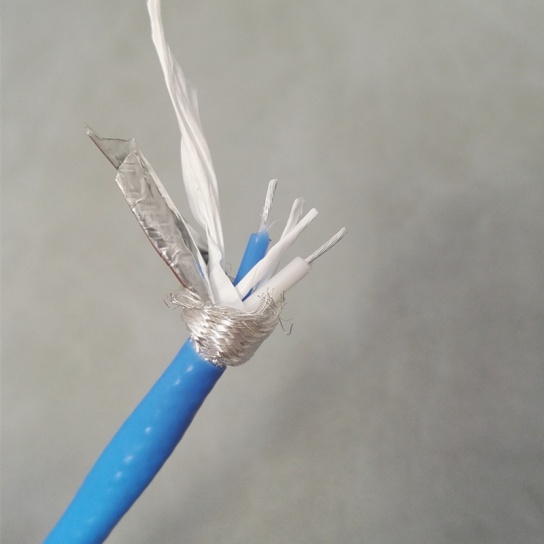
What data transmission rate does aviation fiber optic cable support for aircraft
For aircraft, the data transmission rate of aviation fiber optic cable isn’t a single fixed number. It’s determined by the entire data link—fiber type, network architecture, and transceiver technology. In practical terms, modern airborne fiber optic systems can support data rates from 10 Mb/sto 400 Gb/s per channel, with future systems aiming for Tbit/slevels.
How Fast Can It Go?
The speed of aviation fiber is determined by the entire data link, not just the cable. Key factors include:
- Fiber Type: Single-mode fiber (SMF) is used for long-distance, high-speed backbones, while multi-mode fiber (MMF) is common for shorter intra-cabin links.
- Transceiver Technology: The latest optical transceivers (e.g., 100G, 400G) define the maximum data rate per fiber.
- Network Architecture: Technologies like Wavelength Division Multiplexing (WDM) can multiply a single fiber’s capacity by transmitting multiple data channels simultaneously.
In Practice:
- Commercial Aircraft: Modern onboard data networks typically support 10 Mb/s to several Tb/s. Single-mode fiber backbones can handle up to 100 Gb/s per channel, with a clear path to 400 Gb/s and beyond.
- Military & Space: High-performance systems, such as those using radiation-hardened transceivers, can achieve 150 Gbps+per link, with overall system capacities in the multi-terabit per secondrange .
Key Advantages Over Copper
Fiber is the preferred choice for modern aircraft due to several critical advantages:
- Massive Bandwidth & High Speed: Fiber’s bandwidth is not inherently limited like copper. Commercial aircraft can now support in-flight Wi-Fi speeds over 100 Mbps per passenger, a significant leap from the ~3 Mbpsaverage in 2015. Fiber backbones are already handling 100 Gb/sand gearing up for 400 Gb/s.
- Lightweight & Space-Saving: Fiber is significantly lighter than copper (less than half the weight per 1,000 feet). This results in substantial fuel savings and more space for revenue-generating payloads or passengers. Its smaller diameter also simplifies cable routing in tight spaces .
- EMI Immunity & Security: As optical signals are immune to electromagnetic interference (EMI), fiber ensures stable data transmission in the aircraft’s electrically noisy environment. It is also much harder to tap without detection, enhancing data security .
- Environmental Durability: Aviation-grade fiber cables are engineered to withstand extreme temperatures, vibration, moisture, and crushing forces. They are certified to standards like ARINC 802-3and EN4641-301, ensuring long-term reliability in harsh conditions .
Where Is It Used Onboard?
Aviation fiber is the backbone for high-bandwidth systems throughout the aircraft:
- Avionics & Flight Control: Connects flight computers, sensors, and displays, enabling real-time data exchange for safe and stable flight.
- In-Flight Entertainment (IFE) & Connectivity: Forms the high-speed backbone for satellite Wi-Fi, allowing HD streaming and fast internet. Systems can support over 100 Gb/sto meet growing passenger demands .
- Cabin Management & Monitoring: Links systems for lighting, environmental controls, and passenger services. It also supports real-time monitoring for predictive maintenance, reducing downtime .
- Sensors & High-Resolution Systems: Transmits data from radar, cameras, and other high-res sensors with minimal latency, which is crucial for navigation and safety .
Planning Your System: Key Considerations
When selecting fiber for your project, focus on the entire system, not just the cable:
- Define Your Speed & Bandwidth: Calculate the total data from all systems (IFE, avionics, etc.) to determine the required network speed (e.g., 1G, 10G, 40G, 100G).
- Choose the Right Fiber: Opt for single-mode fiberfor long backbone links and multi-mode fiberfor shorter, high-bandwidth runs within the fuselage.
- Prioritize Reliability: Ensure the entire system—cable, connectors, and transceivers—meets relevant aerospace standards for fire safety, temperature, and vibration resistance .
Partner with FRS for Your Aviation Fiber Needs
If you are an importer, distributor, or system integrator seeking a reliable partner for aviation-grade fiber optic cables, FRSis here to help.
- Expertise: We specialize in manufacturing high-quality fiber cables and assemblies for demanding industries, including aerospace.
- Customization: We offer standard and custom solutions, from single-core to multi-fiber cables, tailored to your specific requirements.
- Support: Our team provides comprehensive support, from initial consultation and sample testing to full-scale production and delivery.
Let’s build a faster, safer, and more connected future for your aircraft projects. Contact FRS today to discuss your needs.