What Are the Key Specifications of MIL-C-27500 Multi-Conductor Aviation Cable
In the aerospace industry, where reliability, safety, and performance are non-negotiable, every component plays a critical role in ensuring the smooth and secure operation of aircraft. Among these components, aviation cables are the lifeline of electrical systems, transmitting power and signals between essential parts such as engines, avionics, and control systems. MIL-C-27500 multi-conductor aviation cable, a military-grade standard cable widely adopted in both military and commercial aerospace applications, stands out for its rigorous specifications that guarantee exceptional performance in harsh environments. For engineers, procurement professionals, and aerospace enthusiasts seeking to understand this vital component, grasping its key specifications is essential. This article delves into the core specifications of MIL-C-27500 multi-conductor aviation cable, explaining their significance and how they contribute to the cable’s reliability in aerospace settings.
1. Overview of MIL-C-27500 Standard: Definition and Scope
Before diving into specific specifications, it is crucial to understand the MIL-C-27500 standard itself. Developed by the United States Department of Defense (DoD), the MIL-C-27500 specification defines the requirements for multi-conductor, shielded or unshielded cables designed for use in aircraft and aerospace vehicles. Unlike commercial cables, which may have more flexible standards, MIL-C-27500 cables are engineered to meet strict military and aerospace criteria, ensuring they can withstand extreme temperatures, vibration, moisture, chemical exposure, and mechanical stress commonly encountered in flight.
The scope of MIL-C-27500 covers a wide range of cable types, including those with solid or stranded conductors, various insulation and jacket materials, and different shielding configurations. These cables are used in a multitude of aerospace applications, from power distribution and avionics communication to flight control systems and in-flight entertainment. The standard’s rigor ensures that MIL-C-27500 cables are interchangeable and compatible across different aircraft platforms, making them a preferred choice for both military and commercial aerospace manufacturers.
2. Conductor Specifications: The Foundation of Electrical Transmission
The conductor is the core component of any cable, responsible for carrying electrical current or signals. MIL-C-27500 multi-conductor aviation cable has strict requirements for conductor material, size, and stranding, all of which directly impact the cable’s electrical performance and mechanical durability.
2.1 Conductor Material
The primary conductor material specified in MIL-C-27500 is copper, chosen for its excellent electrical conductivity, ductility, and corrosion resistance. Copper conductors are typically tinned or silver-plated to enhance corrosion resistance, especially in the harsh aerospace environment where moisture, salt, and other corrosive agents may be present. Tinned copper is the most common option, as it provides a balance of cost and performance, while silver-plated copper is used in applications requiring higher conductivity or superior resistance to extreme temperatures.
In some cases, the standard allows for other conductor materials, such as copper-clad aluminum, but these are less common due to aluminum’s lower conductivity and higher susceptibility to corrosion compared to copper. The use of copper ensures that MIL-C-27500 cables can efficiently transmit power and signals with minimal voltage drop, a critical factor in aerospace systems where electrical efficiency is paramount.
2.2 Conductor Size and Gauge
MIL-C-27500 specifies conductor sizes based on the American Wire Gauge (AWG) system, a standard used to measure the diameter of electrical conductors. The standard covers a range of gauges from 28 AWG (smallest) to 10 AWG (largest), with each gauge corresponding to a specific cross-sectional area and current-carrying capacity. Smaller gauge conductors (e.g., 24-28 AWG) are typically used for signal transmission, where low current and high flexibility are required, while larger gauge conductors (e.g., 10-16 AWG) are used for power distribution, where higher current-carrying capacity is necessary.
The current-carrying capacity (ampacity) of MIL-C-27500 conductors is strictly defined by the standard, taking into account factors such as conductor material, insulation temperature rating, and installation environment (e.g., ambient temperature, airflow). For example, a 16 AWG tinned copper conductor in a MIL-C-27500 cable may have an ampacity of 7 amps in a 105°C environment, while a 22 AWG conductor may have an ampacity of 3 amps under the same conditions. This specification ensures that engineers can select the appropriate conductor size for their specific application, preventing overheating and potential system failure.
2.3 Conductor Stranding
MIL-C-27500 cables require conductors to be stranded, as opposed to solid, to enhance flexibility and resistance to fatigue from vibration. The standard specifies the number of strands and the diameter of each strand for each gauge size. For example, a 22 AWG conductor may consist of 7 strands of 30 AWG wire, while a 16 AWG conductor may consist of 19 strands of 26 AWG wire. The stranding configuration not only improves flexibility but also increases the conductor’s surface area, which can enhance heat dissipation and signal transmission in high-frequency applications.
Additionally, the standard requires that stranded conductors be concentrically stranded (i.e., strands arranged in layers around a central strand) to ensure uniform flexibility and strength. This stranding configuration prevents the conductor from breaking or becoming damaged due to repeated bending or vibration, a common occurrence in aircraft during takeoff, landing, and flight.
3. Insulation Specifications: Protecting Conductors and Ensuring Safety
Insulation is a critical component of MIL-C-27500 multi-conductor aviation cable, as it separates individual conductors to prevent short circuits and protects the conductors from environmental damage. The standard specifies strict requirements for insulation material, thickness, and temperature rating, all of which are tailored to the harsh aerospace environment.
3.1 Insulation Material
The most common insulation material used in MIL-C-27500 cables is polytetrafluoroethylene (PTFE), a fluoropolymer known for its excellent thermal stability, chemical resistance, and electrical insulation properties. PTFE can withstand extreme temperatures ranging from -65°C to 200°C, making it ideal for use in aircraft engines and other high-temperature areas. Additionally, PTFE is resistant to oils, fuels, solvents, and other chemicals commonly found in aerospace environments, ensuring that the insulation remains intact and effective over the cable’s lifespan.
In some applications, the standard allows for other insulation materials, such as ethylene-tetrafluoroethylene (ETFE) or perfluoroalkoxy (PFA). ETFE offers similar thermal and chemical resistance to PTFE but is more flexible and easier to process, making it suitable for applications requiring greater flexibility. PFA, on the other hand, has a higher temperature rating (up to 260°C) than PTFE, making it ideal for use in extremely high-temperature environments, such as near jet engines.
3.2 Insulation Thickness and Voltage Rating
MIL-C-27500 specifies minimum insulation thickness for each conductor gauge to ensure adequate electrical insulation and mechanical protection. The insulation thickness varies depending on the conductor size and the cable’s voltage rating. Most MIL-C-27500 cables have a voltage rating of 600 volts, which is sufficient for most aerospace applications, including power distribution and avionics systems. For higher-voltage applications, the standard allows for thicker insulation or alternative insulation materials to meet the required voltage rating.
The insulation thickness is also designed to withstand mechanical stress, such as abrasion and impact, which can occur during cable installation and aircraft operation. For example, a 22 AWG conductor may have a minimum insulation thickness of 0.008 inches, while a 16 AWG conductor may have a minimum insulation thickness of 0.012 inches. This ensures that the insulation does not break or crack under normal operating conditions, preventing short circuits and potential electrical fires.
3.3 Insulation Color Coding
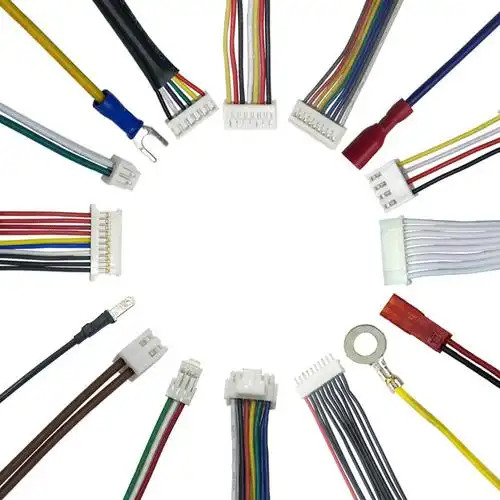
To facilitate installation and maintenance, MIL-C-27500 requires that the insulation of each conductor be color-coded according to a standard scheme. This color coding allows engineers and technicians to easily identify individual conductors, ensuring that they are connected correctly to the appropriate components. The standard specifies a range of colors, including black, red, blue, green, yellow, and white, with specific colors assigned to different functions (e.g., red for positive power, black for ground). Additionally, the standard allows for striped or tracer colors to identify conductors in multi-conductor cables with a large number of conductors.
4. Shielding Specifications: Mitigating Electromagnetic Interference (EMI)
Electromagnetic interference (EMI) is a major concern in aerospace systems, as it can disrupt the transmission of signals and cause malfunctions in sensitive avionics equipment. MIL-C-27500 multi-conductor aviation cable addresses this issue through strict shielding specifications, which are designed to minimize EMI and ensure reliable signal transmission.
4.1 Shielding Types
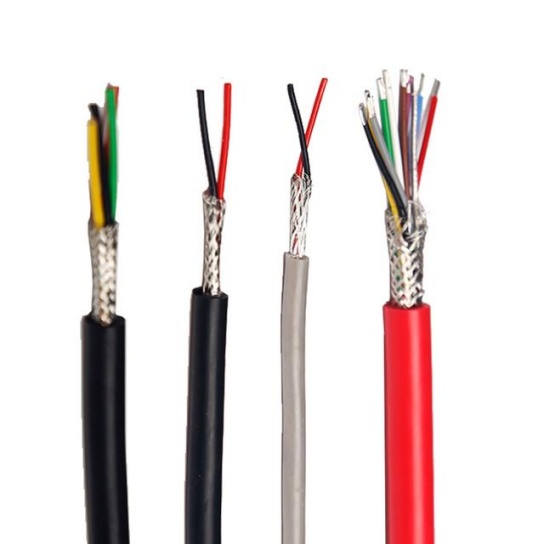
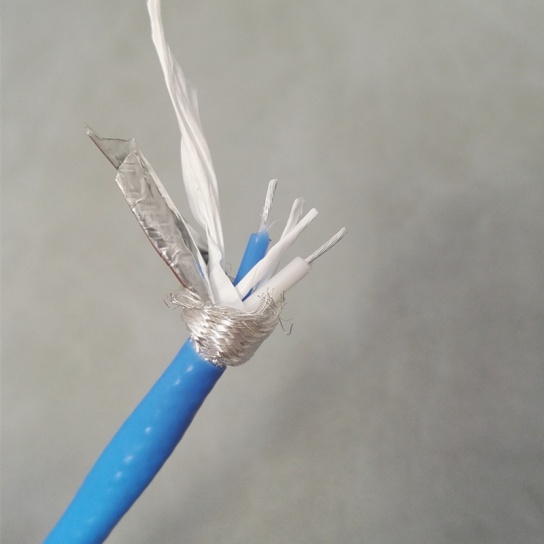
MIL-C-27500 specifies two primary types of shielding for multi-conductor cables: braided shielding and foil shielding. Braided shielding consists of a mesh of copper or tinned copper wires woven around the insulated conductors. This type of shielding provides excellent EMI protection, as the mesh creates a Faraday cage that blocks external electromagnetic fields from interfering with the signals inside the cable. Additionally, braided shielding is flexible and durable, making it suitable for use in applications where the cable is subjected to repeated bending or vibration.
Foil shielding, on the other hand, consists of a thin layer of aluminum or copper foil wrapped around the insulated conductors. Foil shielding provides 100% coverage of the conductors, making it highly effective at blocking high-frequency EMI. However, foil shielding is less flexible than braided shielding and can be easily damaged if the cable is bent excessively. For this reason, many MIL-C-27500 cables use a combination of braided and foil shielding (known as “double shielding”) to provide maximum EMI protection and flexibility.
4.2 Shield Coverage and Drain Wire
The standard specifies the minimum shielding coverage for braided shielding, typically ranging from 85% to 95%. Higher shielding coverage provides better EMI protection, but it also increases the cable’s stiffness and cost. For most aerospace applications, 90% shielding coverage is sufficient to ensure reliable signal transmission. Additionally, MIL-C-27500 requires that shielded cables include a drain wire, which is a small copper wire placed between the shielding and the jacket. The drain wire is used to ground the shielding, allowing any induced EMI to be safely discharged to ground, further enhancing the cable’s EMI protection.
5. Jacket Specifications: Protecting the Entire Cable Assembly
The jacket (or outer sheath) of MIL-C-27500 multi-conductor aviation cable is the final layer of protection, shielding the entire cable assembly from environmental damage, mechanical stress, and chemical exposure. The standard specifies strict requirements for jacket material, thickness, and performance.
5.1 Jacket Material
Similar to insulation materials, the jacket materials used in MIL-C-27500 cables are designed to withstand extreme temperatures and harsh aerospace environments. The most common jacket material is PTFE, which offers excellent thermal stability, chemical resistance, and abrasion resistance. PTFE jackets can withstand temperatures ranging from -65°C to 200°C, making them suitable for use in a wide range of aerospace applications.
In applications requiring greater flexibility, the standard allows for jacket materials such as ETFE or polyurethane (PU). ETFE jackets are more flexible than PTFE and offer similar thermal and chemical resistance, while PU jackets are highly abrasion-resistant and flexible, making them suitable for use in areas where the cable is subjected to frequent movement or contact with other components. Additionally, some MIL-C-27500 cables use a combination of jacket materials, such as a PTFE inner jacket and a PU outer jacket, to provide both thermal protection and abrasion resistance.
5.2 Jacket Thickness and Mechanical Properties
MIL-C-27500 specifies minimum jacket thickness for each cable size to ensure adequate mechanical protection. The jacket thickness varies depending on the cable’s diameter and the application’s requirements. For example, a small multi-conductor cable with 22 AWG conductors may have a jacket thickness of 0.015 inches, while a larger cable with 16 AWG conductors may have a jacket thickness of 0.020 inches. The jacket must also meet strict mechanical property requirements, including resistance to abrasion, impact, and tearing.
Additionally, the standard requires that jackets be flame-retardant, as fire safety is a critical concern in aerospace applications. MIL-C-27500 cables must pass rigorous flame tests, such as the UL 94 V-0 standard, which measures the cable’s ability to resist ignition and prevent the spread of flame. This ensures that the cable does not contribute to the spread of fire in the event of an electrical fault or other emergency.
6. Environmental and Performance Specifications: Withstanding Aerospace Conditions
Beyond the physical components, MIL-C-27500 multi-conductor aviation cable must meet strict environmental and performance specifications to ensure it can withstand the harsh conditions encountered in aerospace applications. These specifications include temperature range, moisture resistance, chemical resistance, vibration resistance, and radiation resistance.
6.1 Temperature Range
As mentioned earlier, MIL-C-27500 cables are designed to withstand extreme temperatures, with most cables rated for operation from -65°C to 200°C. This wide temperature range ensures that the cable can perform reliably in both the cold temperatures of high-altitude flight and the high temperatures of engine compartments. For applications requiring even higher temperature resistance, the standard allows for cables with PFA insulation and jackets, which can withstand temperatures up to 260°C.
6.2 Moisture and Corrosion Resistance
Aircraft are often exposed to moisture, salt, and other corrosive agents, especially during takeoff and landing in coastal areas. MIL-C-27500 cables must be resistant to moisture and corrosion to ensure their performance and lifespan. The use of tinned or silver-plated conductors, PTFE insulation and jackets, and sealed connectors helps to prevent moisture ingress and corrosion. Additionally, the standard requires that cables pass rigorous moisture resistance tests, such as immersion in water or salt spray, without any degradation in performance.
6.3 Vibration and Shock Resistance
Aircraft are subjected to significant vibration and shock during takeoff, landing, and flight. MIL-C-27500 cables must be designed to withstand these mechanical stresses without breaking or becoming damaged. The stranded conductors, flexible insulation and jacket materials, and secure shielding all contribute to the cable’s vibration and shock resistance. The standard requires that cables pass vibration tests, where they are subjected to frequencies ranging from 10 Hz to 2000 Hz, and shock tests, where they are exposed to high-impact forces, without any degradation in electrical or mechanical performance.
6.4 Chemical Resistance
Aerospace environments contain a variety of chemicals, including fuels, oils, solvents, and hydraulic fluids. MIL-C-27500 cables must be resistant to these chemicals to ensure that the insulation and jacket do not degrade or become damaged. The use of fluoropolymer materials (PTFE, ETFE, PFA) provides excellent chemical resistance, as these materials are inert to most aerospace chemicals. The standard requires that cables pass chemical immersion tests, where they are exposed to various aerospace chemicals for a specified period, without any degradation in performance.
7. Conclusion: The Importance of MIL-C-27500 Specifications in Aerospace Applications
MIL-C-27500 multi-conductor aviation cable is a critical component in aerospace systems, and its key specifications are designed to ensure reliability, safety, and performance in the harshest environments. From the copper conductors that enable efficient electrical transmission to the PTFE insulation and jackets that protect against extreme temperatures and chemicals, every aspect of the cable is rigorously defined by the MIL-C-27500 standard. The shielding specifications mitigate EMI, ensuring reliable signal transmission in sensitive avionics systems, while the environmental and performance specifications ensure the cable can withstand vibration, moisture, and other harsh conditions encountered in flight.
For engineers and procurement professionals working in the aerospace industry, understanding these key specifications is essential for selecting the right cable for their application. By adhering to the MIL-C-27500 standard, manufacturers can produce cables that are interchangeable, compatible, and reliable, ensuring the safety and performance of aircraft systems. Whether used in military fighter jets or commercial airliners, MIL-C-27500 multi-conductor aviation cable remains a trusted choice for aerospace applications, thanks to its rigorous and well-defined specifications.