What Are the Key Performance Requirements for eVTOL Aviation Power Cables
The rapid development of electric Vertical Takeoff and Landing (eVTOL) aircraft is reshaping the future of advanced air mobility (AAM), with applications ranging from urban air taxis and emergency medical services to logistics and surveillance. At the core of these electrified propulsion systems lies a critical component often overlooked: the aviation power cable. Unlike conventional aircraft, eVTOLs rely on high-voltage, high-current electrical systems to drive their distributed electric propulsion (DEP) architectures, making power cables indispensable for safe, reliable, and efficient operation. This article delves into the key performance requirements that eVTOL aviation power cables must meet to withstand the unique challenges of aerial electrification, drawing on industry insights and technical standards for actionable guidance.
1. High-Voltage and High-Current Handling Capability
One of the most fundamental performance requirements for eVTOL power cables stems from the high-voltage nature of eVTOL propulsion systems. Traditional commercial aircraft typically operate at voltages below 300V, but modern eVTOLs demand operating voltages approaching 1000V to achieve the power density needed for vertical takeoff, landing, and cruise operations . This elevated voltage places strict demands on power cables to maintain electrical integrity without breakdown, arcing, or partial discharge.
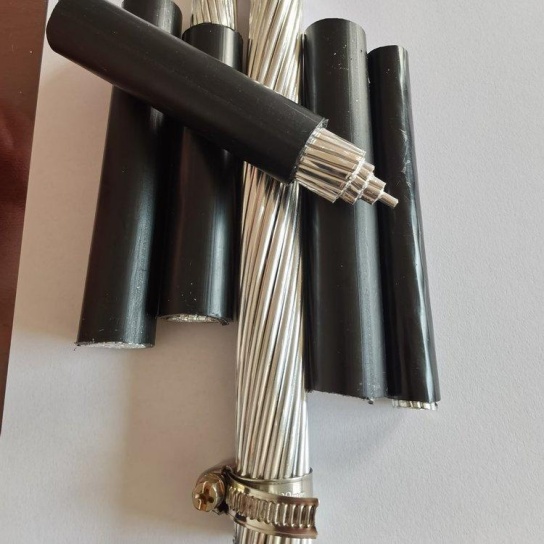
In addition to high voltage, eVTOL power cables must efficiently handle high current loads. The distributed electric propulsion systems in eVTOLs require multiple electric motors to work in tandem, each drawing significant current during peak operations such as takeoff and maneuvering . Cables with inadequate current-carrying capacity will experience excessive temperature rise, leading to insulation degradation, reduced service life, and potential fire hazards. To address this, eVTOL power cables are typically constructed with high-conductivity materials such as oxygen-free tinned copper, silver-plated copper, or lightweight aluminum alloys, which balance current-carrying efficiency with weight constraints .
Partial discharge is another critical concern at high voltages, especially given eVTOLs’ operating altitude range. Unlike commercial airliners that cruise at 40,000 feet with pressurized cabins, eVTOLs operate at lower altitudes (up to 15,000 feet) where air density is lower . Reduced air density increases the risk of partial discharge, which can erode cable insulation over time. As a result, eVTOL power cables must incorporate advanced dielectric materials and insulation designs that suppress partial discharge, even in low-air-density environments .
2. Lightweight and Compact Design (SWaP Optimization)
Weight and size are paramount considerations in eVTOL design, as they directly impact payload capacity, range, and energy efficiency. Every component, including power cables, must adhere to strict Size, Weight, and Power (SWaP) optimization criteria . Traditional rigid power cables or bulky bus bars are ill-suited for eVTOL applications, as they add unnecessary weight and hinder routing in the compact fuselage and around propulsion systems.
To meet SWaP requirements, eVTOL power cables are engineered to be ultra-flexible and lightweight. Manufacturers like Cicoil utilize flat cable designs with shock-absorbing Flexx-Sil™ jacketing, which reduces weight while improving ease of routing in tight spaces . These flat cables are significantly lighter than round cables and can be customized to fit complex geometries, eliminating the need for excess cable length that adds weight . Additionally, lightweight shielding materials such as microfilament ArmorLite™ braiding provide electromagnetic interference (EMI) protection without the weight penalty of traditional heavy shielding .
Material selection plays a key role in SWaP optimization. High-strength, lightweight conductors (e.g., aluminum alloys) and advanced composite insulators (e.g., PEEK) are increasingly used to reduce cable weight without compromising performance . The “Follow-The-Wire” (FTW) design methodology further enhances SWaP efficiency by optimizing cable routing to minimize length and weight, ensuring that power cables integrate seamlessly with other line replaceable units (LRUs) in the eVTOL .
3. Extreme Environmental Resilience
eVTOLs operate in a wide range of harsh environmental conditions, from extreme temperatures and severe vibrations to exposure to chemicals, moisture, and UV radiation. Power cables must withstand these challenges to ensure reliable operation throughout the aircraft’s service life.
Temperature resistance is a critical environmental requirement. eVTOL power cables must perform flawlessly in temperature extremes, from the frigid conditions of high-altitude flight (-104°C) to the high temperatures generated by electric motors and power electronics (+260°C) . Insulation and jacketing materials such as Flexx-Sil™ and Duralectric™ are specifically formulated to maintain flexibility and electrical performance across this broad temperature range, resisting cracking, melting, or brittleness .
Vibration and shock resistance are equally important. eVTOLs experience significant vibration during takeoff, landing, and flight, as well as high g-forces (up to 10 G’s) during maneuvering . Power cables must be mechanically robust to withstand these forces without conductor breakage, insulation damage, or connector separation. Shock-absorbing jacketing and flexible conductor designs help mitigate the impact of vibration, while secure strain relief systems (e.g., lightweight composite conduit fittings) prevent cable fatigue at connection points .
Chemical and environmental resistance is also essential. eVTOL power cables may be exposed to deicing fluids, saltwater (in coastal operations), acid rain, UV light, ozone, humidity, fungus, and grease . Cable jacketing materials must be impervious to these substances to prevent degradation. For example, Cicoil’s Flexx-Sil™ jacketing is resistant to a wide range of chemicals and environmental factors, while meeting strict flammability standards .
4. Flame Resistance and Safety Compliance
Aviation safety standards mandate strict flame resistance for all aircraft components, including power cables. In the event of a fire, power cables must not propagate flames, ignite surrounding materials, or release toxic fumes, which could endanger passengers and crew. eVTOL power cables must comply with rigorous flammability certifications, including UL 94 V-0, FAA Vertical Burn Test 14 CFR 25.853, and UL/CSA VW-1, FT 1 & FT 2 .
Low Smoke Zero Halogen (LSZH) cable jacketing is increasingly required for eVTOL applications. LSZH materials emit minimal smoke and no toxic halogen gases when exposed to fire, improving visibility and air quality in the cabin during an emergency . Additionally, flame-retardant insulation helps prevent the spread of fire along the cable length, limiting damage to the eVTOL’s electrical system and structural components.
Lightning strike protection is another critical safety requirement. eVTOLs, like all aircraft, are vulnerable to lightning strikes, which can induce high-voltage surges in power cables. To mitigate this risk, power cables must be integrated with lightning strike grounding systems and EMI shielding that diverts surge currents away from sensitive electronics . Shielding materials such as braided copper or aluminum provide both EMI protection and a low-resistance path for lightning-induced currents, ensuring the safety and integrity of the power distribution system .
5. EMI/RFI Shielding Performance
eVTOLs rely on a complex network of electronic systems, including avionics, flight controls, sensors, and communication devices, which are sensitive to electromagnetic interference (EMI) and radio frequency interference (RFI). Power cables carrying high-voltage, high-current signals can act as EMI/RFI sources, disrupting the operation of these critical systems. As a result, eVTOL power cables must incorporate effective shielding to minimize EMI/RFI emissions and susceptibility.
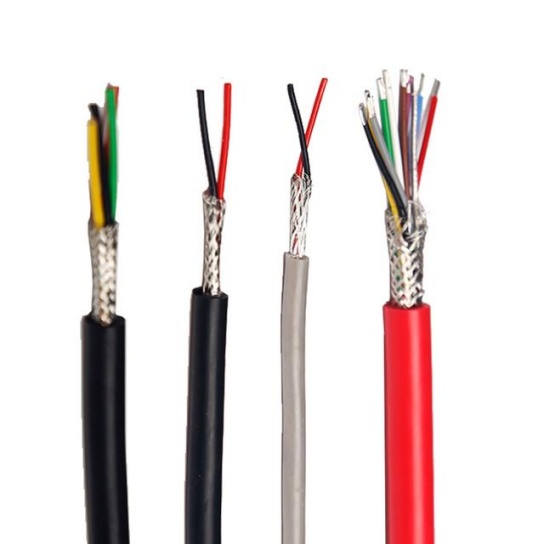
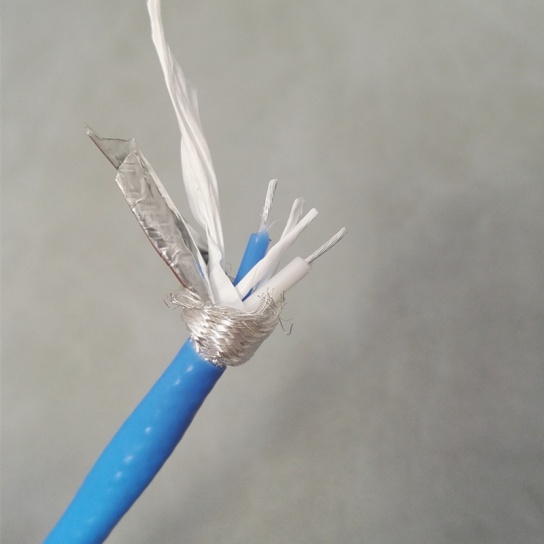
Lightweight EMI/RFI shielding solutions are preferred for eVTOL applications to meet SWaP requirements. Options include microfilament ArmorLite™ braiding, fabric over braiding, and conductive jacketing materials . These shielding systems create a Faraday cage around the cable conductors, containing electromagnetic fields and preventing interference with nearby electronics. Individually shielded conductors are often used in multi-conductor cables to isolate different signal paths, further reducing cross-talk and interference .
Shielding effectiveness is measured by the cable’s ability to attenuate EMI/RFI signals. eVTOL power cables typically require shielding attenuation levels of 60 dB or higher across a wide frequency range (from kHz to GHz) to ensure compatibility with sensitive avionic systems. Proper grounding of the shield is also essential to maximize shielding performance, as ungrounded or poorly grounded shields can act as antennas, amplifying interference .
6. Mechanical Durability and Long-Term Reliability
eVTOL power cables must demonstrate long-term mechanical durability to withstand the rigors of repeated takeoffs, landings, and flight cycles. Cable failures can lead to catastrophic power loss, making reliability a top priority for manufacturers and operators. Key durability requirements include resistance to kinking, cracking, abrasion, and fatigue.
Flexible cable designs are critical for durability, as they reduce stress on conductors and insulation during installation and operation. Flat cables, for example, are less prone to kinking than round cables and can bend more easily without damaging internal conductors . High-strength conductors (e.g., tinned copper) with multiple strands also improve flexibility and fatigue resistance, as they can withstand repeated bending without breaking .
Abrasion resistance is essential for cables routed through tight spaces or near moving components (e.g., landing gear, motor shafts). Cable jacketing materials with high wear resistance, such as Flexx-Sil™ and Duralectric™, protect the internal conductors from damage caused by friction . Additionally, cable management systems (e.g., grommets, conduit) help isolate cables from moving parts, further enhancing durability.
Quality control and certification play a key role in ensuring long-term reliability. eVTOL power cable manufacturers must comply with aerospace standards such as AS9100D/ISO 9001:2015, ITAR, and IPC-J-STD-001 . These standards mandate rigorous testing and inspection processes, including electrical performance testing, environmental exposure testing, and mechanical durability testing, to ensure that cables meet the highest levels of quality and reliability.
Conclusion
eVTOL aviation power cables are critical components that enable the safe, reliable, and efficient operation of advanced air mobility systems. Meeting the key performance requirements outlined in this article—high-voltage/high-current handling, SWaP optimization, extreme environmental resilience, flame resistance, EMI/RFI shielding, and mechanical durability—is essential for ensuring the success of eVTOL technology. As the AAM industry continues to evolve, power cable manufacturers will continue to innovate, developing new materials and designs to meet the growing demands of eVTOL operators and regulators.
For engineers, designers, and procurement professionals involved in eVTOL development, understanding these performance requirements is crucial for selecting the right power cables for their specific applications. By prioritizing cables that meet or exceed these standards, they can help ensure the safety, reliability, and performance of the next generation of electric aircraft.