What are the core application scenarios of 600V aviation power cable
In the aviation industry, where safety, reliability, and efficiency are non-negotiable, every component plays a pivotal role in ensuring seamless operations. Among these critical components, the 600V aviation power cable stands out as a lifeline of the aircraft’s electrical system. Designed to withstand extreme environmental conditions, carry stable power loads, and meet stringent aviation standards, this type of cable is indispensable in numerous key systems of both commercial and military aircraft. Understanding its core application scenarios is not only essential for aviation engineers, maintenance teams, and procurement professionals but also for anyone seeking insights into the intricate electrical infrastructure of modern aircraft. This article delves into the primary application scenarios of 600V aviation power cables, exploring how they contribute to the safety and functionality of various aircraft systems.
1. Main Power Distribution System: The Backbone of Aircraft Electrical Supply
The main power distribution system is the central hub of an aircraft’s electrical network, responsible for transmitting power generated by engines or auxiliary power units (APUs) to all electrical components on board. 600V aviation power cables are the preferred choice for this critical system due to their ability to handle high voltage and current loads efficiently. Unlike lower-voltage cables, 600V cables can transmit power over longer distances with minimal power loss, which is crucial for large aircraft such as commercial airliners (e.g., Boeing 787, Airbus A350) and military transport planes.
In the main power distribution system, these cables connect the main generators to the main distribution panel, where power is split and directed to various subsystems. They also play a key role in connecting the APU to the distribution system, ensuring a reliable backup power source during engine start-up or in case of main generator failure. The high voltage rating of 600V cables allows for a more compact and lightweight electrical system, as they can carry higher power with smaller cross-sectional areas compared to lower-voltage alternatives. This weight reduction is particularly important in aviation, where every pound saved translates to improved fuel efficiency and increased payload capacity.
Moreover, 600V aviation power cables used in main power distribution are designed to withstand the harsh conditions of the aircraft’s engine compartment, including extreme temperatures (ranging from -55°C to 125°C), vibration, and exposure to hydraulic fluids and fuel vapors. Their robust insulation and shielding materials prevent short circuits and electromagnetic interference (EMI), which could otherwise disrupt the operation of sensitive electrical components.
2. Avionics Systems: Ensuring Precision and Reliability in Flight Control
Avionics systems are the “brain” of modern aircraft, encompassing flight control systems, navigation systems, communication systems, and surveillance systems. These systems require a stable and uninterrupted power supply to function accurately, as even a momentary power failure could have catastrophic consequences. 600V aviation power cables are used to supply power to critical avionics components, ensuring that they receive a consistent voltage level regardless of fluctuations in the main power supply.
One of the key applications in avionics is the flight control system, which includes fly-by-wire systems, autopilot systems, and actuator control units. Fly-by-wire systems, which replace traditional mechanical controls with electronic signals, rely heavily on a reliable power supply to transmit commands from the cockpit to the aircraft’s control surfaces (e.g., ailerons, elevators, rudders). 600V cables provide the necessary power to these systems, ensuring that the electronic signals are transmitted accurately and without delay.
Navigation systems, such as GPS receivers, inertial navigation systems (INS), and radar systems, also depend on 600V aviation power cables for their operation. These systems require a stable power supply to maintain accurate positioning and navigation data, which is essential for safe flight operations, especially during long-haul flights or in adverse weather conditions. Additionally, communication systems, including VHF radios, satellite communication systems, and transponders, use 600V cables to ensure clear and reliable communication between the aircraft and air traffic control (ATC).
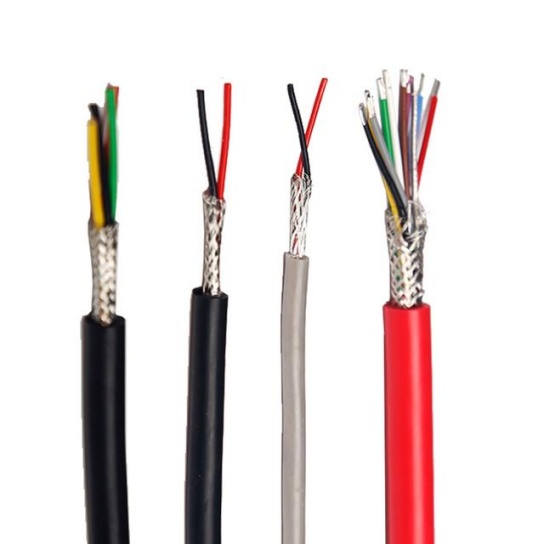
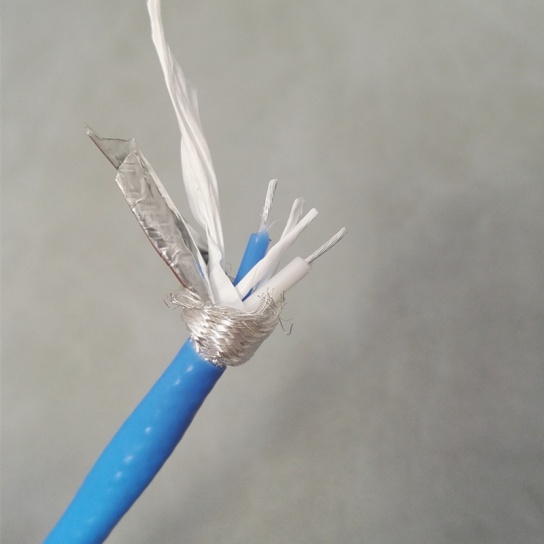
The avionics bay, where most of these systems are located, is a confined space with high levels of EMI from various electrical components. 600V aviation power cables used in avionics are equipped with advanced shielding materials, such as braided copper shielding or aluminum foil shielding, to minimize EMI and prevent cross-talk between different systems. This shielding ensures that the sensitive avionics components receive clean power, free from interference that could affect their performance.
3. Environmental Control Systems (ECS): Maintaining Comfort and Safety for Crew and Passengers
Environmental Control Systems (ECS) are responsible for regulating the temperature, pressure, and air quality inside the aircraft cabin and cockpit. These systems are essential for the comfort and safety of crew and passengers, especially during flights at high altitudes where the outside air is cold, thin, and lacking oxygen. 600V aviation power cables are used to power the various components of the ECS, including air compressors, heat exchangers, blowers, and temperature control units.
Air compressors, which are used to compress outside air and supply it to the cabin, require a high-power input to operate efficiently. 600V cables are ideal for this application as they can carry the high current needed by the compressors without overheating. Heat exchangers, which regulate the temperature of the compressed air, also rely on 600V power cables to power their fans and control valves. Blow ers, which circulate the conditioned air throughout the cabin and cockpit, are another key component powered by 600V cables.
In addition to maintaining comfort, the ECS also plays a critical role in ensuring the safety of the aircraft’s electrical and mechanical systems. By controlling the temperature and humidity in the avionics bay and engine compartment, the ECS prevents overheating and corrosion of sensitive components. 600V aviation power cables used in the ECS are designed to withstand the temperature variations and moisture levels present in these areas, ensuring reliable operation even in extreme conditions.
4. Landing Gear Systems: Powering Safe Takeoff and Landing
The landing gear system is one of the most critical systems in an aircraft, responsible for supporting the aircraft’s weight during takeoff, landing, and ground operations. Modern landing gear systems are highly automated, with electronic control units (ECUs) and hydraulic or electric actuators that require a reliable power supply. 600V aviation power cables are used to power these components, ensuring that the landing gear deploys and retracts smoothly and safely.
Electric landing gear systems, which are becoming increasingly common in modern aircraft (especially in electric and hybrid-electric aircraft), rely heavily on 600V power cables. These systems use electric motors to deploy and retract the landing gear, and the high voltage rating of 600V cables allows for efficient power transmission to these motors. The cables also power the landing gear’s braking systems, which are essential for slowing down the aircraft during landing and preventing it from skidding on the runway.
The landing gear system is exposed to extreme conditions during takeoff and landing, including high impact forces, vibration, and exposure to debris and moisture. 600V aviation power cables used in this system are constructed with durable materials that can withstand these harsh conditions, including abrasion-resistant jackets and flexible conductors that can handle vibration without breaking. Additionally, the cables are designed to be fire-resistant, as the landing gear bay is a high-risk area for fires due to its proximity to the engines.
5. Auxiliary Power Units (APUs): Providing Backup Power and Ground Operations Support
Auxiliary Power Units (APUs) are small gas turbine engines located at the rear of most commercial aircraft. They are used to provide backup power to the aircraft’s electrical system during engine failure, as well as to power the aircraft’s systems during ground operations (e.g., before engine start-up). 600V aviation power cables are used to connect the APU to the aircraft’s main power distribution system, ensuring that power generated by the APU is transmitted efficiently to the necessary components.
During ground operations, the APU powers the ECS, lighting, avionics, and other systems, allowing the aircraft to operate without relying on external power sources (e.g., ground power units). This is particularly useful during boarding and deplaning, as it ensures that the cabin remains comfortable and the avionics systems remain operational. 600V cables are essential for this application as they can carry the high power required by these systems, even when the main engines are not running.
In case of main engine failure during flight, the APU automatically starts and provides backup power to critical systems, such as the flight control system, communication system, and ECS. This backup power is essential for ensuring that the crew can maintain control of the aircraft and safely divert to the nearest airport. 600V aviation power cables ensure that the power generated by the APU is transmitted reliably to these critical systems, even in emergency situations.
6. Military Aircraft Specialized Systems: Meeting Tactical and Combat Requirements
In military aircraft, 600V aviation power cables are used not only in the standard systems mentioned above but also in specialized systems that meet tactical and combat requirements. These include weapon systems, electronic warfare (EW) systems, and surveillance systems, which require high-power and reliable power supplies to operate effectively in combat environments.
Weapon systems, such as missile launchers, gun systems, and bomb release mechanisms, require a high-power input to function. 600V cables are used to power these systems, ensuring that they can be deployed quickly and accurately when needed. Electronic warfare systems, which are used to detect, jam, and deceive enemy radar and communication systems, also rely on 600V power cables for their operation. These systems generate high levels of EMI, and the shielding of 600V cables ensures that they do not interfere with other critical systems on the aircraft.
Surveillance systems, such as airborne early warning (AEW) radars and reconnaissance cameras, require a stable and uninterrupted power supply to capture and transmit high-quality images and data. 600V aviation power cables provide the necessary power to these systems, ensuring that they can operate effectively even in harsh combat environments, such as high altitudes, extreme temperatures, and high levels of vibration.
Conclusion: The Indispensable Role of 600V Aviation Power Cables in Modern Aviation
600V aviation power cables are a critical component of modern aircraft, serving as the lifeline of numerous key systems that ensure the safety, reliability, and efficiency of flight operations. From the main power distribution system that supplies power to all electrical components to specialized systems in military aircraft, these cables play an indispensable role in every aspect of aviation. Their ability to withstand extreme environmental conditions, carry high power loads, and minimize EMI makes them the preferred choice for aviation applications.
As the aviation industry continues to evolve, with the development of electric and hybrid-electric aircraft, the demand for high-voltage aviation power cables, including 600V cables, is expected to grow. These cables will play an even more critical role in powering the next generation of aircraft, ensuring that they are more efficient, environmentally friendly, and safe. For aviation professionals, understanding the core application scenarios of 600V aviation power cables is essential for designing, maintaining, and procuring aircraft systems that meet the highest standards of performance and safety.