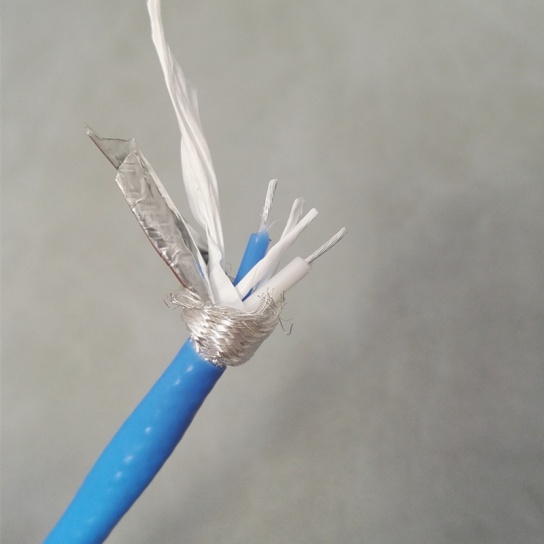
What are the core advantages of aviation fiber optic cable over traditional aviation cable?
The aviation industry is a field that demands extreme precision, reliability, and safety. Every component used in aircraft, from the engine to the smallest communication wire, plays a crucial role in ensuring smooth and secure flight operations. In recent decades, the adoption of aviation fiber optic cables has gradually replaced traditional aviation cables (such as copper cables) in many key applications. This shift is not accidental but driven by the unique advantages that fiber optic technology brings to the aviation environment. For aviation professionals, aircraft manufacturers, and even maintenance teams, understanding the core advantages of aviation fiber optic cables over traditional ones is essential for making informed decisions about aircraft design, upgrades, and maintenance. This article will delve into the key benefits of aviation fiber optic cables, exploring how they outperform traditional cables in terms of weight, bandwidth, electromagnetic interference resistance, safety, durability, and long-term cost-effectiveness.
1. Significantly Reduced Weight: A Critical Advantage for Aviation Efficiency
Weight is one of the most critical factors in aviation design. Every extra kilogram of weight on an aircraft increases fuel consumption, reduces range, and affects overall operational efficiency. Traditional aviation cables, typically made of copper conductors, are inherently heavy due to the dense nature of copper. In contrast, aviation fiber optic cables are composed of lightweight materials such as glass or plastic fibers, surrounded by protective jackets that are also lighter than the insulation and shielding used in copper cables.
To put this into perspective, a typical copper cable used for aviation communication weighs approximately 2.5 kg per 100 meters, while a comparable fiber optic cable weighs only 0.8 kg per 100 meters. This translates to a weight reduction of more than 60%. For large commercial aircraft, which may use several kilometers of cables for various systems (including communication, navigation, flight control, and in-flight entertainment), the total weight savings can be substantial—often hundreds of kilograms. This weight reduction directly contributes to lower fuel costs, as airlines can save on average 0.5% to 1% of fuel consumption for every 100 kg of weight reduced. Over the lifespan of an aircraft, this adds up to significant cost savings, making fiber optic cables a more economical choice in the long run.
Moreover, the reduced weight also improves the aircraft’s maneuverability and payload capacity. With lighter cables, the aircraft can carry more passengers, cargo, or additional equipment without compromising on performance or safety. This is particularly beneficial for regional aircraft and military aircraft, where payload flexibility and operational efficiency are paramount.
2. Superior Bandwidth Capacity: Meeting the Growing Data Demands of Modern Aviation
Modern aviation systems rely heavily on high-speed data transmission. From real-time flight data monitoring and satellite communication to in-flight Wi-Fi services and advanced avionics systems (such as fly-by-wire systems), the demand for bandwidth has increased exponentially in recent years. Traditional copper cables have inherent limitations in terms of bandwidth capacity. Copper conductors transmit electrical signals, which are prone to signal degradation (attenuation) and can only carry a limited amount of data at high speeds over long distances.
Aviation fiber optic cables, on the other hand, transmit data using light signals. Light has a much higher frequency range than electrical signals, allowing fiber optic cables to support significantly higher bandwidth. For example, a single fiber optic cable can transmit data at speeds of up to 100 Gbps or more, while a typical copper cable is limited to speeds of around 1 Gbps for the same distance. Furthermore, fiber optic cables can support multiple data channels simultaneously through a technique called wavelength division multiplexing (WDM), which allows different wavelengths of light to carry separate data streams over a single fiber. This means that a single fiber optic cable can replace multiple copper cables, reducing clutter and simplifying the aircraft’s wiring harness.
The high bandwidth capacity of aviation fiber optic cables is particularly critical for next-generation aviation technologies. For instance, autonomous flight systems require real-time transmission of massive amounts of data from sensors, cameras, and radar systems to the flight control unit. In-flight entertainment systems, which now offer high-definition video streaming and interactive services to passengers, also rely on high-bandwidth cables to deliver a seamless user experience. Additionally, air traffic management systems are moving towards more data-intensive technologies such as Automatic Dependent Surveillance-Broadcast (ADS-B), which requires aircraft to transmit and receive real-time position and flight data. Fiber optic cables ensure that these data-intensive applications run smoothly without signal bottlenecks.
3. Immunity to Electromagnetic Interference (EMI): Enhancing Safety and Reliability
The aviation environment is filled with electromagnetic fields (EMFs) generated by various sources, including the aircraft’s engine, radar systems, navigation equipment, and even external sources such as lightning and radio frequency (RF) signals. Traditional copper cables are highly susceptible to electromagnetic interference (EMI), which can disrupt the signals transmitted through the cables. EMI can cause data errors, signal loss, or even complete system failure—consequences that are catastrophic in aviation, where reliable communication and control are essential for safety.
Aviation fiber optic cables are completely immune to EMI. Since they transmit light signals instead of electrical signals, they do not conduct electricity and are not affected by electromagnetic fields. This immunity makes fiber optic cables ideal for use in critical aviation systems, such as flight control, navigation, and engine monitoring. For example, in fly-by-wire systems, which replace mechanical control cables with electronic signals, any disruption to the signal can lead to loss of control of the aircraft. Fiber optic cables ensure that these signals are transmitted accurately and reliably, even in the presence of strong electromagnetic interference.
In addition to EMI immunity, fiber optic cables are also resistant to radio frequency interference (RFI) and crosstalk. Crosstalk is a phenomenon where signals from one cable interfere with signals from another adjacent cable— a common issue with copper cables. Since fiber optic cables do not emit electromagnetic signals, they do not cause crosstalk, and their signals are not disrupted by other cables. This makes fiber optic cables a more reliable choice for complex wiring systems in aircraft, where multiple cables are routed in close proximity.
4. Enhanced Safety: Lower Fire Risk and Non-Conductivity
Safety is the top priority in the aviation industry, and the choice of cables can have a significant impact on aircraft safety. Traditional copper cables pose several safety risks, particularly in the event of a fire. Copper is a conductor of electricity, and in a fire, damaged copper cables can short-circuit, leading to the spread of fire or electric shocks to crew members. Additionally, the insulation materials used in copper cables (such as PVC) can release toxic gases and smoke when burned, which can be harmful to passengers and crew, and can also obscure visibility in the cabin and cockpit.
Aviation fiber optic cables are inherently safer than copper cables in several ways. First, they are non-conductive, so they do not carry electricity. This eliminates the risk of short-circuits and electric shocks, even if the cable is damaged. Second, the materials used in fiber optic cables (such as glass fibers and flame-retardant jackets) are designed to be fire-resistant. They do not burn easily, and when exposed to high temperatures, they release minimal smoke and toxic gases. This is crucial in the event of an aircraft fire, as it helps to protect the lives of passengers and crew, and allows for safer evacuation.
Furthermore, fiber optic cables are not prone to sparking, which is another significant safety advantage. Sparking from damaged copper cables can ignite flammable materials in the aircraft, such as fuel vapors or insulation. Since fiber optic cables do not conduct electricity, they cannot spark, reducing the risk of fire ignition. This makes fiber optic cables particularly suitable for use in fuel-rich environments, such as near the aircraft’s fuel tanks or engine compartments.
5. Greater Durability and Longevity: Withstanding Harsh Aviation Environments
Aircraft operate in harsh environments, including extreme temperatures (from -60°C at high altitudes to 150°C near engines), high humidity, vibration, and mechanical stress. Traditional copper cables are vulnerable to damage under these conditions. Copper conductors can corrode over time, especially in humid environments, leading to signal degradation and cable failure. The insulation on copper cables can also crack or degrade due to extreme temperatures and vibration, exposing the conductor and increasing the risk of short-circuits.
Aviation fiber optic cables are designed to withstand these harsh conditions. The glass or plastic fibers used in fiber optic cables are resistant to corrosion, and the protective jackets are made from durable materials such as Teflon or Kevlar, which are resistant to extreme temperatures, moisture, and chemicals. Additionally, fiber optic cables are more flexible than copper cables, making them less prone to damage from vibration and mechanical stress. They can bend around tight corners in the aircraft’s wiring harness without breaking or losing signal quality.
The durability of fiber optic cables translates to a longer lifespan. On average, aviation fiber optic cables have a lifespan of 25 to 30 years, compared to 15 to 20 years for traditional copper cables. This longer lifespan reduces the need for frequent cable replacements, which is not only cost-effective but also minimizes aircraft downtime. For airlines, reducing downtime is crucial, as every hour an aircraft is grounded for maintenance results in lost revenue.
6. Lower Long-Term Cost-Effectiveness: Beyond Initial Investment
It is true that the initial cost of aviation fiber optic cables is higher than that of traditional copper cables. However, when considering the long-term costs, fiber optic cables are often more cost-effective. This is due to several factors, including lower fuel costs (resulting from reduced weight), longer lifespan, lower maintenance costs, and reduced downtime.
As mentioned earlier, the weight reduction from using fiber optic cables leads to significant fuel savings over the life of the aircraft. For a large commercial aircraft that flies 3,000 hours per year, the fuel savings from a 200 kg weight reduction can be as much as $50,000 per year (based on an average fuel cost of $1.50 per liter). Over a 20-year lifespan, this amounts to $1 million in fuel savings—far exceeding the initial cost difference between fiber optic and copper cables.
Additionally, fiber optic cables require less maintenance than copper cables. Copper cables are prone to corrosion, crosstalk, and EMI-related issues, which require regular inspection and repair. Fiber optic cables, on the other hand, are immune to these issues, and their durable design means that they require minimal maintenance. This reduces the labor costs associated with cable maintenance and minimizes aircraft downtime. Furthermore, the high bandwidth capacity of fiber optic cables means that they can support future data demands without the need for costly upgrades or replacements. This future-proofing is particularly valuable in the rapidly evolving aviation industry, where new technologies and applications are constantly emerging.
Conclusion
Aviation fiber optic cables offer a wide range of core advantages over traditional aviation cables, making them the preferred choice for modern aircraft design and upgrades. From significantly reducing weight and improving fuel efficiency to providing superior bandwidth, immunity to EMI, enhanced safety, greater durability, and lower long-term costs, fiber optic cables address the key challenges and demands of the aviation industry. As aviation technology continues to advance, the reliance on high-speed, reliable, and safe data transmission will only increase, further solidifying the role of fiber optic cables in the future of aviation. For aviation professionals and airlines looking to improve operational efficiency, safety, and cost-effectiveness, investing in aviation fiber optic cables is a strategic decision that delivers long-term value.