The relentless pursuit of greater fuel efficiency, extended range, and higher payload in modern aircraft is driving a fundamental shift in systems design. One of the most significant, yet often hidden, enablers of this evolution is the widespread adoption of lightweight aviation cable.
While seemingly minor, the cables running through an aircraft’s fuselage are a critical weight contributor. By transitioning to advanced lightweight aviation cables, major OEMs are achieving substantial weight savings, enhancing overall system performance, and supporting more sustainable flight operations.
Why Lightweight Aviation Cable is a Top Priority
A modern commercial airliner can contain over 100 km of wiring, with the cable harness often being the third heaviest system after the engine and airframe. In a long-haul aircraft, this harness can weigh over a ton. Reducing this weight directly translates to:
Lower Fuel Burn:Every kilogram saved reduces fuel consumption. Industry data suggests that for every 1 kg of weight saved, an aircraft can save approximately 0.03 kg of fuel per 1,000 km, equating to roughly 0.09 kg less CO₂ emissions.
Extended Range & Payload:Reduced weight allows for longer flight ranges or increased payload capacity without compromising performance.
Lower Lifecycle Costs:Less weight also means reduced stress on components and lower operational costs over the aircraft’s lifespan.
Recognizing this, major aircraft OEMs are systematically replacing traditional, heavier cables with advanced lightweight solutions across new platforms and retrofit programs.
Key Technologies in Advanced Lightweight Aviation Cables
Modern lightweight aviation cables achieve their performance through a combination of innovative materials and optimized designs. Here are the primary technologies being adopted:
1. Advanced Conductors
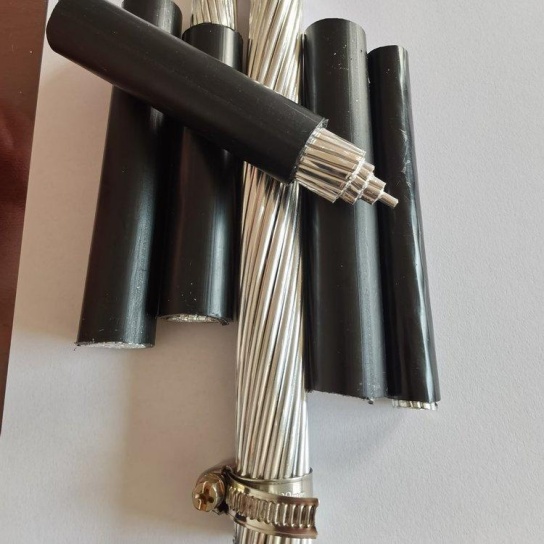
Aluminum Alloy Conductors:Offer up to 50% weight reduction compared to traditional copper, with about 61% of its conductivity. This makes them suitable for various avionics systems where managing weight versus conductivity is crucial.
New Composite Conductors:Research into conductors using carbon fibers infused with silver particles shows promise. These can be significantly lighter than copper while maintaining acceptable conductivity and offering superior thermal conductivity for high-heat environments.
Magnesium-Lithium Alloy Conductors:With a density as low as 0.96–1.65 g/cm³ (compared to copper’s ~8.9 g/cm³), these alloys can reduce cable weight by 30–50% or more. When paired with optimized insulation and shielding, they meet stringent aerospace requirements for flexibility and high-frequency performance.
2. High-Performance Insulation & Jacketing
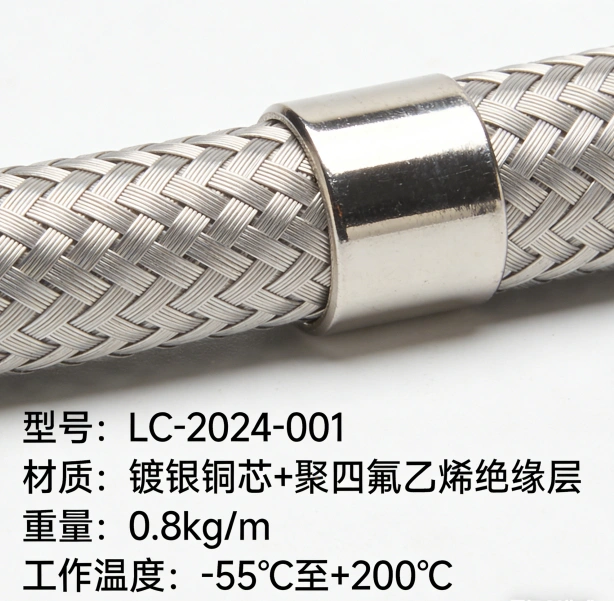
Fluoropolymers (PTFE, ePTFE, FEP):These materials provide excellent dielectric properties, high-temperature resistance (often up to 200–260°C), and low weight. They are the standard for many aerospace cables, supporting long service lives of 20–30 years and compliance with standards like AS22759.
Engineered Fluoropolymer Jackets:Used in high-speed data cables, these jackets offer a unique combination of low friction for easy routing and high resistance to abrasion, chemicals, and temperature extremes.
3. Lightweight Shielding & Constructions
Smaller, High-Density Designs:Many new cables use constructions that are 30-40% smaller in diameter than traditional counterparts. For example, some shielded twisted pair (STP) cables are 30% smaller and 50% lighter than standard oval designs.
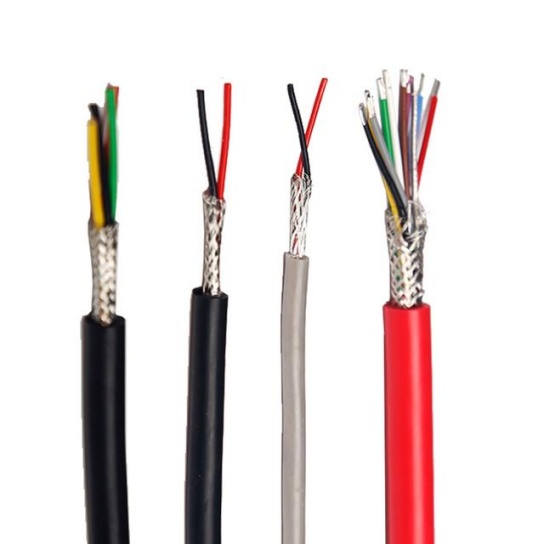
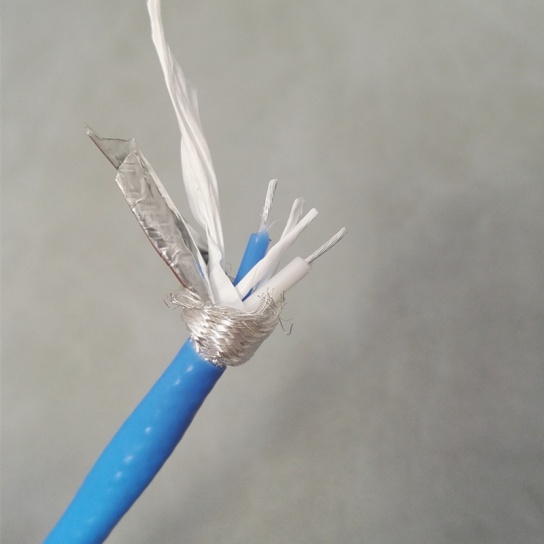
Advanced Shielding:To maintain signal integrity in smaller cables, manufacturers employ sophisticated shielding like double-braided shields (providing up to 92% coverage) and optimized foil/braid combinations. This ensures low attenuation and minimal crosstalk even in congested harnesses.
4. Fiber Optic & Hybrid Cables
Fiber Optics:For high-bandwidth applications, fiber optic cables offer a dramatic weight reduction (up to ten times lighter than equivalent copper cables) and immunity to electromagnetic interference (EMI). A single fiber can carry data at 10 Gbit/s or more, replacing multiple heavy copper pairs.
Hybrid Cables:These integrate optical fibers and electrical conductors into a single, lightweight assembly. This reduces the total cable count and overall weight for systems requiring both high-speed data and power/control lines.
Performance Comparison: Traditional vs. Lightweight Cables
The table below highlights the tangible differences between conventional and advanced lightweight aviation cables.
Lightweight aviation cables are now pervasive across all major aircraft systems:
Avionics & Flight Control:High-speed data buses (Ethernet, CAN, ARINC 429) use lightweight twisted pairs and quadrax cables that are up to 40% smaller and 30-50% lighter, saving over 5 kg per aircraft.
In-Flight Entertainment (IFE) & Cabin Networks:High-density Cat5e/6A/8 Ethernet cables support HD/4K streaming with minimal weight and diameter, easing installation in tight spaces.
RF & Communications:New lightweight coaxials (e.g., PFLX/TFLX) are up to 75% lighter than legacy RG/MIL-C-17 cables while meeting stringent FAA flammability and shielding requirements for systems like GPS and TCAS.
Power Distribution:Research into high-frequency inverters shows potential for a 50-90% reduction in cable cross-section, leading to significant weight savings (10-100 kg) and improved efficiency.
Sensors, EO/IR & UAVs:Lightweight coaxes and twisted pairs are vital for reducing payload and extending mission endurance in unmanned aircraft and high-performance platforms.
Partnering with a Specialized Lightweight Cable Manufacturer
As an aircraft OEM or system integrator, selecting the right lightweight aviation cable partner is critical. Look for a manufacturer with:
Deep Material Expertise:Mastery of PTFE, ePTFE, FEP, and other aerospace-grade polymers.
Comprehensive Product Portfolio:Solutions for power, data, RF, and hybrid applications.
Certified Quality System:Compliance with AS9100 and rigorous traceability for all materials and processes.
Proven Flight Heritage:A track record of cables flying on commercial, military, and space platforms.
Engineering Support:The ability to collaborate on custom designs for weight, size, and performance optimization.
FRS: Your Strategic Partner for Lightweight Aviation Cable
At FRS, we specialize in the design and manufacture of high-performance, lightweight aviation cables tailored to the demanding needs of next-generation aircraft. Our focus is on delivering measurable weight savings, guaranteed signal integrity, and full compliance with global aerospace standards.
Our team of engineers works closely with OEMs to develop customized cable solutions, from conductor selection and material optimization to final qualification and testing. We are committed to supporting your goals for greater efficiency, range, and sustainability.
Ready to reduce weight and enhance performance?Contact the FRS team today to discuss your next project.
Product Overview: aviation cable
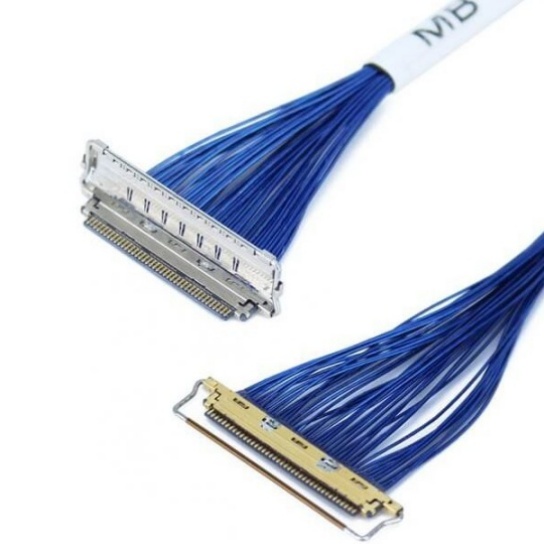
Machine vision cables are specialized components designed to ensure high-speed, stable data transmission and signal integrity in automated imaging systems. Key features include:
Technical Specifica.
When it comes to aviation safety and performance, every component must meet the highest standards—especially electrical systems. High-Temp Resistant Aviation Electrical Cables are engineered to deliver unparalleled durability and reliabi.
Premium Aviation Cables for Aircraft Systems: Elevating Safety and Performance
In the demanding world of aviation, reliability and precision are non-negotiable. Premium Aviation Cables for Aircraft Systems are engineered to meet the r.
From commercial airliners to military drones, aviation cables are the unsung heroes ensuring reliable power, data, and signal transmission in the skies. These specialized cables are engineered to withstand extreme conditions—think turbule.
Designed to meet the rigorous demands of modern aviation and defense systems, Lightweight MIL-SPEC Aviation Wiring Cables represent the pinnacle of reliability, durability, and performance. Engineered to comply with stringent military sp.