Next-Gen UAV Aviation Signal Cables Support Real-Time Radar Data Transmission for Surveillance
In modern UAV surveillance, the ability to transmit high-fidelity radar and sensor data in real time is non-negotiable. Whether for border patrol, maritime domain awareness, or urban security, the UAV’s onboard radar and electronic intelligence (ELINT) payloads must deliver continuous, high-bandwidth data to ground stations or command centers. The UAV aviation signal cableis the critical link that makes this possible.
This article explores how next-generation UAV aviation signal cables are engineered to meet the extreme demands of real-time radar data transmission for surveillance applications.
The Mission-Critical Role of UAV Aviation Signal Cables
Surveillance UAVs, such as the Heron family or integrated SIGINT platforms, are increasingly equipped with active electronically scanned array (AESA) radars, synthetic aperture radars (SAR), and multi-band communication systems. These payloads generate vast amounts of data that must be transmitted to ground stations with minimal latency and maximum fidelity.
The UAV aviation signal cableis the physical backbone of this data path. It connects high-frequency radar front-ends, signal processing units, and downlink radios. Any compromise in its performance—be it signal loss, phase instability, or mechanical failure—can degrade situational awareness or, worse, lead to mission failure.
Key Performance Requirements for Surveillance-Grade Cables
- Wide Bandwidth & High Frequency Support Modern UAV radars and SIGINT payloads operate from L-band to Ku-band and beyond. Cables must maintain low-loss performance at these high frequencies to prevent signal degradation. For instance, aerospace RF coaxial assemblies for AESA radars often require insertion losses below 0.5 dB/m at 18 GHz to ensure reliable data transmission.
- Low Loss & Phase Stability Real-time radar imaging and target tracking demand precise phase coherence across the signal chain. Phase-stable cables ensure that the integrity of wideband radar pulses and modulated signals is preserved, which is vital for high-resolution surveillance and accurate target parameter estimation.
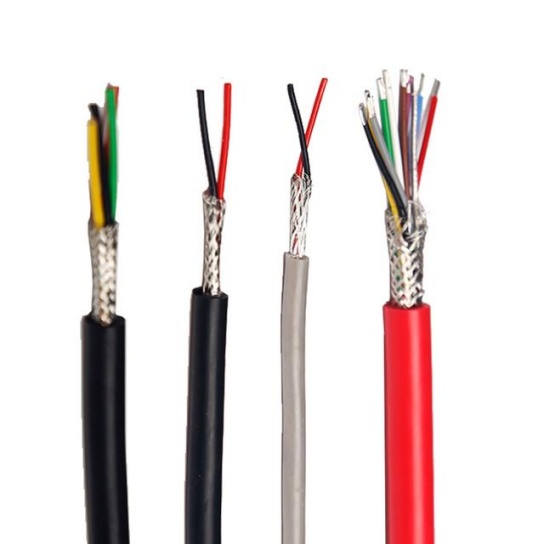
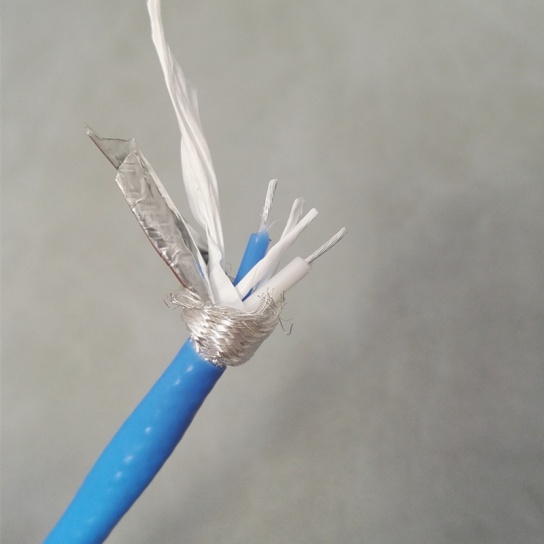
- Robust Shielding & EMI/RFI Immunity UAVs are electrically noisy environments filled with radar, radios, and high-power processors. Multi-layer shielding (foil, braid, and sometimes double-shielded constructions) is essential to prevent electromagnetic interference (EMI) from corrupting sensitive signals. This is particularly critical for cables connecting to radar warning receivers or electronic warfare (EW) systems.
- Mechanical Durability UAVs endure high vibration, rapid acceleration, and extreme temperatures. Cables must be flexible yet durable, with robust jacketing materials that can withstand these stresses over thousands of flight hours. Lightweight composite shields and advanced polymers are increasingly used to reduce weight while maintaining performance.
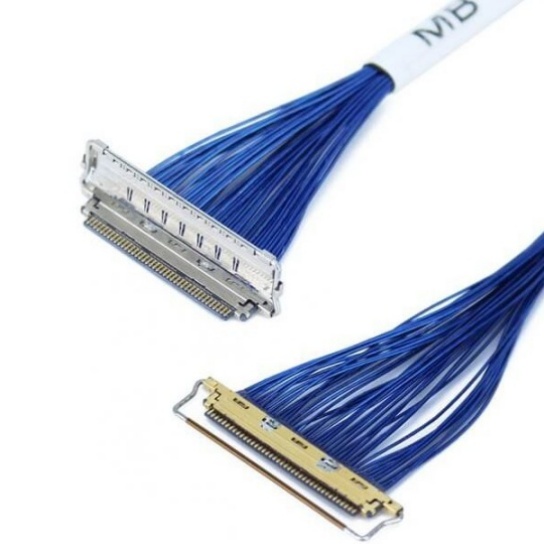
- Miniaturization & Weight Optimization Every gram saved in a UAV contributes to longer endurance and higher payload capacity. Micro-coaxial and twinax cables are now widely used to connect gimbaled sensors and high-speed data links in compact UAV avionics bays, where space is at a premium.
Engineering Features of Next-Gen UAV Signal Cables
- Advanced Conductor and Dielectric Materials High-purity silver-plated copper conductors and low-loss dielectrics like PTFE or PEEK are standard in high-performance aerospace cables. These materials minimize attenuation and maintain stable impedance, which is crucial for preserving signal integrity over long cable runs in UAVs.
- Precision-Engineered Connectors Connectors are a common point of failure. Next-gen UAV cables use precision-machined, miniature RF connectors (e.g., SMA, TNC, or custom board-level interfaces like I-PEX MHF) that ensure low VSWR and reliable mating cycles, even in high-vibration environments.
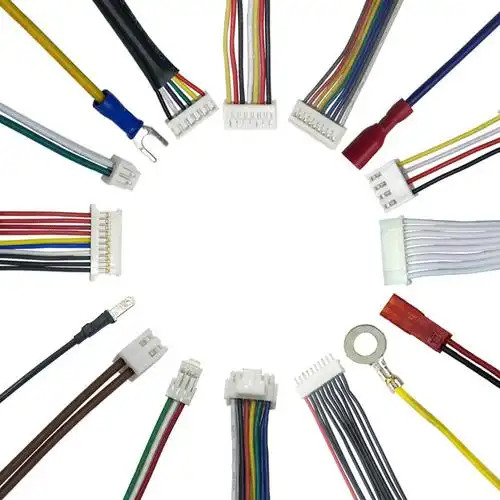
- Custom Cable Assemblies for Complex Routing UAVs have intricate internal layouts. Custom cable harnesses are designed to navigate tight spaces while maintaining bend radius and shielding integrity. This includes routing cables away from high-noise sources and ensuring proper grounding to avoid ground loops.
- Compliance with Aerospace Standards Military and civil UAV cables must meet stringent standards like MIL-DTL-17, DO-160, and ARINC 600. These standards ensure that cables can withstand environmental stresses and maintain performance over the UAV’s service life.
Applications in Real-Time Surveillance
- Border and Maritime Surveillance UAVs equipped with synthetic aperture radar (SAR) rely on high-bandwidth data links to transmit detailed imagery to ground stations. Low-loss aviation signal cables ensure that the radar data is delivered in real time, enabling authorities to detect and track vessels or vehicles in real time.
- Urban Security and Critical Infrastructure Protection In urban environments, UAVs are used for monitoring critical infrastructure and detecting unauthorized drones. Integrated SIGINT payloads capture and analyze radar and communication signals, requiring high-speed data cables to transmit this information to command centers for immediate action.
- Search and Rescue (SAR) Operations In SAR missions, UAVs equipped with radar and EO/IR sensors provide real-time situational awareness to rescue teams. Reliable signal cables ensure that video feeds and sensor data are transmitted without interruption, even in adverse weather conditions.
The Future of UAV Aviation Signal Cables
As UAVs evolve to support higher frequencies (e.g., millimeter-wave radar) and more complex missions, the demand for advanced signal cables will continue to grow. Future cables will likely feature:
- Higher Frequency Support:Cables capable of operating at 40 GHz and beyond to support next-gen radar and communication systems.
- Lightweight Materials:Advanced composites and nanomaterials to further reduce weight without compromising performance.
- Integrated Sensing:Cables with embedded sensors for real-time health monitoring and predictive maintenance.
In conclusion, the UAV aviation signal cableis a critical enabler of modern surveillance capabilities. By combining advanced materials, precision engineering, and rigorous testing, next-gen cables ensure that UAVs can deliver real-time radar data with the reliability and performance required for mission success.