New Upgrade: PTFE Insulated Micro Coaxial Cable Redefines Aviation High-Temperature Performance
The aviation industry stands at the forefront of technological innovation, where every component plays a critical role in ensuring safety, reliability, and operational efficiency. Among these components, cables are the unsung heroes that facilitate seamless communication, power transmission, and data transfer within aircraft systems. As aircraft engines become more powerful, avionics systems grow more complex, and operational environments become harsher, the demand for high-performance cables that can withstand extreme conditions has never been greater. In response to this demand, the new upgrade of PTFE insulated micro coaxial cable has emerged as a game-changer, redefining the standards for high-temperature performance in aviation applications.
Polytetrafluoroethylene (PTFE), commonly known by the brand name Teflon, has long been recognized for its exceptional properties, making it an ideal material for insulation in demanding industries. However, the latest advancement in PTFE insulated micro coaxial cables takes these properties to new heights, addressing the specific challenges faced by the aviation sector. This article delves into the key features of this upgraded cable, its advantages over traditional alternatives, real-world aviation applications, and why it has become the preferred choice for aerospace engineers and manufacturers.
Understanding the Critical Role of Cables in Aviation High-Temperature Environments
Aviation systems operate in a wide range of extreme environments, with high temperatures being one of the most pervasive and challenging. From the engine compartment, where temperatures can exceed 200°C (392°F) during normal operation, to the avionics bays that generate significant heat due to dense electronic components, cables in these areas are subjected to relentless thermal stress. Traditional cables with conventional insulation materials, such as PVC or polyethylene, often fail to withstand these conditions, leading to insulation degradation, short circuits, or even system failures—consequences that are catastrophic in aviation.
Beyond temperature resistance, aviation cables must also meet stringent requirements for flame retardancy, chemical resistance, low smoke emission, and mechanical durability. Regulatory bodies such as the Federal Aviation Administration (FAA) and the European Union Aviation Safety Agency (EASA) have established strict standards to ensure that all aircraft components, including cables, adhere to the highest safety protocols. The new PTFE insulated micro coaxial cable not only meets these standards but exceeds them, offering a comprehensive solution that addresses the multifaceted challenges of aviation environments.
Key Upgrades of PTFE Insulated Micro Coaxial Cable: Redefining High-Temperature Performance
The upgraded PTFE insulated micro coaxial cable is engineered with precision to deliver unparalleled performance in high-temperature aviation applications. Its key upgrades are rooted in advanced material science and innovative design, making it stand out from both traditional PTFE cables and other insulation alternatives. Below are the core enhancements that set this cable apart:
1. Enhanced PTFE Insulation: Superior Thermal Stability
The primary upgrade lies in the advanced PTFE insulation formula. Unlike standard PTFE, which has a continuous operating temperature of up to 260°C (500°F), the upgraded insulation is optimized to maintain structural integrity and electrical performance even at temperatures reaching 300°C (572°F) for short durations and 280°C (536°F) continuously. This is a critical improvement for modern aircraft, where engine and avionics temperatures are rising due to increased power density and miniaturization of components.
The enhanced PTFE insulation achieves this through a proprietary manufacturing process that reduces impurities and improves molecular structure, enhancing its thermal stability. This means the cable can operate reliably in the hottest parts of the aircraft, such as near the turbine engine or exhaust systems, without any degradation of insulation properties. Additionally, the insulation retains its flexibility at high temperatures, preventing brittleness and cracking that can occur with other materials, ensuring long-term durability.
2. Micro Coaxial Design: Space Efficiency and Signal Integrity
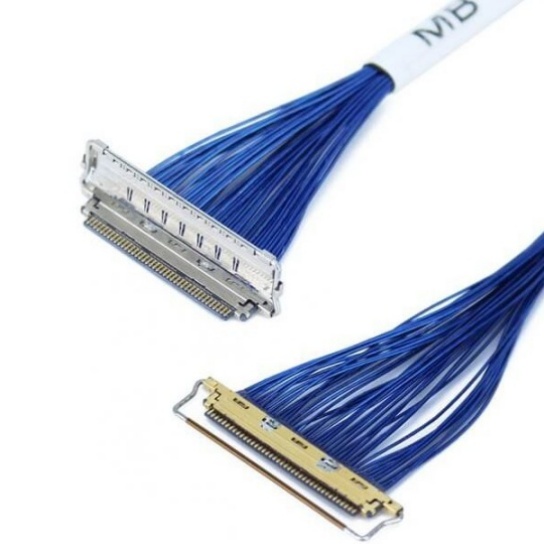
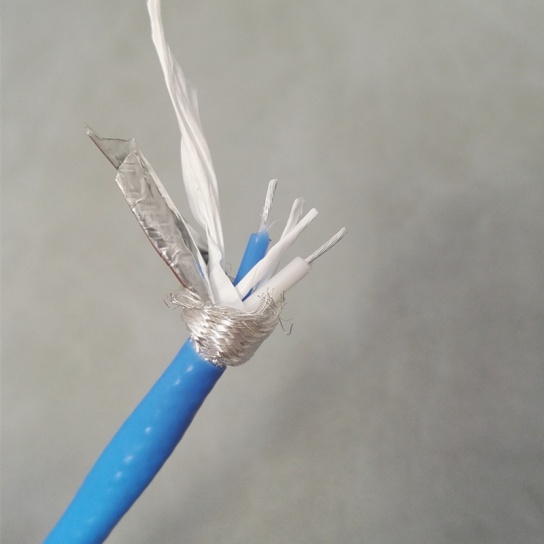
Another significant upgrade is the micro coaxial design, which addresses the growing need for space-efficient cables in modern aircraft. As avionics systems become more compact and integrated, the available space for cabling is increasingly limited. The micro coaxial structure of this cable features a small outer diameter (as low as 0.8mm) while maintaining a high-performance inner conductor and shield, allowing for dense packaging in tight spaces.
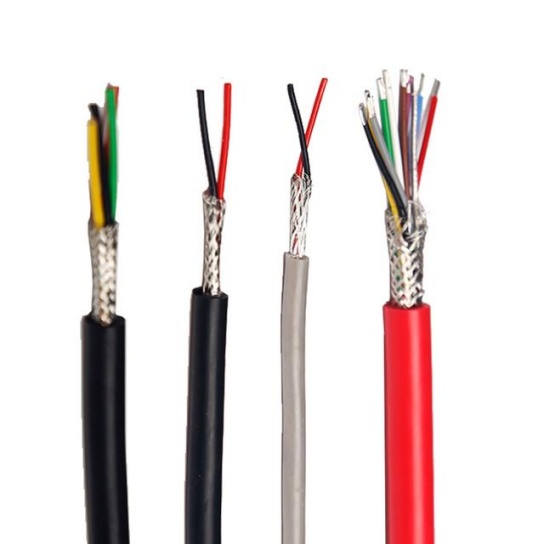
Beyond space efficiency, the micro coaxial design ensures exceptional signal integrity—a critical factor for aviation communication and data transfer systems. The cable’s inner conductor is made of high-purity copper or silver-plated copper, which minimizes signal loss, while the double shielding (braided shield + foil shield) provides 95%+ coverage, effectively reducing electromagnetic interference (EMI) and radio frequency interference (RFI). In aviation, where multiple electronic systems operate simultaneously, EMI/RFI can disrupt signals, leading to communication errors or system malfunctions. The upgraded PTFE insulated micro coaxial cable’s shielding design eliminates this risk, ensuring clear and reliable signal transmission even in high-interference environments.
3. Improved Mechanical Durability: Withstanding Aviation’s Rigors
Aviation cables are not only exposed to high temperatures but also to mechanical stress, including vibration, bending, and abrasion. The upgraded PTFE insulated micro coaxial cable is engineered to withstand these rigors, with a rugged outer jacket (typically made of PFA or FEP, materials compatible with PTFE and offering additional mechanical protection) that resists abrasion, cuts, and chemical exposure. The cable’s construction also enhances its flexibility, allowing it to be routed around tight corners and complex geometries without compromising performance.
Furthermore, the cable undergoes rigorous mechanical testing, including repeated bending tests, vibration tests (in accordance with MIL-STD-810), and tensile strength tests, ensuring it can withstand the harsh mechanical conditions of flight—from takeoff and landing to turbulence and long-term operation.
Why PTFE Insulation Is Superior to Other Materials for Aviation High-Temperature Applications
While there are other high-temperature insulation materials available (such as silicone rubber, polyimide, and FEP), PTFE stands out as the ideal choice for aviation applications, and the upgraded version further amplifies these advantages. Below is a comparison of PTFE with other common insulation materials, highlighting why it is the preferred option:
PTFE vs. Silicone Rubber
Silicone rubber is often used for high-temperature applications, with a maximum continuous operating temperature of around 180°C (356°F). However, it falls short of PTFE’s thermal stability, especially at the extreme temperatures found in aircraft engine compartments. Additionally, silicone rubber is more susceptible to degradation from chemicals (such as jet fuel, hydraulic fluids, and lubricants) commonly used in aviation, whereas PTFE is chemically inert, resisting attack from almost all industrial chemicals. Silicone also emits more smoke when exposed to fire, which is a significant safety hazard in enclosed aircraft cabins—PTFE, on the other hand, is flame-retardant and emits minimal smoke, meeting FAA/EASA smoke density requirements.
PTFE vs. Polyimide
Polyimide (e.g., Kapton) has excellent high-temperature resistance, with a continuous operating temperature of up to 260°C (500°F). However, it is significantly more brittle than PTFE, making it prone to cracking and damage during installation and operation. Polyimide is also more expensive than PTFE, increasing overall system costs. The upgraded PTFE insulation offers comparable or better thermal performance than polyimide while maintaining flexibility and affordability, making it a more practical choice for aviation applications.
PTFE vs. FEP
FEP (fluorinated ethylene propylene) is a fluoropolymer similar to PTFE, with a continuous operating temperature of up to 200°C (392°F). While FEP is easier to process than PTFE, it lacks PTFE’s superior thermal stability and chemical resistance. The upgraded PTFE insulated micro coaxial cable outperforms FEP cables in high-temperature environments, making it suitable for the most demanding aviation applications where FEP would fail.
Real-World Aviation Applications of Upgraded PTFE Insulated Micro Coaxial Cable
The upgraded PTFE insulated micro coaxial cable is designed to meet the needs of a wide range of aviation applications, particularly those requiring high-temperature resistance, space efficiency, and reliable signal transmission. Below are some of the key applications where this cable is making a significant impact:
1. Engine Compartment Systems
The engine compartment is the hottest area of an aircraft, with temperatures often exceeding 250°C (482°F). Cables in this area are used to connect sensors, actuators, and control systems, which monitor and regulate engine performance. The upgraded PTFE insulated micro coaxial cable’s ability to withstand temperatures up to 280°C continuously makes it ideal for this application. Its chemical resistance also ensures it is not damaged by jet fuel, oil, or other fluids present in the engine compartment.
2. Avionics Systems
Modern avionics systems, including flight control systems, navigation systems, and communication systems, generate significant heat due to their high processing power and dense packaging. These systems require cables that can transmit high-frequency signals with minimal loss while operating in high-temperature environments. The micro coaxial design of the upgraded cable allows it to fit into tight spaces in avionics bays, while its superior signal integrity ensures reliable communication between components. Additionally, its flame-retardant and low-smoke properties make it safe for use in enclosed avionics compartments.
3. In-Flight Entertainment (IFE) Systems
IFE systems rely on high-speed data transmission to deliver video, audio, and internet services to passengers. The upgraded PTFE insulated micro coaxial cable’s low signal loss and high EMI/RFI shielding make it ideal for this application, ensuring clear and uninterrupted transmission of high-definition content. Its compact design also allows for easy routing through the aircraft’s cabin structure, without adding unnecessary weight or taking up valuable space.
4. Military Aviation Applications
Military aircraft operate in even harsher environments than commercial aircraft, with exposure to extreme temperatures, high levels of vibration, and chemical warfare agents. The upgraded PTFE insulated micro coaxial cable meets the strict requirements of military standards (such as MIL-DTL-17) and is used in a variety of military aviation applications, including radar systems, weapons control systems, and communication systems. Its durability and reliability make it a critical component for ensuring mission success and crew safety.
Performance Testing and Certification: Meeting Aviation’s Strict Standards
To ensure it meets the rigorous requirements of the aviation industry, the upgraded PTFE insulated micro coaxial cable has undergone extensive testing and certification processes. These tests are designed to validate its performance under extreme conditions and ensure compliance with global aviation standards. Some of the key tests include:
- High-Temperature Aging Test: The cable is exposed to continuous high temperatures (280°C) for 1000+ hours to assess insulation degradation. After testing, the cable’s electrical properties (such as insulation resistance and signal loss) are measured to ensure they remain within acceptable limits.
- Flame Retardancy Test: Conducted in accordance with FAR 25.853 (FAA) and CS 25.853 (EASA), this test evaluates the cable’s ability to resist flame propagation and limit smoke emission. The upgraded PTFE insulated micro coaxial cable passes this test with minimal smoke and no flame spread, ensuring it does not contribute to the spread of fire in the event of a malfunction.
- EMI/RFI Shielding Effectiveness Test: The cable’s shielding performance is tested in a controlled environment to measure its ability to block external interference and prevent signal leakage. The double-shielded design ensures shielding effectiveness of 85dB+ at frequencies up to 10GHz, meeting the strict EMI/RFI requirements of aviation systems.
- Mechanical Vibration Test: The cable is subjected to random vibration (in accordance with MIL-STD-810) to simulate the mechanical stress of flight. After testing, the cable’s construction and performance are inspected to ensure no damage has occurred.
- Chemical Resistance Test: The cable is exposed to common aviation chemicals (jet fuel, hydraulic fluid, lubricants, and cleaning agents) to assess its resistance to degradation. The PTFE insulation and outer jacket remain intact, ensuring the cable’s performance is not compromised by chemical exposure.
The cable has also obtained certifications from leading aviation authorities, including FAA Parts Manufacturing Approval (PMA) and EASA Technical Standard Order (TSO) certification, confirming its compliance with global aviation safety standards.
The Future of Aviation Cables: Innovation Driven by Performance Demands
As the aviation industry continues to evolve—with the development of electric aircraft, supersonic travel, and more advanced avionics systems—the demand for high-performance cables will only grow. The upgraded PTFE insulated micro coaxial cable represents a significant step forward in meeting these demands, but innovation in cable technology is ongoing. Manufacturers are already exploring ways to further enhance the cable’s performance, including increasing its temperature resistance, reducing its weight, and improving its signal transmission capabilities for 5G and beyond.
One area of focus is the integration of advanced materials, such as carbon fiber-reinforced PTFE, which could further improve the cable’s mechanical strength while reducing weight. Another area is the development of self-healing PTFE insulation, which could repair minor damage automatically, increasing the cable’s lifespan and reliability. These innovations will ensure that PTFE insulated micro coaxial cables remain at the forefront of aviation technology, supporting the next generation of aircraft systems.
Conclusion: Why the Upgraded PTFE Insulated Micro Coaxial Cable Is the Right Choice for Aviation
The new upgrade of PTFE insulated micro coaxial cable is more than just a technical improvement—it is a redefinition of high-temperature performance in aviation cables. Its enhanced PTFE insulation, micro coaxial design, and improved mechanical durability make it the ideal solution for the most demanding aviation applications, from engine compartments to avionics systems. By exceeding strict aviation standards for thermal stability, flame retardancy, signal integrity, and chemical resistance, this cable ensures the safety, reliability, and efficiency of aircraft operations.
For aerospace engineers, manufacturers, and operators, the upgraded PTFE insulated micro coaxial cable offers a competitive advantage, reducing the risk of system failures, lowering maintenance costs, and supporting the integration of advanced aircraft technologies. As the aviation industry continues to push the boundaries of performance, this cable will remain a critical component, enabling innovation and ensuring the highest levels of safety and reliability.