Micro Coaxial Cable Emerges as Key Solution for 40G Base-T Aviation Ethernet Systems
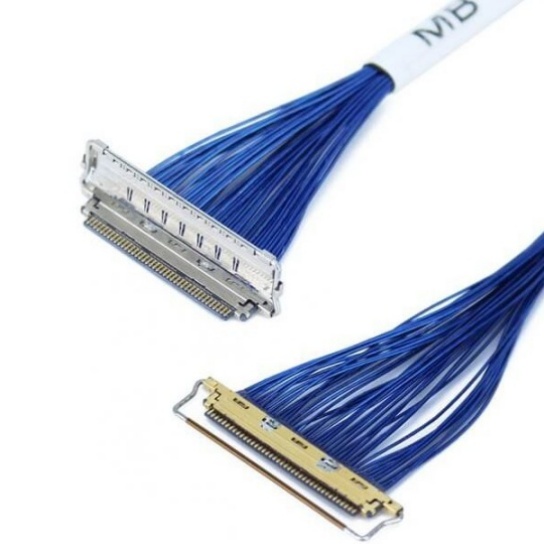
The demand for higher data rates in next-generation avionics is pushing 40G Base-T from a data center concept into airborne and defense applications. To achieve 40 Gbit/s over twisted-pair copper, the IEEE 802.3bq standard imposes extreme requirements on cable bandwidth, noise, and loss. In this context, the 40G Base-T aviation Ethernet cableis not just a Cat8 cable in a new jacket; it represents a highly engineered system where micro coaxial cabledesign plays a critical role in signal integrity.
📡 Understanding 40GBASE-T and Its Aviation Relevance
40GBASE-T is standardized under IEEE 802.3bq to deliver 40 Gbit/s over 4-pair balanced twisted-pair copper. Its key characteristics are:
Bandwidth:1–1600 MHz operational, with cable systems specified to 2000 MHz.
Distance:Maximum channel length is approximately 30 meters, sufficient for most aircraft and vehicle backplanes.
Encoding:Uses PAM-16 modulation with sophisticated FEC, demanding very low noise and jitter.
Connectivity:Maintains RJ45 compatibility, allowing a smooth migration path from 1G/10G.
In aviation, this enables applications like:
Core Avionics Backbone:Linking core routers/switches in the avionics bay.
Cabin Networks:Supporting IFEC, in-seat power, and high-resolution displays.
Sensor & Data Fusion:Handling high-rate data from radars, EO/IR, and mission computers.
UAV/UAM Systems:Powering high-bandwidth links between control surfaces, payloads, and data recorders.
The short link lengths in these environments make 40GBASE-T a practical alternative to optical fiber, offering lower cost, easier installation, and high reliability.
💡 Why Micro Coaxial Design is Central to 40G Performance
A 40G Base-T link is an aggregate of four high-speed differential pairs, each functioning like a wideband transmission line. At 2 GHz, even minor imperfections cause significant signal degradation. This is where micro coaxial design principles become essential:
Precise Impedance Control:Each pair must maintain a stable 100 Ω differential impedance. Deviations cause reflections and mode conversion, degrading eye diagrams and BER. Micro-coax techniques ensure this control across tight bends and temperature extremes.
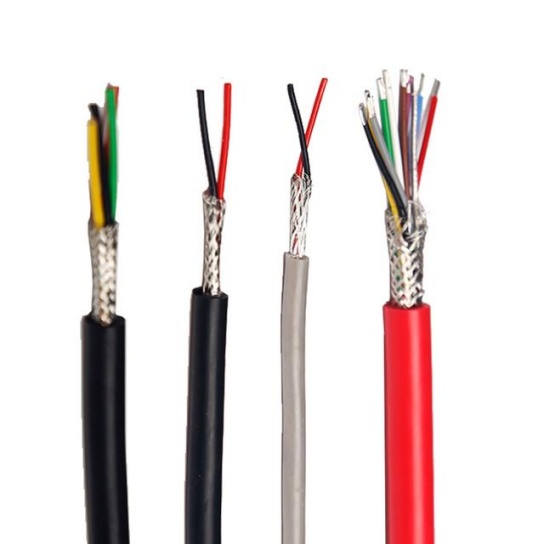
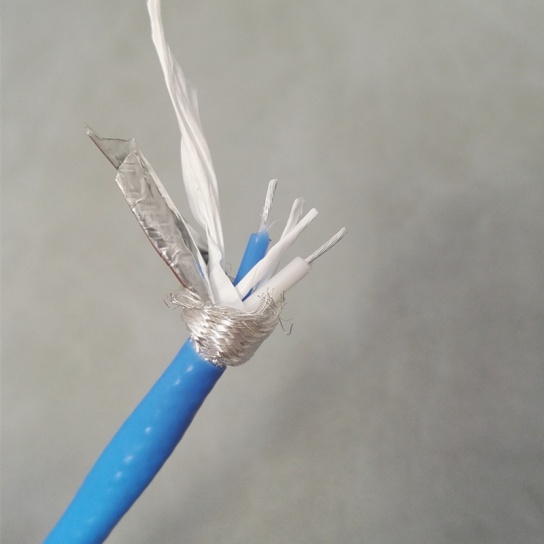
Superior Shielding:Aviation environments are rich in EMI. Individual pair shielding (PiMF) or overall shielding (S/FTP) is crucial to suppress alien crosstalk (AXT) and maintain signal integrity. Micro-coax cables often use multiple shields (foil + braid) to achieve >55 dB shielding effectiveness.
Low-Loss Dielectrics:To combat high-frequency attenuation, low-loss dielectrics like expanded PTFE (ePTFE) or fluoropolymers are used. These materials maintain stable impedance and minimize signal loss, especially in flexing harnesses.
Controlled Geometry:Consistent conductor spacing, twist rates, and pair-to-pair spacing are vital for managing crosstalk and delay skew. Micro-coax manufacturing provides the precision needed for these parameters to be held within tight tolerances.
Mechanical Robustness:Aviation cables must be lightweight, flexible, and resistant to crushing, vibration, and temperature. Advanced micro-coax constructions balance these needs with the electrical performance required for 40G speeds.
🛠️ Key Electrical & Mechanical Parameters
When evaluating a 40G Base-T aviation Ethernet cable, focus on these critical parameters:
Impedance:100 Ω ± 10 Ω differential.
Bandwidth:≥ 2 GHz (Cat8 performance).
Insertion Loss:Must meet or exceed TIA-568.2-D Cat8 limits up to 2 GHz.
Return Loss:≥ 10–15 dB at 1–1600 MHz, increasing at higher frequencies.
NEXT & AXT:Very high values (e.g., >55 dB at 100 MHz) that increase with frequency.
Shielding Effectiveness:>55 dB is a common aerospace target.
Operating Temperature:-55 °C to +125/150/200 °C, depending on qualification.
Weight & Diameter:Minimizing these is crucial for aircraft weight savings.
Flex Life & Crush Resistance:Essential for harness reliability in moving aircraft sections.
🔍 Differentiating 40G Base-T Cable Types
Not all “Cat8” cables are suitable for aviation. Here’s a comparison:
The performance of the 40G Base-T aviation Ethernet cable is only as good as its connection. Key considerations include:
Connector Type:ARINC 664-compliant or MIL-DTL-38999 series connectors with size 8 or 10 contacts are common. Octaxial contacts (e.g., Glenair SuperFly Datalink) are also used for their superior EMI performance.
Cable-to-Connector Transition:The transition from the micro-coax geometry of the cable to the connector’s PCB or contact field is a critical point for impedance discontinuities. Precision stamped contacts and optimized backplane footprints are essential.
PoE/UPoE Support:40GBASE-T supports high-power PoE. The cable must handle the associated temperature rise and dielectric stress without exceeding its current-carrying capacity.
🚀 System-Level Design and Qualification
Selecting the right cable is only half the battle. A robust system design includes:
Channel Budgeting:Calculate the total loss budget (cable, connectors, PCB traces) and compare it to the standard’s requirements. Remember that 40GBASE-T has less margin than 10GBASE-T.
Simulation:Use 3D EM tools to model the cable, connectors, and transitions. This helps identify potential impedance mismatches and crosstalk issues early in the design phase.
Qualification:Aerospace cables must pass stringent tests, including:
Flammability:ABD0031, FAR Part 25, EN3479.
Mechanical:Vibration, shock, flex, and crush.
Environmental:Temperature, humidity, and fluid exposure.
🏭 Why Partner with an Experienced 40G Cable Manufacturer
Designing and manufacturing a high-performance 40G Base-T aviation Ethernet cable requires deep expertise. An experienced partner like FRS offers significant advantages:
Proven Micro-Coax Expertise:FRS specializes in custom micro coaxial cable assemblies, understanding the interplay between materials, geometry, and performance.
Aviation-Grade Qualifications:FRS products are built to meet the demanding requirements of the aerospace and defense industry, ensuring reliability in critical applications.
Customization & Rapid Prototyping:FRS can work with your team to develop tailored solutions, from material selection to final qualification, accelerating your time-to-market.
Comprehensive Support:FRS provides expert support throughout the entire product lifecycle, from initial concept to after-sales service.
For your next-generation avionics or UAV project, trust FRS to deliver the high-performance 40G Base-T aviation Ethernet cable solutions you need.
Product Overview: aviation cable
Machine vision cables are specialized components designed to ensure high-speed, stable data transmission and signal integrity in automated imaging systems. Key features include:
Technical Specifica.
Designed to meet the rigorous demands of modern aviation and defense systems, Lightweight MIL-SPEC Aviation Wiring Cables represent the pinnacle of reliability, durability, and performance. Engineered to comply with stringent military sp.
When it comes to aviation safety and performance, every component must meet the highest standards—especially electrical systems. High-Temp Resistant Aviation Electrical Cables are engineered to deliver unparalleled durability and reliabi.
Premium Aviation Cables for Aircraft Systems: Elevating Safety and Performance
In the demanding world of aviation, reliability and precision are non-negotiable. Premium Aviation Cables for Aircraft Systems are engineered to meet the r.
From commercial airliners to military drones, aviation cables are the unsung heroes ensuring reliable power, data, and signal transmission in the skies. These specialized cables are engineered to withstand extreme conditions—think turbule.