How to select aviation coaxial cable for radar anti-interference needs
Executive Summary: The Anti-Interference Imperative
In modern radar systems, the coaxial cable is not merely a passive wire; it is a critical component of the RF front-end. For airborne radar, the coax must deliver high-fidelity signals while rejecting interference in a harsh environment filled with powerful transmitters, digital processors, and jammers.
Selecting the right aviation coaxial cable involves a structured approach:
- Define Radar & Environment: Determine the frequency band, power level, and environmental conditions (temperature, vibration, EMI sources).
- Set Electrical Targets: Establish key metrics like impedance (typically 50 Ω), VSWR, insertion loss, shielding, and phase stability.
- Choose Construction: Select the appropriate cable construction (solid, semi-rigid, flexible) and shielding based on the targets and space constraints.
- Validate & Integrate: Perform system-level validation, considering connector interfaces, cable routing, and installation practices to ensure the final assembly meets the anti-interference goals.
Radar System & EMI Environment
Radar Signal Chain & Cable Role
A typical airborne radar transmits high-power RF pulses and receives faint echoes. The coaxial cable links the antenna to the transmitter/receiver (TR) module. Any loss or distortion in this path degrades key performance metrics:
- Detection Range: Increased loss weakens return signals, reducing the maximum range.
- Target Resolution & Accuracy: Phase and amplitude errors in the cable can distort the antenna pattern and pointing angle.
- False Alarm Rate: Interference or reflections picked up by the cable can be misinterpreted as targets.
The Hostile EMI Environment
Aircraft are electrically noisy environments. The coax must perform reliably amidst:
- High-Power Radios: VHF/UHF comms, IFF, and satellite links.
- Digital Systems: High-speed data buses and processors generating wideband noise.
- Jammers & Countermeasures: In military aircraft, the cable must resist intentional and unintentional interference.
- Natural Phenomena: Lightning and precipitation static.
The goal is to ensure the signal entering the receiver is as clean as possible, free from externally induced noise or internally reflected energy.
Key Electrical Parameters for Anti-Interference
1. Characteristic Impedance (Z₀)
- Standard: 50 Ω for most radar and avionics RF systems; 75 Ω is rare in airborne radar front-ends.
- Tolerance: Tighter tolerances (e.g., ±1–2 Ω) are required for high-frequency or phased-array radars to minimize VSWR and reflections. Standards like EN 4604-007:2025specify 50 Ω ±2–3 Ω for enhanced versions.
2. Voltage Standing Wave Ratio (VSWR)
VSWR is a direct measure of impedance mismatch. For radar, low VSWR is paramount.
- General Guideline: VSWR ≤ 1.2 up to the max operating frequency.
- Critical Systems: For phased-array or EW systems, VSWR ≤ 1.1 is often targeted.
- Standards: The enhanced version of EN 4604-007:2025specifies a maximum VSWR of 1.35 at 6 GHz, a significant improvement for sensitive systems.
3. Insertion Loss & Power Handling
- Insertion Loss: Must be minimized to preserve signal-to-noise ratio (SNR) and detection range. Loss is frequency-dependent; a cable good at L-band may be inadequate at X-band.
- Power Handling: The cable must withstand high peak and average power without overheating or dielectric breakdown. This is a key parameter in standards like EN 4604-007:2025, which specifies minimum power handling from 8000 W at 50 MHz down to 700 W at 6 GHz.
4. Shielding Effectiveness (SE)
This is the cable’s first line of defense against EMI.
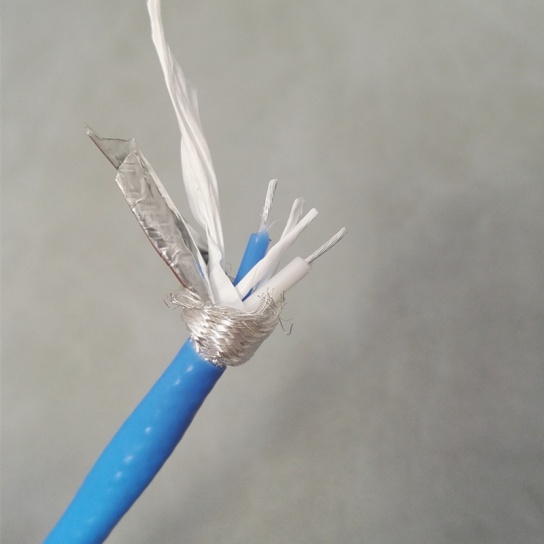
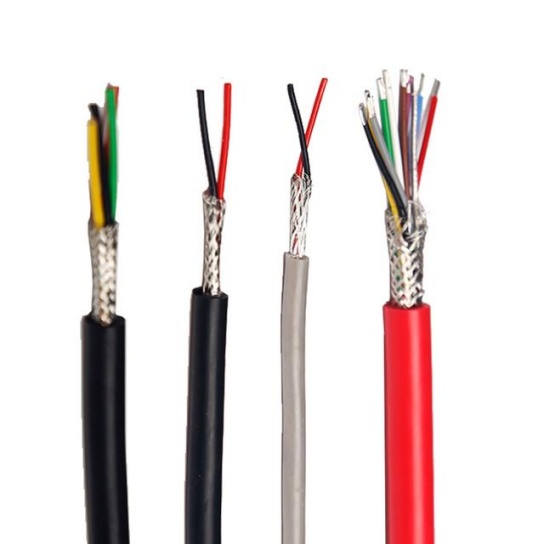
- Multi-Layer Shielding: High-performance aviation coaxes use a combination of a bonded foil and a high-coverage braid.
- SE Performance: Well-designed cables can achieve >90 dB SE at lower frequencies, and >100 dB/ft at frequencies up to 2 MHz.
- Standards: EN 4604-007:2025mandates a 100% coverage foil shield plus a braid, ensuring excellent EMI suppression.
5. Phase Stability
Critical for beamforming in phased-array radars, where the relative phase of signals to each element must be precise.
- Phase vs. Temperature: Cables use low thermal coefficient of phase (TCP) dielectrics (e.g., PTFE, ePTFE, foam fluoropolymers) to minimize phase drift.
- Phase vs. Flex: Cables are designed to minimize phase change when bent, often specified in degrees per GHz per unit bend.
Construction Choices for EMI Resistance
Center Conductor
- Solid Silver-Plated Copper: Offers the lowest loss and best high-frequency performance, ideal for high-performance radar.
- Copper-Clad Aluminum (CCA): A lighter, more economical option for less critical paths, but with slightly higher loss.
Dielectric
- PTFE (Teflon): The industry standard for high-temperature aerospace use, with a low and stable dielectric constant.
- Foam Fluoropolymers: Used in ultra-low-loss cables to further reduce loss and improve phase stability.
Shielding
- Single Braid: Found in lighter, more flexible cables (e.g., RG-58), with ~85-90% coverage.
- Double Shield (Foil + Braid): Provides >95-99% coverage, essential for high-EMI environments.
- Triple Shield: Used in extreme EMI environments, like some RG-393/U cables with dual silver-plated shields for high shielding effectiveness.
Jacket
- FEP, ETFE, Polyurethane: Common in aerospace for their resistance to heat, fluids, and abrasion. EN 4604-007:2025specifies an FEP jacket rated for -55°C to +200°C.
Aviation Standards & Compliance
Selecting a cable that meets recognized standards is non-negotiable for flight safety and certification.
- EN 4604-007:2025: A key European standard for 50 Ω, up to 6 GHz coaxial cables. It specifies detailed electrical, mechanical, and environmental requirements, with an enhanced version (code “R”) for sensitive systems requiring tighter VSWR control.
- MIL-DTL-17: A widely used U.S. military standard. Cables like RG-142 and RG-393/U are specified to this standard, ensuring they meet rigorous performance criteria for high-frequency, high-temperature, and high-vibration environments.
- MIL-PRF-39012: The standard for RF connectors, ensuring the connector-cable interface maintains the cable’s shielding and impedance integrity.
Step-by-Step Cable Selection Workflow
- Characterize the Radar: Define frequency band, average/peak power, dynamic range, and whether it’s a mechanically scanned or phased-array system.
- Define the Environment: Consider installation location (pressurized bay, near engine, external radome) to determine temperature, vibration, and fluid exposure needs.
- Set Electrical Targets: Establish maximum allowable VSWR, insertion loss, shielding effectiveness, and phase stability.
- Match Construction to Application:
- Short Runs, Tight Space: Use high-quality flexible cables (e.g., low-loss variants of LMR, RG-400).
- Long Runs, High Frequencies: Use ultra-low-loss cables with foam dielectrics.
- Extreme EMI: Use double- or triple-shielded constructions (e.g., RG-393/U, EN 4604-007 WN/R).
- Validate System Performance: Perform link budget analysis and, if possible, measure VSWR, insertion loss, and shielding effectiveness in a representative environment.
Connectors, Routing & Installation
The performance of the cable assembly is only as good as its installation.
- Connector Choice: Use high-quality connectors that meet MIL-PRF-39012 and are designed for the cable. Ensure the center contact, dielectric, and outer conductor are all properly matched and dimensioned.
- Shielding Integrity: Maintain 360° shielding at the connector. Use proper crimping or soldering techniques and adhesive-lined boots to prevent moisture ingress.
- Cable Routing:
- Separation: Route coax at least 2-3 inches away from ignition wiring; cross power cables at 90°.
- Bend Radius: Do not exceed the manufacturer’s minimum bend radius to avoid performance degradation.
- Support: Use cushioned clamps at regular intervals (e.g., every 8-12 inches) to manage vibration.
- Environmental Sealing: In areas prone to moisture, use hermetically sealed connectors or potting. Ensure the outer jacket is resistant to aviation fluids.
Practical Examples
Example 1: X-Band Weather Radar on a Regional Jet
- Requirements: 9.3–9.5 GHz, ~10 kW peak power, 10–15m cable run, pressurized cabin.
- Likely Solution: A flexible, low-loss 50 Ω coax like Times Microwave LMR-400 or an equivalent. VSWR target ≤ 1.2. RG-400 is a minimum; LMR-400 offers lower loss for the long run.
Example 2: Ku/Ka-Band AESA Radar on a Fighter Jet
- Requirements: 15–18 GHz, high phase stability, extreme EMI, tight spaces.
- Likely Solution: Phase-stable, low-loss microwave coax (e.g., Times Microwave MaxGain) with a high-coverage braid and robust jacket. Connectors must be precision-machined for low VSWR at Ka-band.
Example 3: L-Band Surveillance Radar in a Helicopter
- Requirements: 1–2 GHz, severe vibration, high EMI from multiple systems.
- Likely Solution: A ruggedized 50 Ω coax like RG-214 or RG-393/U, known for high shielding and temperature resistance. Careful routing and support are critical.
Future Trends
- Miniaturization: Development of smaller-diameter, low-loss cables to support higher-density avionics.
- Advanced Materials: New dielectric and conductor materials to further reduce loss and weight.
- Hybrid Systems: Combining coax with fiber optics for very long runs, reserving coax for the most critical, high-frequency segments near the antenna.