High-Voltage eVTOL Aviation Power Cables Now Compatible with 800V Battery Systems
As the eVTOL industry shifts from prototype testing to commercial operations, a key trend is the widespread adoption of 800V battery systems. This evolution demands a new generation of high-voltage eVTOL aviation power cablesengineered to meet more than just carrying current. They must address voltage stress, weight, thermal loads, and safetywithin the confined space of an aircraft.
This article examines why 800V architectures are becoming the standard, the resulting challenges for aviation cables, and the essential design features for next-generation eVTOL power cables.
🚁 Why 800V? The Shift to Higher-Voltage eVTOL Systems
The move to 800V (or higher) battery systems in eVTOLs is driven by fundamental electrical principles: P = V × I. To deliver the hundreds of kilowatts needed for vertical takeoff and landing, designers can either push a large current (I) at a low voltage (V) or use a higher voltage to reduce the current.
The industry is choosing the latter for several critical reasons:
- Reduced Current, Reduced Losses: Halving the current for the same power cuts resistive (I²R) losses to a quarter. This improves overall system efficiency—a crucial factor for battery-powered flight—and reduces the need for heavy, complex cooling systems.
- Lighter Power Cables: For the same power, a higher voltage allows the use of smaller-diameter conductors, directly reducing the aircraft’s weight. In eVTOLs where every kilogram impacts payload and range, this is a primary design objective.
- Faster, More Efficient Charging: High-voltage systems are essential for rapid charging, enabling shorter ground times between flights—a key economic driver for high-utilization air taxis.
- Convergence with EV Technology: Automotive OEMs and Tier 1s are increasingly involved in eVTOL development. Leveraging mature 800V EV platforms and components (like SiC inverters) accelerates development and reduces costs.
Key Insight: The 800V (or 800–1000V) architecture is becoming the de facto standard for high-performance eVTOLs, creating a clear demand for power cables that are fully compatible with these high-voltage, high-power, and high-cycle-duty operations.
⚡ New Design Challenges at 800V
Designing aviation power cables for 800V eVTOLs presents challenges far beyond those for traditional 28V/270V aircraft systems.
- Higher Voltage Stress & Partial Discharge At 800V DC, the electric field stress on cable insulation is significantly higher. Combined with lower air density at altitude, this increases the risk of partial discharge—a leading cause of long-term insulation failure. Aerospace cables must be designed to suppress partial discharge, ensuring a long service life and safe operation up to their rated voltage.
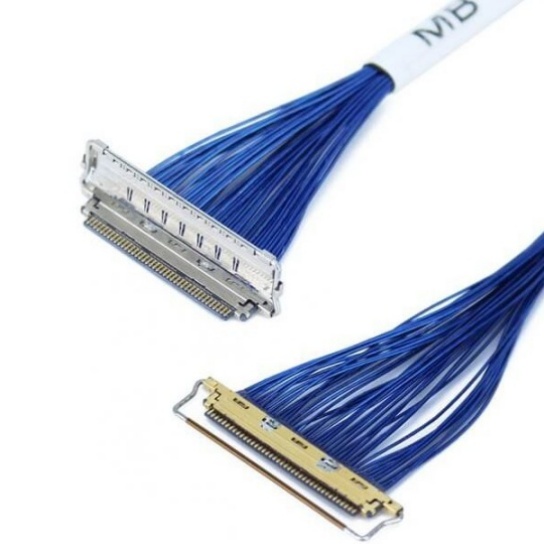
- Extreme SWaP Constraints (Size, Weight, and Power) eVTOLs cannot afford the bulky wiring and heavy busbars of traditional aircraft. Power cables must be lightweight, flexible, and compactto fit within tight spaces and complex 3D routing paths. This has spurred innovation in flat, lightweight cablesand the use of high-strength conductors and advanced insulation materials to reduce weight without sacrificing performance.
- Harsh Operating Environment eVTOL power cables must withstand severe conditions:
- Wide Temperature Range: From -40°C at altitude to over 125°C near power electronics.
- Mechanical Stress: High vibration, shocks (multiple G-loads), and bending fatigue from repeated flight cycles.
- Chemical & Environmental Exposure: De-icing fluids, salt spray, fuel, hydraulic fluids, UV radiation, and ozone.
- Aviation-Grade Safety & Flammability Safety is paramount. Cables must be flame retardantand, in many cases, Low Smoke Zero Halogen (LSZH)to minimize toxic fumes and smoke in a fire. They must pass stringent tests like UL 94 V-0and FAA vertical burn tests (14 CFR 25.853). Additionally, they must be protected against arc trackingand designed to prevent catastrophic failure from internal faults.
- EMI/RFI Shielding & Lightning Protection High-voltage, high-current cables can emit significant electromagnetic interference (EMI), disrupting avionics and communications. Effective EMI/RFI shielding(often with 60 dB+ attenuation) is therefore essential. Cables must also be integrated into a lightning protection scheme, providing a low-impedance path for surge currents to protect sensitive electronics.
🔧 Core Design Features for 800V-Compatible eVTOL Cables
To meet these challenges, next-generation eVTOL power cables must incorporate several key features:
- Voltage Rating & Partial Discharge Control: Systems are designed for 800V nominal, but cables should be rated for at least 1000–1200V DCwith significant safety margins. This is achieved using high-performance dielectrics (like PTFE, ETFE) and designs that eliminate internal air gaps where partial discharges can start.
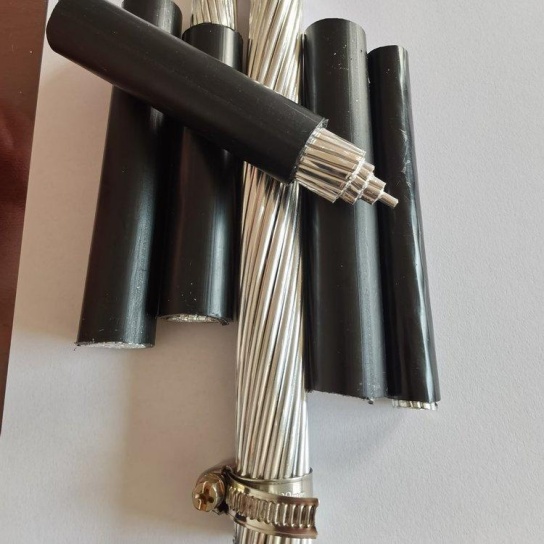
- Conductor Design for Ampacity & Flexibility: Conductors must handle high currents (hundreds of amps) without overheating while remaining highly flexible for routing. This is accomplished using high-conductivity, high-strand-count copper(or aluminum where weight is critical) and flexible constructions like fine-stranded bunched or roped conductors.
- Advanced Insulation & Jacketing Materials: Materials must be lightweight, flexible across a wide temperature range, and resistant to mechanical and chemical stress. Common choices include fluoropolymers (PTFE, FEP, ETFE)and high-performance silicone rubber, often reinforced with braids or tapes for added protection.
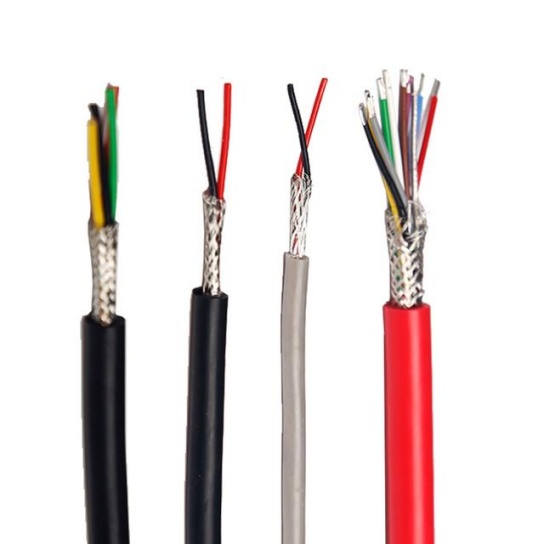
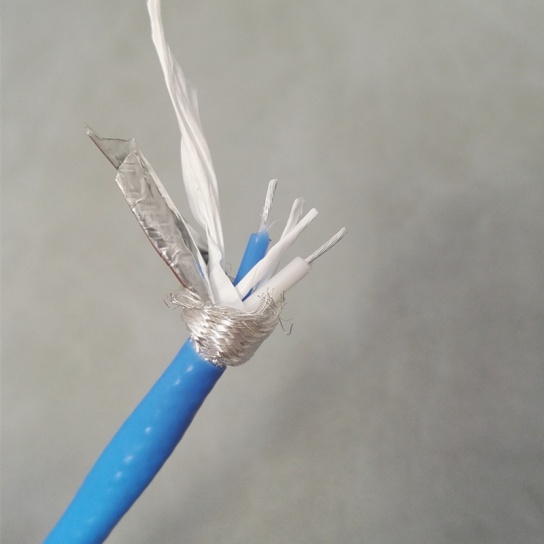
- EMI Shielding & Lightning Protection: Shielding is typically achieved with tinned copper braids, spiral wraps, or metallized fabrics, often combined with an overall shield and a robust 360° grounding termination. This protects both the cable and surrounding systems from EMI and diverts lightning-induced surges.
- Mechanical Durability & Connector Integration: Cables must be fatigue-resistantto withstand repeated bending and flexing. They are often terminated with high-reliability, locking aerospace connectorsthat are also rated for high voltage and current, ensuring a robust and safe connection throughout the aircraft’s life.
🛠️ Practical Steps for System Designers
When selecting high-voltage aviation power cables for an 800V eVTOL, a systematic approach is essential:
- Define System Architecture & Operating Profile: Determine the maximum system voltage (e.g., 800V nominal, 1000V max), continuous/peak power, and flight profile (takeoff, cruise, landing, charging). This defines the cable’s current and thermal requirements.
- Calculate Conductor Size for Ampacity & Voltage Drop: Size the conductor to handle the maximum expected current with an acceptable temperature rise (typically < 5–10°C). Also, ensure the voltage drop along the cable is within acceptable limits for the application.
- Select Insulation & Jacketing for Voltage & Environment: Choose materials that provide the necessary voltage rating with partial discharge margins, wide temperature tolerance, and resistance to the specific chemicals and mechanical stresses of your eVTOL platform.
- Specify Shielding & Grounding Strategy: Define the required shielding effectiveness (e.g., 60 dB) and ensure the shield is properly terminated at both ends to a low-impedance ground point. Integrate the cable into the overall lightning protection plan.
- Validate with Simulation & Testing: Perform electrical (voltage withstand, partial discharge), thermal, and mechanical (vibration, bending) tests on sample cables and harnesses. This validates the design against both aerospace standards (DO-160, DO-311) and your specific flight conditions.
🚀 The Future: Toward 1000V+ and Smart Cables
The industry is already looking beyond 800V. Prototypes and future platforms are exploring 1000V, 1200V, and even 1500Vsystems to further reduce current and increase efficiency. This will push cable technology to new limits, requiring even more robust insulation, shielding, and safety systems.
We are also moving toward “smart” eVTOL cablesintegrated with sensing and diagnostics. Embedding temperature, strain, or partial discharge sensors can provide real-time health monitoring, enabling predictive maintenance and significantly enhancing operational safety and reliability.
✅ Conclusion
The rise of 800V battery systems in eVTOLs is a fundamental shift that demands a new class of high-voltage aviation power cables. These cables are no longer just conductors; they are critical, certified components that integrate power delivery, safety, EMI protection, and mechanical durabilityinto a single, lightweight package.
For eVTOL manufacturers, system designers, and certification engineers, success hinges on a deep understanding of high-voltage cable technology. By prioritizing voltage margins, weight, thermal management, and environmental resiliencefrom the start, the industry can build eVTOLs that are not only high-performing and efficient but also meet the uncompromising safety standards required for aircraft.