High-Speed Avionics: Aviation Ethernet Cable 1000 Base-T Powers Next-Gen IFE Systems
Modern aircraft are increasingly defined by their data networks. From in-flight entertainment (IFE) and connectivity to avionics and cabin management, the demand for high-speed, reliable data transmission is reshaping system architecture. At the heart of this evolution is 1000BASE-T Ethernet over fire-resistant aviation cable EN 2267, a combination that delivers the bandwidth, safety, and weight efficiency required for next-generation aircraft.
This article explores how EN 2267fire-resistant cables are enabling 1000BASE-T networks to meet the rigorous demands of modern avionics, with a focus on standards, performance, and practical design considerations.
Understanding EN 2267: The Fire-Resistant Standard
EN 2267is a European aerospace standard for lightweight electrical cables used throughout the aircraft. It defines requirements for general-purpose cables with a core operating temperature range of –55 °C to +260 °C.
- Core Family: The standard is organized by family (e.g., DRA, DZA, DZ) and part number (e.g., -009, -010, -011), each specifying characteristics for different applications like low-pressure areas or laser marking.
- Key Performance: Cables are typically rated for 600 V ACand are tested for resistance to aircraft fluids, thermal aging, and mechanical stress, in addition to their fire resistance .
Fire Resistance vs. Arc Tracking: A Critical Distinction
In aerospace, “fire resistant” has two critical, but distinct, meanings:
- Flame Propagation: The cable’s ability to resist burning and limit flame spread, crucial for passing FAR 25.853and ABD0031flammability tests for materials and wiring.
- Arc Tracking: The cable’s ability to resist forming a conductive carbon track along its surface under high voltage, which can lead to short circuits. This is a key feature of many EN 2267cables, especially the DRA/DZ families, proven for 115/200 V AC networks and suitable for 230/400 V AC in pressurized zones with proper installation .
For 1000BASE-T data lines, arc tracking resistanceis often as critical as low flame propagation, as a short can disrupt not just data, but entire system networks.
1000BASE-T Over EN 2267 Cables: Compatibility Explained
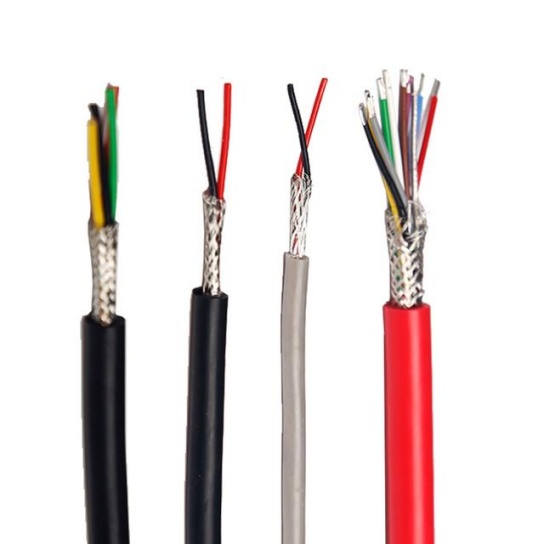
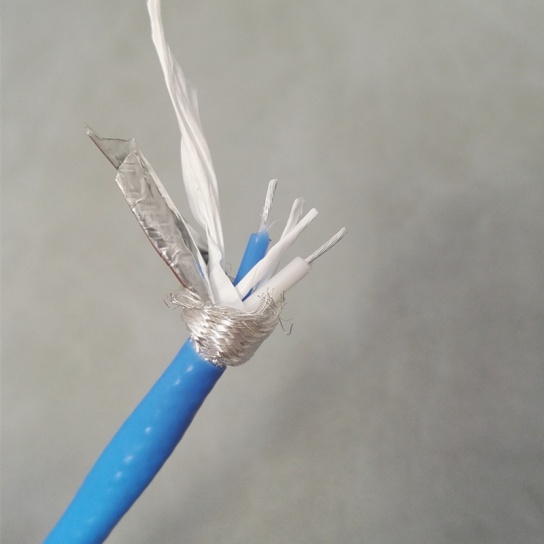
1000BASE-T (IEEE 802.3ab) is a proven standard that transmits 1 Gbit/s over four twisted pairsup to 100 meters on commercial-grade Cat5e/Cat6 cable. In aircraft, this is achieved using four individually shielded, EN 2267-compliant twisted pairswithin a single cable assembly .
The electrical performance of EN 2267 cables is fully compatible with 1000BASE-T requirements:
- Characteristic Impedance: The cable’s impedance and return loss are controlled to ensure low bit-error rates at 1 GHz frequencies.
- Signal Attenuation: Even with the added mass of aerospace-grade insulation and shielding, the cable’s attenuation is designed to be within the 1 Gbit/s link budget over typical aircraft harness lengths (often under 50–80 m).
- EMI/EMC: The robust shielding of EN 2267 cables provides the necessary electromagnetic compatibility for dense avionics bays and passenger cabins .
✈️ Key Applications in Next-Gen Aircraft
The combination of 1000BASE-T and EN 2267 cables is enabling several key applications:
- IFE Video Distribution: High-definition and even 4K content can be reliably distributed from servers to seatback or wireless access points.
- Cabin Management Systems (CMS): Lighting, environmental controls, and passenger service units are increasingly connected via IP networks over these cables.
- Avionics Data Links: Used for non-critical sensor data, system health monitoring, and configuration networks where 1 Gbit/s is sufficient.
- Connected Aircraft Backbone: Serves as a unified IP-based backbone for data, voice, and control traffic, simplifying wiring and reducing overall weight .
Design Considerations for 1000BASE-T over EN 2267
When designing with this technology, consider the following:
- Cable Selection: Choose the right EN 2267 family. For data, DRA/DZ families with proven arc-tracking resistance are common. For power or mixed-signal lines, families like DZA/DZ may be specified.
- Shielding Strategy: For 1000BASE-T, use individually shielded twisted pairs with an overall shield. Pay close attention to connector backshell termination and cable bend radii to maintain shielding effectiveness.
- Connector Compatibility: Use MIL-DTL-38999 or ARINC 600 series connectors with qualified contacts and backshells. Ensure the connector is tested and qualified for the specific EN 2267 cable to guarantee performance.
- Installation Practices: Follow the aircraft manufacturer’s wiring practices. Avoid tight bends and proximity to heat sources. Maintain separation from high-power cables to minimize EMI coupling.
- Compliance & Derating: Ensure the cable meets all necessary flammability, smoke, and toxicity (FST) requirements. Always apply the manufacturer’s derating factors for temperature and current when operating at altitude or in confined spaces .
The Road Ahead: Trends to Watch
The industry is moving towards higher speeds and more integrated systems:
- Migration to 10GBASE-T: For backbone links, 10GBASE-T over EN 2267-qualified Cat6A-style cables is on the horizon, requiring even better impedance control and shielding.
- Single-Pair Ethernet (SPE): Standards like 1000BASE-T1are gaining traction for specific applications, promising further weight and space savings.
- Power over Data Lines (PoDL): Combining data and power over a single twisted pair is an emerging trend that will rely on the same fire-resistant cable infrastructure .
Partnering for Success with FRS
Delivering a reliable, compliant, and high-performance 1000BASE-T network in an aircraft requires more than just selecting the right standard. It demands a partner with deep expertise in aerospace cable engineering and manufacturing.
FRSis an experienced fire resistant aviation cable EN 2267manufacturer with a proven track record in supplying high-performance cables to leading airframe OEMs and system integrators. Our team can support you from initial concept through to final qualification, ensuring your next-generation avionics and IFE systems are built on a solid and safe cabling foundation.
Let FRS be your trusted partner for fire-resistant aviation cable EN 2267 solutions.
Contact Us Right Now:
E-MAIL: sales@custom-cable-assemblies.com