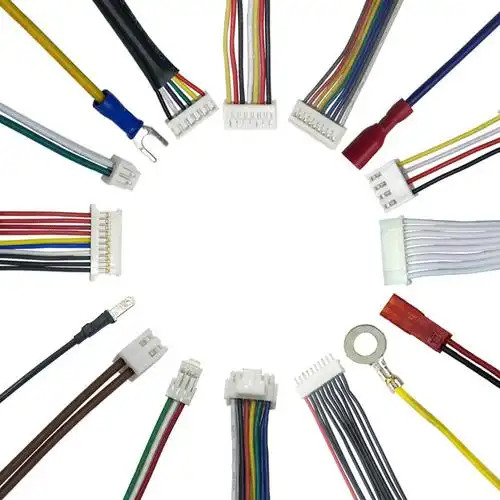
High-Speed Aviation Cable for Aircraft – AeroExpo
In today’s commercial and defense aircraft, high-speed aviation cableis no longer a supporting component—it is a critical system asset. As avionics networks migrate from ARINC 429 and MIL-STD-1553 to Ethernet backbones, Fibre Channel, SpaceWire, and high-speed video, the performance, weight, and reliability of the cable assembly directly determine flight safety, passenger experience, and lifecycle cost.
This article explains what makes a high-speed aviation cabletruly “airborne grade,” how to select the right product for your application, and how leading suppliers on platforms like AeroExpocan support your B2B procurement process.
1. Why High-Speed Aviation Cable Matters
Modern aircraft generate and consume vast amounts of data:
- Flight Management & Autopilot:ARINC 664, Ethernet, and Fibre Channel links.
- In-Flight Entertainment (IFE):High-definition video streams to multiple displays and wireless access points.
- Sensors & Mission Systems:High-resolution EO/IR cameras, radar, and telemetry.
- Diagnostics & Health Monitoring:Continuous data logging and real-time condition-based maintenance.
These systems require high-speed data transmissionwith minimal latency and maximum signal integrity. A high-speed aviation cable must deliver:
- Multi-gigabit data ratesover practical cable lengths.
- Low attenuation and stable impedanceto avoid bit errors.
- Excellent EMI/RFI shieldingin a dense electromagnetic environment.
- Reliabilityacross a wide temperature range and under vibration, flex, and moisture.
Choosing the wrong cable can lead to intermittent links, EMI susceptibility, costly rework, and certification delays.
2. Key Electrical & Physical Parameters
When evaluating a high-speed aviation cable, focus on these core specifications:
2.1 Data Rate & Frequency Range
- Ethernet:Cat5e/6/6A cables support 100 MHz to 500 MHz frequencies for 100 Mb/s to 10 Gb/s.
- High-Speed Serial (LVDS, SpaceWire):Often require stable performance into the GHz range.
- Video (HDMI, DVI, Camera Links):Demand high bandwidth with tight skew control.
2.2 Characteristic Impedance
- Differential Pairs:Typically 100 Ωfor Ethernet and many avionics buses.
- CAN Bus:Usually specified at 120 Ω.
- FireWire (SAE AS5643):Around 110 Ω.
Precise impedance control is vital to minimize reflections and ensure signal integrity.
2.3 Attenuation & Return Loss
- Insertion Loss:Must be low enough to meet the link budget at the required frequency and cable length.
- Return Loss:Indicates how well the cable matches its characteristic impedance; poor return loss causes signal reflections.
2.4 Crosstalk & Skew
- Near-End & Far-End Crosstalk (NEXT/FEXT):Must be tightly controlled to prevent data corruption in multi-pair cables.
- Intra-Pair Skew:Critical for high-speed parallel video and differential signals.
2.5 Shielding Effectiveness
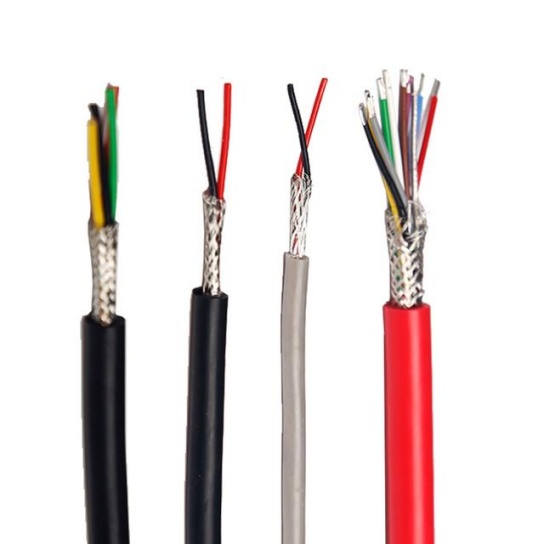
A high-speed aviation cable typically uses a combination of shields:
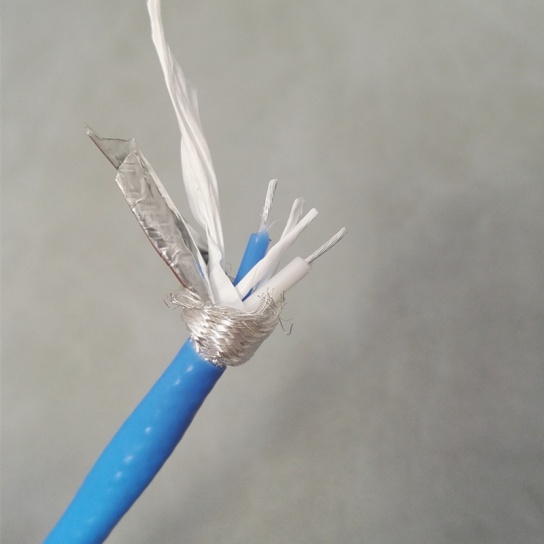
- Individual pair shields.
- Overall braided shield (often >90% coverage).
- Optional foil layers.
This multi-shield approach provides high immunity to EMI/RFI in aircraft environments.
2.6 Mechanical & Environmental Performance
- Temperature Range:Typically –55 °C to +150/200 °C.
- Flex Life:For moving parts like gimbals or hinged panels.
- Abrasion & Chemical Resistance:Against fuel, hydraulic fluid, and cleaning agents.
- Flame, Smoke & Toxicity (FST):Must meet standards like FAR Part 25, Appendix Fand ABD0031.
3. Common Architectures for High-Speed Aviation Cable
3.1 Quadrax (Star Quad) Cables
- Structure:Four conductors arranged in a star-quad geometry, functioning as two tightly coupled differential pairs.
- Benefits:Excellent EMI rejection, low crosstalk, and a smaller diameter than two separate twisted pairs.
- Applications:High-speed data, video, and FireWire (SAE AS5643) in aircraft.
3.2 Shielded Twisted Pair (STP) Cables
- Structure:Standard two-conductor twisted pairs with individual and overall shielding.
- Benefits:Simple to terminate and compatible with a wide range of aerospace connectors (e.g., ARINC, MIL-DTL-38999).
- Applications:Ethernet backbones (Cat5e/6/6A), CAN bus, and other serial data links.
3.3 Coaxial and Twinax Cables
- Structure:A single central conductor surrounded by a dielectric and shield.
- Benefits:Very low loss at high frequencies.
- Applications:RF, video, and some high-speed digital links where point-to-point connections are sufficient.
3.4 Fibre Optic Cables
- Structure:Glass or plastic optical fiber with a protective buffer and jacket.
- Benefits:Immune to EMI/RFI, extremely high bandwidth, and lightweight.
- Applications:Avionics backbone networks, data recorders, and high-resolution sensor links.
4. Applications of High-Speed Aviation Cable in Modern Aircraft
4.1 Flight Management & Avionics Networks
- Ethernet Backbones:Connecting flight computers, displays, and sensors.
- ARINC 664 Networks:High-speed switched Ethernet for integrated cockpits.
- MIL-STD-1553B to Ethernet Gateways:Enabling data sharing between legacy and modern systems.
4.2 In-Flight Entertainment (IFE) & Cabin Systems
- HDMI/DVI/DisplayPort Links:From media servers to passenger displays.
- Ethernet & USB:For wireless access points, seatback systems, and crew devices.
- High-Speed Video:For moving-map systems and real-time camera feeds.
4.3 Mission Systems & ISR Platforms
- EO/IR Sensor Feeds:High-bandwidth video from gimbaled cameras.
- Data Links:High-speed downlinks for UAVs and reconnaissance aircraft.
- Sensor Data Aggregation:Combining data from multiple sensors onto a single high-speed bus.
4.4 Onboard Diagnostics & Health Monitoring
- High-Speed Data Logging:Recording data from engines, hydraulics, and flight controls.
- Real-Time Telemetry:Transmitting critical health data to ground stations.
5. How to Select the Right High-Speed Aviation Cable
5.1 Define the Application Profile
- Data Rate & Protocol:Is it 100BASE-TX, 1000BASE-T, 10GBASE-T, Fibre Channel, or a proprietary bus?
- Cable Length:What is the maximum distance between devices?
- Environmental Conditions:Will the cable be in a pressurized area, near engines, or in a flexing section?
5.2 Match the Cable to the Connector
- Connector Compatibility:Ensure the cable’s diameter, bend radius, and shielding are compatible with your chosen connector (e.g., ARINC 801, MIL-DTL-38999, μ-Com).
- Termination Process:Some cables are easier to terminate than others. Quadrax cables, for example, may require special preparation.
5.3 Balance Performance and Weight
- Weight Savings:Lighter cables reduce fuel burn and increase payload. Some designs can be up to 40% smaller and 25% lighter than traditional cables.
- Performance vs. Weight:Don’t sacrifice critical performance for minimal weight savings.
5.4 Verify Compliance & Qualification
- Standards:Check for compliance with relevant standards like SAE AS4373, SAE AS5643, EN4641-301, and NEMA WC 27500.
- Certification:Ensure the cable meets the flammability, smoke, and toxicity requirements of your target aircraft platform.
5.5 Plan for Installation & Maintenance
- Bend Radius:Ensure the cable’s bend radius is compatible with the available space.
- Flexibility:For moving parts, choose cables with proven flex life.
- Labeling & Traceability:Opt for cables with clear, laser-markable jackets for easy identification.
6. Working with AeroExpo Suppliers
Platforms like AeroExpohost a wide range of manufacturers and distributors specializing in high-speed aviation cable. Here’s how to leverage them effectively:
6.1 Use Advanced Search Filters
- Product Category:Filter by “High-Speed Data Cables,” “Ethernet Cables,” or “FireWire Cables.”
- Application:Narrow down by “Aircraft,” “Defense,” or “UAV.”
- Technical Specs:Use filters for impedance, temperature range, or shielding type.
6.2 Compare Technical Datasheets
- Key Parameters:Look at attenuation, impedance, capacitance, and shielding effectiveness.
- Environmental Performance:Check FST ratings and operating temperature.
- Compliance:Verify against relevant standards.
6.3 Evaluate Supplier Credentials
- Certifications:Look for AS9100, NADCAP, or other relevant quality certifications.
- Experience:Check if the supplier has experience with your specific aircraft platform or application.
- References:Ask for case studies or customer references.
6.4 Request Samples & Testing
- Prototyping:Order samples to test compatibility with your connectors and systems.
- Benchmarking:Compare performance, flexibility, and ease of termination.
6.5 Communicate Your Requirements Clearly
- Provide Detailed Specs:Include data rate, length, environmental conditions, and any relevant standards.
- Ask for Customization:Many suppliers offer custom cable assemblies, including specific shielding, jacketing, or connector combinations.
7. Future Trends in High-Speed Aviation Cable
7.1 Higher Data Rates
- 25/40/100 GbE:As avionics networks evolve, cables must support even higher data rates over longer distances.
7.2 Miniaturization & Weight Reduction
- New Materials:Advances in fluoropolymers and conductor designs are enabling smaller, lighter cables without sacrificing performance.
7.3 Hybrid Cables
- Power + Data:Combining power and high-speed data in a single cable to reduce weight and complexity.
7.4 Smart Cables
- Embedded Sensors:Cables with built-in sensors for monitoring temperature, strain, or EMI in real-time.
7.5 Increased Use of Fibre Optics
- EMI Immunity:As data rates increase, fibre optics are becoming more attractive for backbone and long-haul applications.
Conclusion
Selecting the right high-speed aviation cableis a strategic decision that impacts the performance, safety, and cost of your aircraft systems. By understanding the key parameters, architectures, and applications, you can make informed choices that meet your specific needs.
Platforms like AeroExpoprovide a valuable resource for sourcing high-quality high-speed aviation cablefrom leading manufacturers and distributors. By leveraging their advanced search tools, technical datasheets, and supplier expertise, you can streamline your procurement process and ensure the success of your aerospace projects.
If you’re looking for a reliable partner for your next project, start your search on AeroExpotoday and discover the best high-speed aviation cablesolutions for your application.