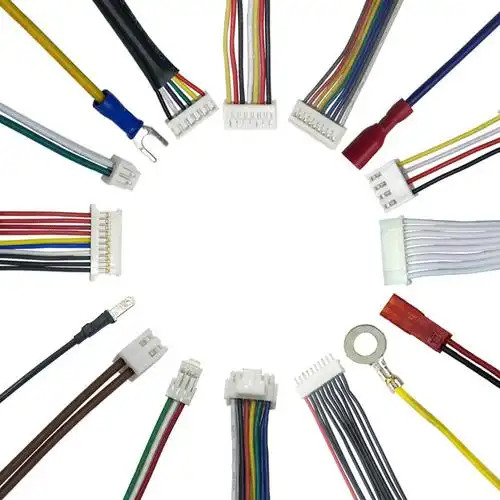
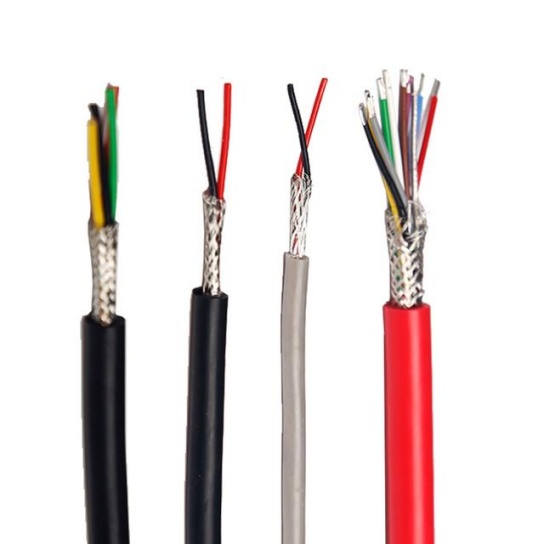
Flexible Aviation Cable: Key Features, Applications and Selection Guide
In modern aircraft, flexible aviation cableserves as the central nervous system, connecting avionics, power systems, and flight controls. As airframes shrink and systems grow more complex, the demand for cables that are lighter, more bendable, and more reliable has never been greater. This guide explores the essential characteristics, diverse applications, and a practical methodology for selecting the right flexible aviation cablefor your specific needs.
💡 What is Flexible Aviation Cable?
Flexible aviation cableis a specialized wire or cable engineered for aircraft and aerospace systems. It is designed to be routed through tight spaces and areas with vibration or movement, all while withstanding harsh environmental conditions. Unlike standard industrial cables, these must meet stringent requirements for weight, flexibility, and reliability, often adhering to standards like MIL‑DTL‑17 or proprietary OEM specs .
Key differentiators include:
- High Flexibility:Built to endure repeated bending and tight-radius routing without performance loss.
- Harsh-Environment Durability:Resistant to extreme temperatures, vibration, moisture, fuel, and chemicals.
- Lightweight Construction:Minimizing weight is critical for fuel efficiency and payload.
- High Reliability & Safety:Designed for a service life of decades with minimal maintenance .
✨ Key Features of Flexible Aviation Cable
1. High Flexibility & Bend Life
- Fine-Stranded Conductors:Composed of hundreds of fine copper or copper alloy strands to reduce bending stress and increase flex life.
- Optimized Construction:Layering and stranding techniques ensure the cable can be flexed, twisted, and routed in confined spaces without work-hardening or breaking.
- Controlled Bend Radius:Manufacturers specify a minimum bend radius, which must be followed to avoid damaging the cable .
2. Harsh-Environment Resistance
- Wide Temperature Range:Insulation and jacketing materials like PTFE, FEP, and ETFE allow operation from -65 °C to +200 °C or higher, with some high-temp versions rated up to 260 °C.
- Chemical & Fluid Resistance:Materials are selected to resist degradation from jet fuel, hydraulic fluid, de-icing agents, and cleaning solvents.
- Vibration & Mechanical Stress:The cable’s construction is designed to withstand constant vibration and flexing without fatigue failure .
3. Lightweight & Space-Saving
- Advanced Materials:The use of high-performance polymers and optimized copper stranding reduces weight compared to traditional cables.
- Compact Designs:Flat-ribbon and multi-pair constructions allow for high-density routing in limited spaces, saving valuable aircraft weight and volume .
4. Electrical Performance & Shielding
- Low Attenuation:Essential for high-frequency signals (e.g., RF/microwave) to maintain signal integrity over distance.
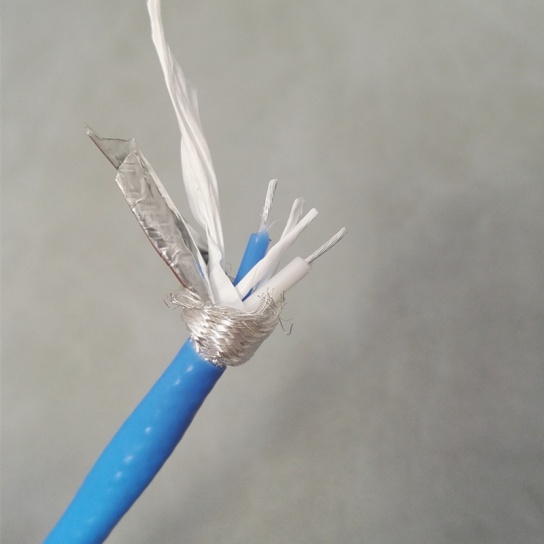
- EMI/RFI Shielding:Typically features braided shields, foil shields, or combinations thereof to protect against electromagnetic interference in the aircraft’s dense electronic environment.
- Controlled Impedance:Critical for high-speed data buses (e.g., Ethernet, CAN, HDMI) to prevent signal reflections and data errors .
5. Flame Resistance & Safety
- Flammability Standards:Must meet stringent standards like FAR/CS-25 and ABD0031, often with low smoke and low toxicity (LSZH) properties.
- Non-Propagating Design:The cable must self-extinguish quickly and not contribute significantly to fire spread in case of an onboard incident .
🎯 Key Applications of Flexible Aviation Cable
1. Airframe Wiring Harnesses
Used extensively for general aircraft wiring, including lighting, sensors, and control systems. Their flexibility is crucial for routing through complex, confined spaces within the fuselage and wings .
2. Avionics & Flight Control Systems
Connect critical systems like navigation, communication, and flight computers. These cables must maintain signal integrity and reliability over long distances and in high-vibration zones .
3. High-Speed Data & In-Flight Entertainment (IFE)
- Data Networks:Used for ARINC 429, CAN, Ethernet, and fiber optic cables that connect avionics and IFE systems.
- Video Transmission:Specialized HDMI and quad cables distribute high-resolution video (including 4K) throughout the aircraft .
4. RF, Satellite & Ku/Ka-Band Antennas
Flexible coaxial cables are vital for mechanically steered antennas used in satellite communications (SATCOM). They must endure constant flexing while maintaining low signal loss for frequencies up to 32 GHz .
5. Moving Parts & Actuators
Cables for flight control surfaces, landing gear, and other moving assemblies must be highly flexible and fatigue-resistant to withstand millions of flex cycles without failure .
6. High-Temperature Zones
Specialized high-temperature flexible aviation cableswith PTFE or FEP insulation are used near engines and other hot zones, where temperatures can exceed 200 °C .
7. Ground Support & Airport Equipment
Flexible cables are also used in ground power units (GPUs), aircraft charging systems, and service vehicles, where they must endure repeated coiling and uncoiling .
🛠️ How to Select the Right Flexible Aviation Cable
1. Define the Operating Environment
- Temperature:Will the cable be near engines or in unpressurized areas?
- Chemicals/Fluids:Exposure to jet fuel, hydraulic fluid, or de-icing agents?
- Mechanical Stress:Is there vibration, flexing, or tight routing?
- Fire Safety:What are the flammability requirements (e.g., FAR 25.853)?
Tip:Match the cable’s material and construction to the harshest environment it will face .
2. Determine Electrical Requirements
- Signal vs. Power:Is it for low-current signals or high-current power?
- Voltage & Current:Calculate voltage drop and current-carrying capacity, considering temperature derating in bundles.
- Frequency & Data Rate:Higher frequencies demand better shielding and controlled impedance .
3. Evaluate Flexibility & Mechanical Life
- Bend Radius:Ensure the installation allows for the manufacturer’s minimum bend radius.
- Flex Life:For moving parts, specify cables rated for millions of flex cycles.
- Installation:Avoid sharp bends, kinks, or tight clamping that can damage the cable .
4. Analyze Shielding Needs
- EMI/RFI:Use braided shields for strong EMI protection or foil shields for lightweight applications.
- Crosstalk:For high-speed data, consider twisted pairs or quadrax cables with tight skew control .
5. Consider Weight & Space Constraints
- Density:Use multi-pair or flat cables to save space in crowded areas.
- Weight:Remember that every gram saved contributes to fuel efficiency and payload .
6. Verify Standards & Certifications
- Compliance:Ensure the cable meets relevant standards like MIL-DTL-17, EN, or OEM specifications.
- Traceability:For safety-critical applications, full material traceability and qualification test reports are essential .
7. Plan for Installation & Maintenance
- Routing:Use supports and clamps to manage bend radius and prevent stress.
- Termination:Follow manufacturer guidelines for crimping, soldering, or IDC connections.
- Inspection:Implement regular inspections for wear, damage, or insulation cracks .
📋 Flexible Aviation Cable Specification Cheat Sheet
When reviewing a datasheet, focus on these key parameters:
- Conductor:Material (copper, silver-plated), size (AWG), and stranding (fine/multi-strand).
- Insulation:Material (PTFE, FEP, ETFE) and wall thickness.
- Shielding:Type (braid, foil, combination) and coverage percentage.
- Jacket:Material (FEP, PTFE, polyurethane) and its resistance properties.
- Electrical:Voltage rating, temperature rating, and impedance (for RF/data).
- Mechanical:Minimum bend radius (static and dynamic) and flex life.
- Standards:MIL-SPEC, EN, OEM, or other relevant certifications.
- Agency Approvals:FAA, EASA, UL, or other regulatory marks .
🚀 Conclusion
Flexible aviation cableis a cornerstone of modern aircraft design, enabling the safe and efficient operation of increasingly complex systems within tight spatial and weight constraints. By understanding the key features, applications, and a structured selection process, engineers and buyers can ensure they choose the optimal cable for their specific aerospace project.
For expert guidance on selecting the right flexible aviation cablefor your application, consult with a qualified aerospace cable manufacturer or distributor.