Custom Aviation Coaxial | EMI-Resistant, Aircraft Avionics Compatible, Factory Direct
When sourcing custom aviation coaxial cables, engineers and procurement teams prioritize three critical factors: EMI resistance, airborne avionics compatibility, and factory-direct value. This guide explains what these mean in practice and how to select the right partner.
Why EMI Resistance is Non-Negotiable in Aircraft
Aircraft are environments saturated with electromagnetic energy from radar, radios, power systems, and lightning. Even minor interference can degrade navigation accuracy or cause data loss.
Key EMI Control Elements:
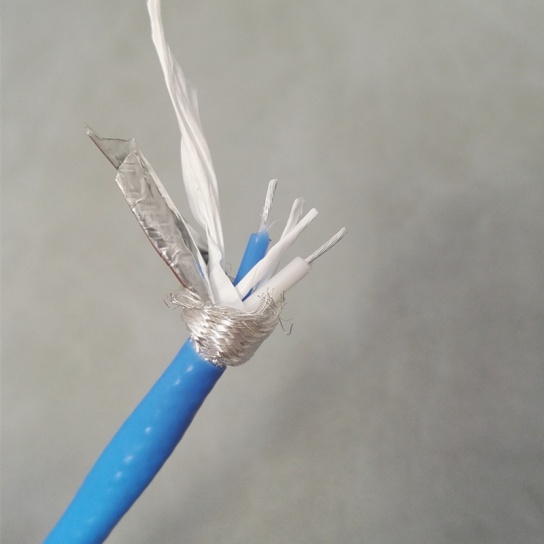
Shielding Architecture:High-performance aviation coax uses multiple shielding layers (e.g., braid + foil) to achieve >90 dB attenuation. Advanced designs can reach 100–120 dB, effectively creating an electromagnetic “Faraday cage” around the signal.
Connector Shielding Integrity:A 360° metal-to-metal contact between the connector and cable braid is essential. Any gap can create an “EMI leakage window,” significantly reducing shielding effectiveness.
Controlled Impedance:Precise 50 Ω or 75 Ω impedance is maintained across the entire frequency range. Mismatches cause signal reflections, which become additional noise sources.
Environmental Sealing:Gaskets and potting protect against moisture ingress, which can lead to corrosion and unpredictable EMI behavior over time.
In practice:For a navigation or TCAS system, a shielded coax that meets MIL-STD-461 or DO-160 EMI requirements is not optional—it is a flight-safety requirement.
What “Aircraft Avionics Compatible” Really Means
This term goes beyond simply fitting in an aircraft. It signifies that the coaxial cable assembly is designed and validated to meet the stringent demands of airborne systems.
1. Mechanical & Environmental Survivability
Temperature:Must perform reliably from -55 °C to +200 °C, depending on the location (cockpit vs. engine bay).
Vibration & Flex:Built to withstand constant vibration and flexing without degrading shielding or causing connector microphonics.
Chemical & Fluid Resistance:The jacket material must resist aviation fluids like Skydrol, oils, and fuels, as well as UV exposure.
2. Electrical Performance
Low Loss:Essential for long cable runs to avoid signal degradation.
Phase Stability:Critical for systems like phased-array antennas and radar, where signal timing is crucial.
Voltage Withstand & Insulation:Must pass standards like RTCA DO-160 to ensure safety and prevent arcing.
3. Regulatory & System Compliance
Standards:Cables must be specified to meet relevant standards (e.g., MIL-DTL-17, MIL-C-17, ARINC 600) and pass tests per DO-160 or MIL-STD-461.
System Integration:The assembly must be form-fit-function compatible with the aircraft’s existing bulkhead connectors, cable trays, and bend radius constraints.
In practice:“Aircraft avionics compatible” means the coax is engineered to survive the aircraft environment and perform to the avionics system specification over its entire service life.
The Value of Factory-Direct Customization
For OEMs and integrators, working with a factory-direct aviation coaxial manufactureroffers significant advantages over distributors.
Full Design Control:You can specify every parameter, from conductor size to jacket color, ensuring the cable is optimized for your exact application.
Traceability & Quality:Direct factories maintain complete lot traceability and can provide test data (VSWR, insertion loss, shielding) for each build, which is often required for certification.
Cost & Lead Time Efficiency:Eliminating middlemen reduces costs and shortens lead times. Factories can also scale production to match your project’s ramp-up and peak demands.
Prototyping & NPI Support:A capable factory can support rapid prototyping and New Product Introduction (NPI), providing samples and engineering support early in the design cycle.
In practice:Factory-direct sourcing turns your coaxial cable from a generic commodity into a certified, application-specific component of your aircraft system.
Custom Aviation Coaxial vs. Standard RF Cable
Feature
Standard RF Cable
Custom Aviation Coaxial
EMI Shielding
Basic braid, ~60-80 dB
Multi-layer shielding, >90-120 dB
Environmental Spec
Limited to 70-85 °C
-55 °C to +200 °C, fluid resistant
Impedance Control
±10% tolerance
Tight control, often ±1-3 Ω
Connector Interface
Generic commercial types
MIL-DTL-38999, ARINC, etc.
Compliance
Not certified for aircraft
Designed to DO-160, MIL-STD-461
Traceability
Batch-level at best
Full lot and test data records
Customization
Length only
Length, routing, connectors, materials
Lifecycle
3-5 years typical
10-20+ years with maintenance
Key Specs to Define with Your Manufacturer
To get the right custom aviation coaxial cable, provide your supplier with these details:
System Parameters:Frequency range, power level, and whether it’s for receive, transmit, or control.
Electrical Specs:Required impedance (50 Ω or 75 Ω), max VSWR, and insertion loss at your operating frequency.
Environmental Specs:Operating and storage temperature, and exposure to fluids (Skydrol, fuel, etc.).
Mechanical Constraints:Available bend radius, cable routing, and any need for flex or torsion resistance.
Connector Requirements:Specific series, mounting style (panel, bulkhead), and any filtering or special contact plating needs.
Compliance Needs:Any specific standards to meet (MIL, DO-160, EN, etc.) and required test reports.
Common Pitfalls to Avoid
Mismatched Impedance:Using 75 Ω video coax for a 50 Ω avionics RF link will cause significant return loss and system noise.
Ignoring Shielding Continuity:A coax with a great shield can be ruined by a poorly designed connector interface with gaps or paint.
Overlooking Environmental Specs:A cable that works in a lab may fail in an aircraft due to temperature, vibration, or fluid exposure.
Choosing Based on Price Alone:The total cost of failure in an airborne system (recall, downtime) far exceeds the savings from a low-cost cable.
Lack of Documentation:Always ensure you receive test data and compliance certificates. Without them, your system certification is at risk.
Partnering with FRS for Your Custom Aviation Coaxial Needs
At FRS, we specialize in factory-direct, custom aviation coaxial solutionsbuilt to excel in demanding airborne environments.
Engineering-Driven:Our engineers work with you from concept to production, ensuring your coax is optimized for your specific application.
Certified Quality:We adhere to rigorous quality management systems and can provide comprehensive test reports to meet your certification needs.
Flexible & Scalable:From prototypes to full-scale production, we support projects of all sizes with competitive lead times and responsive service.
Ready to specify your next custom aviation coaxial cable?
Contact FRS todayfor a consultation or quote. Let us help you achieve the optimal balance of EMI resistance, avionics compatibility, and factory-direct value for your project.
Premium Aviation Cables for Aircraft Systems: Elevating Safety and Performance
In the demanding world of aviation, reliability and precision are non-negotiable. Premium Aviation Cables for Aircraft Systems are engineered to meet the r.
When it comes to aviation safety and performance, every component must meet the highest standards—especially electrical systems. High-Temp Resistant Aviation Electrical Cables are engineered to deliver unparalleled durability and reliabi.
From commercial airliners to military drones, aviation cables are the unsung heroes ensuring reliable power, data, and signal transmission in the skies. These specialized cables are engineered to withstand extreme conditions—think turbule.
Product Overview: aviation cable
Machine vision cables are specialized components designed to ensure high-speed, stable data transmission and signal integrity in automated imaging systems. Key features include:
Technical Specifica.
Designed to meet the rigorous demands of modern aviation and defense systems, Lightweight MIL-SPEC Aviation Wiring Cables represent the pinnacle of reliability, durability, and performance. Engineered to comply with stringent military sp.