Aircraft Cable Assemblies: Trends in Digital Twin Technology
The global aircraft cable assembly market, projected to reach $15 billion by 2025 with a 6% CAGR , stands at the crossroads of escalating complexity and stringent safety demands. As modern aircraft integrate more avionics systems—with single wide-body jets requiring up to 40 kilometers of cabling —traditional manual design and manufacturing processes struggle with inefficiencies, quality inconsistencies, and limited traceability. Digital twin technology has emerged as a transformative solution, reshaping how these critical components are designed, produced, maintained, and optimized across their lifecycle. Below are the defining trends driving this digital revolution in aircraft cable assembly.
1. Lifecycle-Centric Digital Thread Integration
Gone are the days of siloed digital twin applications limited to single production stages. Today’s leading manufacturers are building interconnected digital threads that span the entire cable assembly lifecycle—from initial design to end-of-service retirement. This integration ensures seamless data flow between design software, production equipment, and maintenance systems, eliminating the errors caused by manual data transcription .
Boeing’s implementation for the 787 Dreamliner exemplifies this trend: its digital twin platform unifies CAD models, material specifications, and production data to create a living virtual replica of each cable assembly . Engineers can trace a component’s origin from raw material batch to installation location, while maintenance teams access real-time performance data linked directly to the original design parameters. Siemens’ Capital software further advances this by enabling electronic validation of wiring harnesses against design rules, reducing design change errors by 90% in aerospace applications .
2. AI-Powered Process Optimization and Quality Control
Artificial intelligence is no longer an auxiliary tool but a core component of digital twin systems for cable assemblies. Machine learning algorithms embedded in virtual models analyze thousands of process variables—from wire stripping depth to terminal crimping pressure—to identify optimization opportunities beyond human capability .
In production, this translates to tangible efficiency gains: Airbus reported a 20% reduction in cable harness assembly time for the A330 after integrating AI-driven digital twins that simulate optimal routing and tool placement . Quality control benefits equally: computer vision integrated with digital twins detects microscopic defects like insulation cracks or connector misalignment with 99.7% accuracy—far exceeding manual inspection rates . These systems learn from historical defect data, continuously improving detection capabilities while generating standardized inspection rules via natural language processing .
3. Predictive Maintenance Enabled by Embedded Sensing
The shift from reactive to predictive maintenance represents one of the most impactful applications of digital twins in cable assemblies. Modern aircraft now use “smart” cable systems embedded with micro-sensors that transmit real-time data on temperature, vibration, and electrical resistance to their digital counterparts .
This connectivity delivers measurable value: industry data shows digital twin-enabled predictive maintenance reduces cable-related downtime by 50% and cuts maintenance costs by 20-30% . For example, the U.S. Air Force uses digital twins of F-35 cable assemblies to predict insulation degradation under extreme flight conditions, replacing components proactively before failures occur . Siemens’ MindSphere platform extends this capability by correlating sensor data with environmental parameters, enabling fleet-wide maintenance optimization .
4. Supply Chain Synchronization Through Virtual Collaboration
Global supply chain disruptions have accelerated the adoption of digital twins as collaboration tools for cable assembly ecosystems. Virtual replicas enable OEMs and tiered suppliers to synchronize design changes, validate component compatibility, and simulate assembly processes in real time—regardless of geographic location .
Lockheed Martin leverages this trend for military aircraft programs, using cloud-based digital twins to align 20+ global suppliers on cable harness specifications . The technology eliminates costly rework by identifying design-manufacturing conflicts early: a recent satellite project reduced planning time by three months through collaborative digital twin simulations . Smart contracts integrated with these systems further streamline procurement by automating quality and delivery tracking .
5. Adaptation to Next-Generation Aircraft Requirements
As electric vertical takeoff and landing (eVTOL) vehicles and hydrogen-powered aircraft enter development, digital twins are evolving to address their unique cable assembly needs. eVTOLs require 3.2x more cable density than traditional helicopters , while hydrogen aircraft demand components resistant to extreme temperatures and corrosion—challenges digital twins tackle through advanced material simulation.
Manufacturers are using virtual models to test new materials like carbon fiber-reinforced conductors and PEEK insulation, accelerating certification by 30% . For example, Chinese researchers developing CR929 wide-body jet components use digital twins to validate lightweight cable designs that reduce aircraft weight by 15% , directly improving fuel efficiency.
The Road Ahead: Overcoming Adoption Barriers
Despite these advances, challenges remain—primarily data security concerns, cross-platform compatibility issues, and upfront investment costs. Leading solutions address these through end-to-end encryption (critical for protecting sensitive aircraft data ), open API architectures that integrate with legacy systems, and phased implementation strategies that prioritize high-impact use cases like quality control or maintenance .
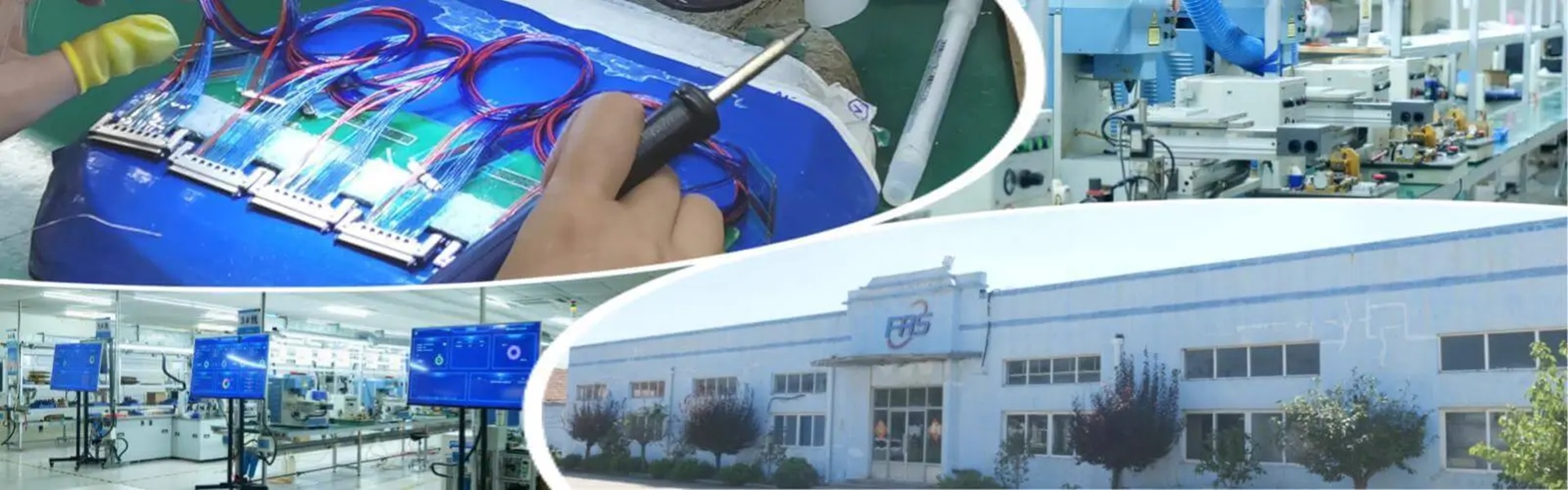
For manufacturers seeking to leverage these digital twin trends, FRS stands as a trusted partner in building next-generation aircraft cable assemblies. Our state-of-the-art facilities integrate AI-enhanced digital twin technology across every stage: from simulating lightweight, high-temperature cable designs using carbon fiber composites to delivering predictive maintenance-ready assemblies with embedded sensing. FRS’s compliance with FAA, EASA, and CAAC standards ensures seamless integration into global aerospace supply chains, while our collaborative virtual platform keeps customers aligned from prototype to production. When precision, efficiency, and innovation matter, FRS turns digital twin potential into tangible aerospace excellence.