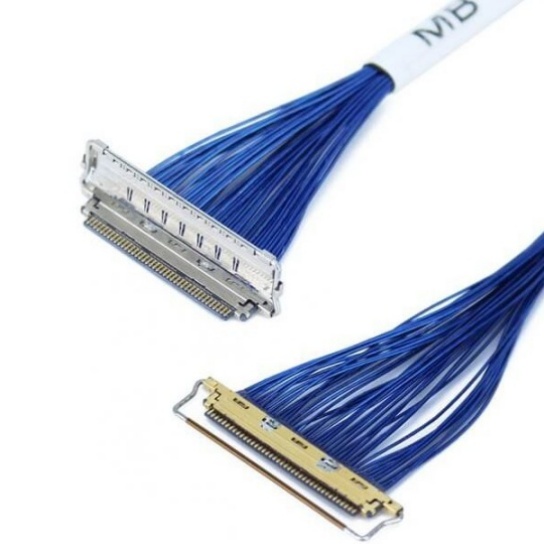
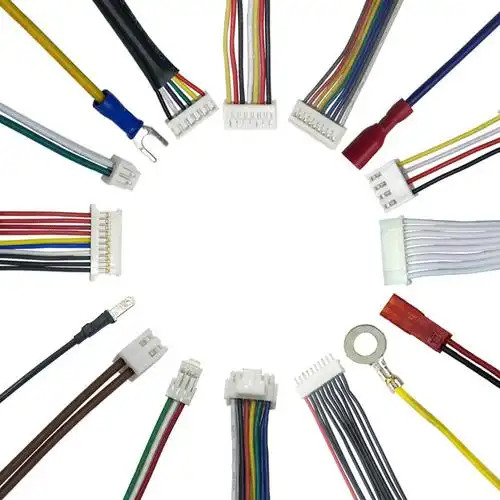
Aerospace Wiring Innovation: PTFE Insulated Micro Coaxial Cable Solves Compact Space Installation Challenges
Modern aircraft, UAVs, and spacecraft demand ever-higher functionality within shrinking spaces. Traditional PTFE insulated aviation cable often hits a wall: it’s reliable, but its diameter, bend radius, and rigidity can make routing through today’s high-density avionics a major challenge.
The solution is a new generation of PTFE insulated micro coaxial cable. By optimizing every layer—from a precision inner conductor to a low-loss PTFE dielectric and a finely tuned shield—engineers can achieve the same, or better, electrical performance in a fraction of the size. This article explores how this innovation is transforming avionics design and installation.
🎯 The Core Challenge: Miniaturization vs. Performance
The drive for more features in smaller, lighter aircraft is relentless. Avionics bays, UAV fuselages, and satellite payloads are packed with sensors, processors, and high-speed links. This creates a fundamental conflict:
- The Need:High-density wiring with minimal weight and volume.
- The Constraint:Reliable RF/microwave performance, immunity to EMI, and the ability to withstand harsh aerospace environments (wide temperature ranges, vibration, fluids).
Standard PTFE insulated aviation cable, while excellent, becomes a bottleneck. Its larger diameter and stiffness make tight-radius routing difficult, increasing the risk of damage during installation and compromising the harness’s bend radius. The industry needed a PTFE insulated micro coaxial cablethat could maintain signal integrity without consuming excessive space.
🔬 Anatomy of a PTFE Insulated Micro Coaxial Cable
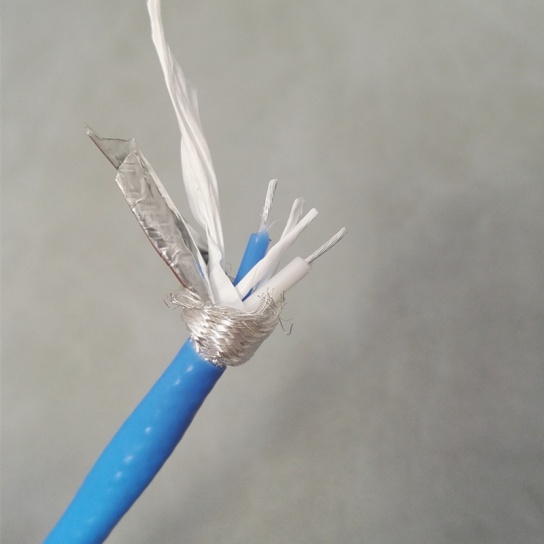
A high-performance PTFE insulated micro coaxial cable is built like a precision instrument. Each layer is critical:
- Inner Conductor:Made of high-purity silver-plated copper or copper-clad steel. Silver plating minimizes high-frequency loss, while the steel core provides strength for thin wires. Some designs use a strandedconstruction for flexibility or a solidcore for stability.
- Dielectric (The PTFE Heart):PTFE is the gold standard for high-frequency insulation due to its low and stable dielectric constant (εr ≈ 2.1) and low dissipation factor. To further reduce loss in micro cables, manufacturers use:
- Foamed PTFE:Creates a micro-porous structure, lowering the effective dielectric constant and loss. Ideal for high-frequency/low-loss applications.
- Expanded PTFE (ePTFE):Offers a low dielectric constant and is highly flexible, making it suitable for tight-bend scenarios.
- Shielding:Essential for preventing EMI in crowded avionics. Common structures include:
- Dual Shields:A combination of a thin foil (for 100% coverage) and a braid (for low DC resistance and flexibility).
- Spiral Shields:A flat, wound conductor that provides excellent flexibility for dynamic applications. High-end versions may use silver-plated copper-clad aluminum (SPCCA) to reduce weight while maintaining shielding effectiveness of 80-110 dB.
- Outer Jacket:Protects the cable from mechanical damage, moisture, and chemicals. Materials include:
- FEP/PFA:Offers a smooth surface for easy routing and is chemically resistant.
- Aramid Fibers (Kevlar®):Provides high tensile strength for small-diameter, high-flex cables.
- ETFE:A tough, flame-retardant option that meets many aerospace flammability standards.
💡 How PTFE Insulation Enables Miniaturization
PTFE’s unique properties make it the only practical choice for this demanding application:
- Ultra-Low Loss:Its low εr and dissipation factor allow for thinner dielectrics and smaller conductors, directly reducing cable size and loss.
- Wide Temperature Range:PTFE operates reliably from -65°C to +260°C, far exceeding the needs of most aircraft environments. Special constructions can even handle short-term exposure to 300°C.
- Chemical & Solvent Resistance:PTFE is virtually inert, resisting degradation from jet fuel, hydraulic fluids, and cleaning agents, ensuring a long service life in harsh conditions.
- Flame Resistance & Low Smoke:PTFE-based cables typically meet stringent flammability standards (e.g., FAR 25.869, EN 3475) with low smoke and no corrosive halogens, a critical safety feature in enclosed spaces.
- Dimensional Stability:PTFE’s properties ensure the cable’s impedance and electrical performance remain stable over its entire temperature range, which is vital for phase-critical systems.
🚀 Key Performance Metrics for Aerospace Micro Coax
When selecting a PTFE insulated micro coaxial cable, focus on these key metrics:
- Impedance:Most RF systems use 50 Ω, but 75 Ω is also common. Tight manufacturing tolerances (e.g., ±5%) are essential for signal integrity.
- Attenuation (Insertion Loss):This is a function of frequency, conductor size, and dielectric loss. For example, a 40 AWG PTFE cable might have ~0.4 dB/m loss at 1 GHz, increasing significantly at higher frequencies. Foamed or expanded PTFE cores are used to mitigate this in long runs.
- Shielding Effectiveness (SE):In dense avionics, SE of 80-110 dBis common. The goal is to minimize noise coupling between adjacent cables and systems.
- Voltage Rating:Typically 300-600 V, sufficient for most signal and control applications.
- Operating Temperature:Standard range is -65°C to +200/250°C. For engine zones, verify the specific rating.
- Flex Life & Bend Radius:For moving parts (e.g., UAV wings), a tight bend radius (e.g., 3-5x OD) and high flex cycles are crucial. This often requires a finely stranded conductor and a flexible dielectric like ePTFE.
🛠️ Installation Best Practices
Even the best PTFE insulated micro coaxial cable can fail if mishandled. Follow these practices to ensure a reliable harness:
- Respect the Bend Radius:Never bend the cable tighter than the manufacturer’s specification, especially near connectors. Use proper support clamps (e.g., P-clamps) to avoid crushing or kinking.
- Avoid Tension on Connectors:Pull the cable body, not the connector, to prevent damage to the delicate center conductor and dielectric.
- Protect from Sharp Edges:Use edge protectors or grommets where cables pass through bulkheads or panels.
- Maintain Separation:Keep RF cables away from high-current power lines to minimize EMI. Cross them at right angles when necessary.
- Use Support Loops:In areas with vibration, create a gentle loop to act as a strain relief, reducing stress on solder joints and crimps.
- Follow Manufacturer’s Guidelines:Adhere to specific routing, clamping, and torque recommendations to ensure the cable performs as qualified.
🌍 Real-World Applications
PTFE insulated micro coaxial cables are now vital in numerous aerospace systems:
- Aircraft Sensor Arrays:Connecting high-frequency sensors in tight spaces like wing leading edges or engine nacelles.
- UAV Avionics:Linking radar, EO/IR sensors, and data links where weight and space are at a premium.
- Satellite Payloads:Routing high-data-rate signals between instruments and antennas in the confined, thermally challenging environment of a satellite bus.
- In-Flight Entertainment (IFE):Distributing high-bandwidth video and data to passenger seats with minimal cable bulk.
- Test & Measurement Equipment:Used in aerospace labs for their precision, repeatability, and ability to handle wide temperature swings.
✅ How to Choose the Right Cable
Selecting the optimal PTFE insulated micro coaxial cable involves a systematic approach:
- Define Electrical Requirements:Determine the operating frequency, required power, and acceptable loss budget.
- Set Mechanical & Environmental Constraints:Consider bend radius, flex life, operating temperature, and exposure to chemicals or fluids.
- Evaluate Shielding Needs:Higher shielding effectiveness is crucial in dense environments or for weak signals.
- Verify Standards & Qualifications:Ensure the cable meets relevant standards like MIL-DTL-17, EN 3475, or specific OEM specifications.
- Prototype and Test:Build a test harness and validate its performance in your specific application environment, including temperature, vibration, and EMI.
🔮 The Future: Pushing the Boundaries
The evolution of PTFE insulated micro coaxial cable continues, driven by the need for even smaller, lighter, and higher-performing solutions. Trends include:
- Miniaturization:Moving towards 40 AWG and smallerconductors for ultra-compact links.
- Advanced Materials:Exploring new dielectric formulations and composite shields to further reduce size and loss.
- Integrated Assemblies:Combining RF, power, and data into single hybrid cables to reduce harness complexity.
- High-Frequency Readiness:Designing cables for mmWave and terahertzapplications in future radar and communication systems.
For aerospace engineers, the message is clear: PTFE insulated micro coaxial cable is no longer a compromise. It is the enabling technology for the next generation of compact, high-performance aircraft and spacecraft.By understanding its capabilities and following best practices, you can confidently design wiring harnesses that meet the most demanding avionics challenges.