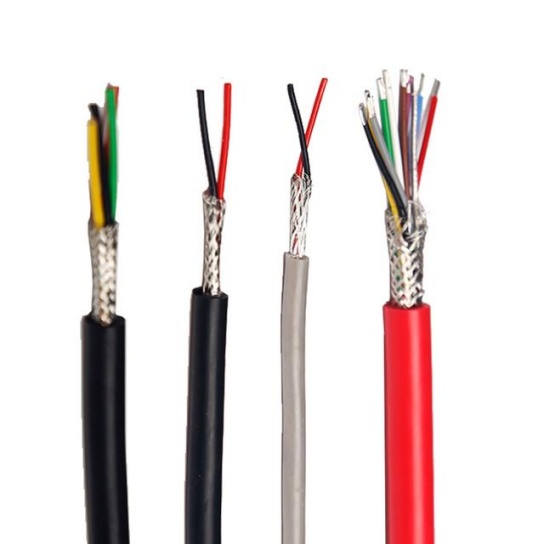
Advanced Carbon Nanotube EMI Shielded Aviation Cable Cuts Aircraft Weight by 35%
Electromagnetic interference (EMI) shielding is a critical requirement for modern aircraft. Every signal and power cable running through an airframe must be protected from external and internal noise sources, including radar, radio, high-current switching, and digital systems. Traditionally, this protection comes from heavy metal shields—typically copper or aluminum braids combined with foil layers. While effective, these shields are also one of the largest contributors to overall aircraft weight.
Recent advances in carbon nanotube (CNT) technology are changing this equation. Prototype and early-commercial CNT-based EMI shielded aviation cables have demonstrated the potential to cut cable weight by 30–50% compared to conventional designs, with shielding effectiveness that meets or exceeds aerospace standards. In practical terms, this translates into significant fuel savings, extended range, and reduced lifecycle costs for both commercial and military aircraft.
This article explores how advanced CNT EMI shielded aviation cables achieve these results, the current state of the technology, and what it means for aircraft designers and integrators.
Why EMI Shielding Is Non-Negotiable in Aviation
A modern commercial airliner can contain over 100 miles (≈160 km) of wiring, with a total harness weight exceeding 4,000 pounds (≈1,800 kg). In many aircraft, nearly half of this weight comes from conductive shielding and jacketing materials. These cables are routed through environments with:
- High EMI/RFI:From onboard radars, satellite links, high-power avionics, and passenger Wi-Fi.
- Lightning and High-Intensity Radiated Fields (HIRF):Requiring shielding that can safely conduct thousands of amperes to the airframe.
- Extreme Temperatures and Mechanical Stress:From -55°C in cruise to over 200°C near engines, combined with vibration and flexing.
Failure to adequately shield these cables can lead to corrupted sensor data, avionics resets, communication loss, or even catastrophic system failures. As a result, aerospace-grade cables must meet stringent standards for shielding effectiveness, fire safety (e.g., FAR 25.853), and environmental durability.
The Traditional Metal Shield Penalty
Conventional EMI shielding relies on one or more of the following layers:
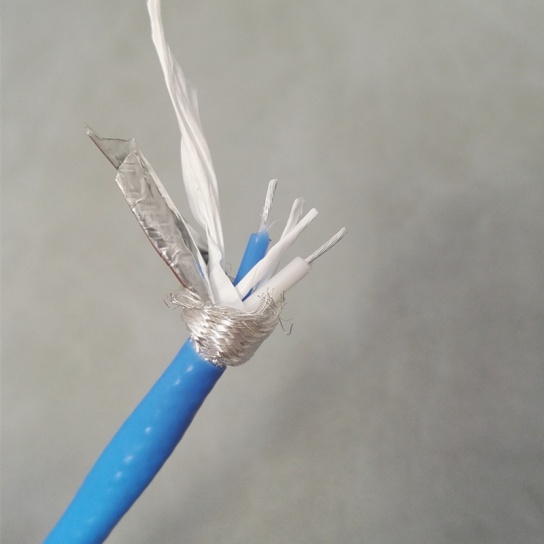
- Metal Braid:Typically 70–95% optical coverage copper or aluminum, providing 30–60+ dB of shielding over a broad frequency range.
- Foil Shield:Aluminum or copper-polyester laminate for 100% coverage at lower frequencies.
- Drain Wires:To ensure a low-impedance path to ground.
While effective, this approach has inherent drawbacks:
- High Density:Copper has a density of 8.96 g/cm³. Even thin braids and foils contribute substantial mass.
- Limited Flexibility:Heavier braids can make cables stiff, complicating routing in tight spaces and increasing the risk of damage during installation or maintenance.
- Corrosion and Fatigue:Braided shields can degrade over time due to flexing, moisture ingress, and galvanic corrosion, especially at connector interfaces.
For weight-sensitive platforms like UAVs, business jets, and next-generation airliners, even a 10–20% reduction in cable weight can have a measurable impact on performance and operating costs.
Carbon Nanotubes: A New Shielding Paradigm
Carbon nanotubes are cylindrical nanostructures with exceptional electrical conductivity, mechanical strength, and a density of only about 1.3–1.4 g/cm³—roughly one-seventh that of copper. When processed into films, papers, or woven textiles, CNTs can function as lightweight, flexible conductors and shields.
There are several architectural approaches:
- CNT Tape or Paper Shields:A continuous sheet of CNT material laminated or wrapped around the core, often combined with a thin metal layer for improved low-frequency performance.
- CNT Braids or Yarns:CNT fibers are spun into yarns and braided like traditional wire, offering a direct replacement for copper braid with significantly lower mass.
- CNT-Coated Conductors:A thin CNT layer is deposited directly onto a dielectric core, serving as the outer conductor in coaxial or twisted-pair cables.
These approaches have been validated in both laboratory and aerospace-relevant environments, showing shielding effectiveness from 30 MHz to 18 GHz, with some configurations exceeding 100 dB in the GHz range.
How Much Weight Can Be Saved?
Published data points highlight the potential:
- Prototype RG-316 Coaxial Cables:Replacing double-layer copper shields with multilayer CNT shields reduced weight by 47–51% while maintaining shielding effectiveness from 300 MHz to 18 GHz.
- CNT Fabric Shields:A lightweight CNT fabric (0.2 g/cm³) achieved 66.8 dB shielding per layer. When used in coaxial cables, this reduced the shield mass by 32.1% compared to copper, with comparable signal performance.
- NASA-Funded CNT Tape:Early work projected up to 80% weight reduction in spacecraft wiring by replacing metal shields with CNT tape, translating to millions of dollars in launch cost savings per vehicle.
- Rice University Developments:A CNT-based outer conductor coating eliminated 97% of the braid mass in test coax cables, meeting military shielding standards and withstanding 10,000 bending cycles without performance loss.
Based on these figures and assuming shielding constitutes roughly half the weight of an aircraft wiring harness, a 30–35% reduction in total harness weightis a realistic target for future aircraft designs that fully adopt CNT-based shielding.
Meeting Aviation Performance Requirements
Shielding Effectiveness
Aircraft EMI shielding must address a wide spectrum:
- Low Frequency (LF):30–400 MHz (VHF/UHF comms, FM radios).
- High Frequency (HF) & Microwave:400 MHz–18+ GHz (radar, satellite, data links).
CNT shields can be engineered for broadband performance:
- High-Frequency Shielding:CNT fabrics and braids provide excellent high-frequency shielding (>30 dB) due to their high conductivity and multiple reflection paths.
- Low-Frequency Shielding:Performance at LF can be enhanced by incorporating magnetic or highly conductive particles into the CNT matrix or adding a thin metal layer.
Mechanical Durability
Aircraft cables must endure thousands of flight cycles, including bending, twisting, and vibration. CNT-based shields offer key advantages:
- Fatigue Resistance:CNT shields have shown minimal degradation in shielding effectiveness after repeated flexing, unlike copper braids, which can work-harden and crack.
- Flexibility:CNT textiles and coatings can be made extremely thin and flexible, allowing for tighter bend radii and easier installation in confined spaces.
Electrical Performance
For high-speed data cables, insertion loss and impedance stability are critical. CNT-based shields can match or exceed the performance of copper:
- Controlled Impedance:The conductivity and dimensional stability of CNT layers allow for precise impedance control in coaxial and twisted-pair cables.
- Low Insertion Loss:Prototype CNT coax cables have demonstrated insertion loss within a few percent of equivalent copper designs, even at multi-gigahertz frequencies.
Integration Challenges and Current Status
Despite the promise, several challenges remain before CNT EMI shielded aviation cables become standard:
- Connector Compatibility:Bonding CNT shields to metal connector backshells requires reliable, low-resistance interfaces. Early prototypes showed higher resistance due to adhesive layers, but improved processes are being developed.
- Standardization and Qualification:New materials must undergo extensive qualification testing (EMI, fire, thermal, mechanical) to meet standards like DO-160, MIL-STD-461, and FAR 25.853. This is a multi-year process for any new cable type.
- Manufacturing Scalability:While lab-scale production is well-established, high-volume, cost-effective manufacturing of uniform CNT materials at aerospace quality is still maturing.
- Cost:Current CNT materials are more expensive than copper on a per-kilogram basis. However, the overall system cost can be offset by weight savings, reduced fuel burn, and simplified installation.
Several companies and research institutions are actively addressing these challenges, with CNT-based wires and tapes already in use in spacecraft and high-performance UAVs under experimental or limited production contracts.
Applications and Impact
The benefits of advanced CNT EMI shielded aviation cables are particularly pronounced in:
- Commercial Aircraft:Reducing harness weight by hundreds of kilograms can save millions of dollars in fuel over an aircraft’s lifetime. Lighter wiring also improves payload and range.
- Military and UAV Platforms:Weight savings directly translate to extended loiter time, higher payload, or improved maneuverability. The improved fatigue resistance of CNT shields is also a major advantage for high-vibration environments.
- Spacecraft and Satellites:Launch costs are extremely sensitive to mass. A 50% reduction in cable weight can save hundreds of thousands of dollars per launch, making CNT cables a compelling option for new space missions.
The Road Ahead
The vision of an aircraft with 30–35% lighter wiring harnesses is moving from theory to reality. As CNT materials, manufacturing processes, and certification pathways mature, we can expect to see these advanced cables first in high-value, weight-sensitive platforms, then gradually expanding to mainstream commercial aircraft.
For aircraft designers, the message is clear: EMI shielding and weight reduction are no longer competing priorities.With advanced CNT EMI shielded aviation cables, it is becoming possible to achieve both, opening the door to more efficient, capable, and reliable aircraft in the decades ahead.