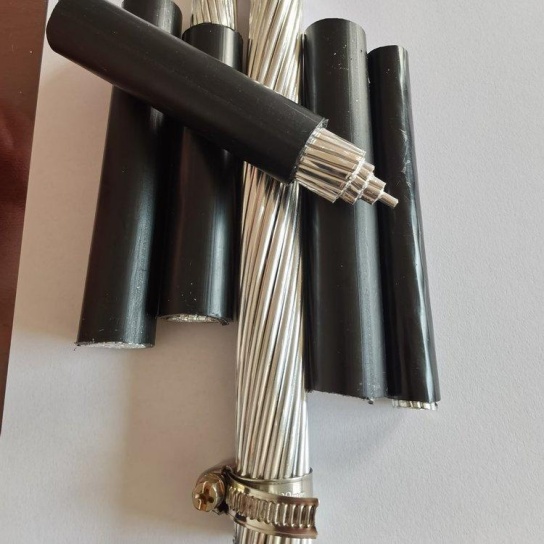
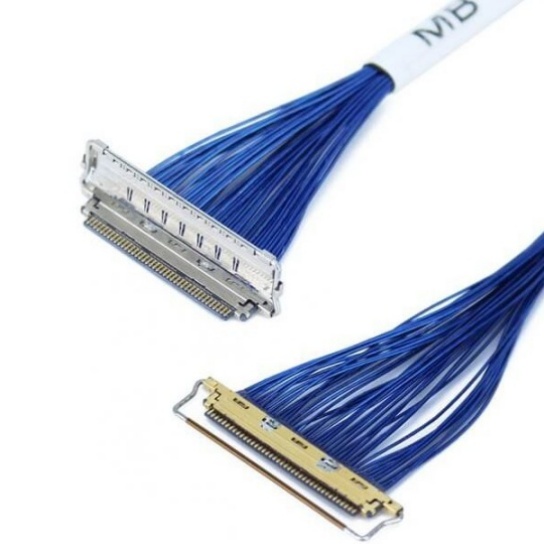
MIL-W-22759 aviation cable, now standardized under SAE AS22759, is the workhorse hook-up wire for modern aircraft and military platforms. It is engineered to perform reliably in high-vibration, high-temperature, and high-reliability environments where failure is not an option. This specification covers a family of single-conductor wires featuring fluoropolymer insulation and high-performance copper alloy conductors, designed for critical airframe wiring, avionics, and other aerospace applications.
🎯 Why MIL-W-22759 is the Standard
The aerospace and defense industry relies on MIL-W-22759/AS22759 cables for several critical reasons:
High Reliability: Designed for long service life in harsh conditions, these cables are used in airframes, engine zones, and avionics bays where safety and uptime are paramount.
Performance in Harsh Environments: They maintain integrity under high temperatures, intense vibration, and exposure to fuels, oils, and hydraulic fluids, which would degrade ordinary PVC or rubber-insulated wires.
Lightweight & Space-Saving: The thin-walled fluoropolymer insulation allows for smaller diameters and reduced weight, a crucial advantage in aircraft design where every gram counts.
Compliance & Certification: Using qualified M22759 wire simplifies certification and qualification processes for new aircraft and systems, as it is already recognized by bodies like the FAA and DoD.
🔬 Construction & Materials
A typical MIL-W-22759 wire consists of three main parts: the conductor, the insulation, and the optional jacket or shield.
1. Conductor
Material: High-strength copper alloy, available tin-plated, silver-plated, or nickel-plated.
Silver-plated: Offers the lowest resistance and is common in high-temperature, high-frequency applications.
Nickel-plated: Provides superior corrosion and high-temperature resistance, often used in engine bays.
Tin-plated: A cost-effective choice for general aerospace use, offering good oxidation resistance.
Stranding: Composed of many fine strands to provide the flexibility needed for tight-radius routing and to withstand vibration.
2. Insulation
The choice of insulation defines the wire’s electrical and thermal performance. Key types include:
Insulation Type
Key Features
Typical Ratings
Common Specs
PTFE(Fluoropolymer)
Excellent high/low-temp stability, chemical resistance, low dielectric loss.
Up to 260°C, 600-1000V.
M22759/9, /10, /11, /12
ETFE(Tefzel®)
Tough, abrasion-resistant, good chemical/solvent resistance, easier to process.
Up to 150°C, 600V.
M22759/16
PTFE Tape + Polyimide
Enhanced high-temp performance and mechanical toughness.
Up to 260°C, 600V.
M22759/82
3. Wall Thickness & Voltage
The standard defines three wall thicknesses, correlating to voltage ratings:
Thin Wall: ~250 V
Standard Wall: ~600 V
Thick Wall: ~1000 V
📊 Key Performance Metrics
Temperature Range: Depending on the variant, these cables operate from -65°C to 150°C(ETFE) or up to 200-260°C(PTFE types).
Voltage Rating: Available in 250 V, 600 V, and 1000 Vversions to suit different circuit requirements.
Electrical Properties: PTFE insulation provides very high dielectric strength and volume resistivity, ensuring signal integrity and low losses.
Mechanical & Chemical Resistance: The fluoropolymer insulation is highly resistant to abrasion, cut-through, fuels, lubricants, and most chemicals, making it ideal for demanding environments.
📋 Popular MIL-W-22759 Variants
Here is a comparison of some of the most widely used variants:
Spec
Conductor
Insulation
Temp Rating
Voltage
Key Applications
M22759/9
Silver-plated Cu
PTFE
200°C
1000 V
General-purpose, high-temp avionics.
M22759/10
Silver-plated Cu
PTFE
260°C
1000 V
Near-engine, high-temp zones.
M22759/11
Silver-plated Cu
PTFE
200°C
600 V
General aircraft wiring.
M22759/12
Silver-plated Cu
PTFE
260°C
600 V
High-temp, space-constrained areas.
M22759/16
Tin-plated Cu
ETFE
150°C
600 V
General aircraft wiring, replacing older MIL-W-5086.
M22759/82
Ni-plated Cu
PTFE/polyimide/PTFE
260°C
600 V
Extreme high-temp, high-vibration engine bays.
🔢 How to Read a MIL-W-22759 Part Number
Decoding the part number helps you quickly identify the wire’s specifications.
Example: M22759/16-22-9
M22759: Base military wire spec (now SAE AS22759).
/16: Spec sheet revision, defining conductor, insulation, temp, and voltage.
22: Conductor size in AWG (American Wire Gauge).
9: Insulation color code (9 = White).
🛠️ Aerospace Applications
MIL-W-22759 cables are found in nearly every critical system on modern aircraft and spacecraft:
Airframe Wiring: Power distribution, lighting, and control systems throughout the fuselage and wings.
Avionics & Flight Control: Interconnects for radar, navigation, autopilot, and communication systems.
Engine & Powerplant: Wiring in engine bays, ECS, and APU compartments where temperatures and vibration are extreme.
Spacecraft & UAVs: Used in satellites and unmanned aircraft where weight and reliability are mission-critical.
✅ Best Practices for Selection & Use
Match the Environment: Select the variant based on the operating temperature. Use 260°C-rated cables near engines and 150°C-rated cables for general airframe use.
Verify Voltage & Current: Ensure the wire’s voltage rating exceeds the circuit voltage and that its current-carrying capacity (ampacity) is sufficient, considering derating for bundling and proximity to hot surfaces.
Follow Standards: Adhere to the latest SAE AS22759 revision and applicable industry standards (e.g., FAA, MIL-STD-704) for qualification and testing.
Plan for Bend Radius: Avoid sharp bends during installation. Follow the manufacturer’s minimum bend radius to prevent insulation damage.
Ensure Proper Termination: Use compatible connectors and follow recommended crimping or soldering procedures. Consider strain relief to protect solder joints from vibration.
🚀 The Future of Aerospace Wiring
The MIL-W-22759/AS22759 family continues to evolve, driven by the need for even greater performance, miniaturization, and weight savings. Trends include:
Advanced Materials: New fluoropolymer blends for improved performance.
Integrated Shielding: More cables with built-in shielding for EMI/EMC protection.
Smarter Manufacturing: Enhanced quality control and traceability for every spool of wire.
For engineers and procurement teams, understanding MIL-W-22759 is not just about selecting a wire; it’s about ensuring the safety, reliability, and performance of the entire aerospace system.
From commercial airliners to military drones, aviation cables are the unsung heroes ensuring reliable power, data, and signal transmission in the skies. These specialized cables are engineered to withstand extreme conditions—think turbule.
When it comes to aviation safety and performance, every component must meet the highest standards—especially electrical systems. High-Temp Resistant Aviation Electrical Cables are engineered to deliver unparalleled durability and reliabi.
Premium Aviation Cables for Aircraft Systems: Elevating Safety and Performance
In the demanding world of aviation, reliability and precision are non-negotiable. Premium Aviation Cables for Aircraft Systems are engineered to meet the r.
Designed to meet the rigorous demands of modern aviation and defense systems, Lightweight MIL-SPEC Aviation Wiring Cables represent the pinnacle of reliability, durability, and performance. Engineered to comply with stringent military sp.
Product Overview: aviation cable
Machine vision cables are specialized components designed to ensure high-speed, stable data transmission and signal integrity in automated imaging systems. Key features include:
Technical Specifica.