2026 New Standard Update: Aviation Ethernet Cable 1000 Base-T Meets ANSI/NEMA WC 27500-2026
The integration of Gigabit Ethernet (1000BASE-T) into aircraft systems is driving a critical shift in cable selection. This article explores how fire-resistant aviation cable EN 2267is evolving to meet the stringent requirements of next-generation avionics, particularly in light of the anticipated ANSI/NEMA WC 27500-2026update.
🔍 The Core Challenge: Why EN 2267 Matters for 1000BASE-T
Modern aircraft rely on high-speed data networks for flight controls, in-flight entertainment, and sensor fusion. 1000BASE-T (1 Gbit/s over twisted pairs) is a key technology, but it introduces new demands on cabling:
Bandwidth & Crosstalk:Requires precision-controlled impedance and minimal signal loss.
EMI/EMC:Demands excellent shielding and robust insulation.
Environmental Rigor:Must withstand high/low temperatures, vibration, and fluids.
Safety:Must be fire-resistant with low smoke and toxicity (LSHF/LSZH).
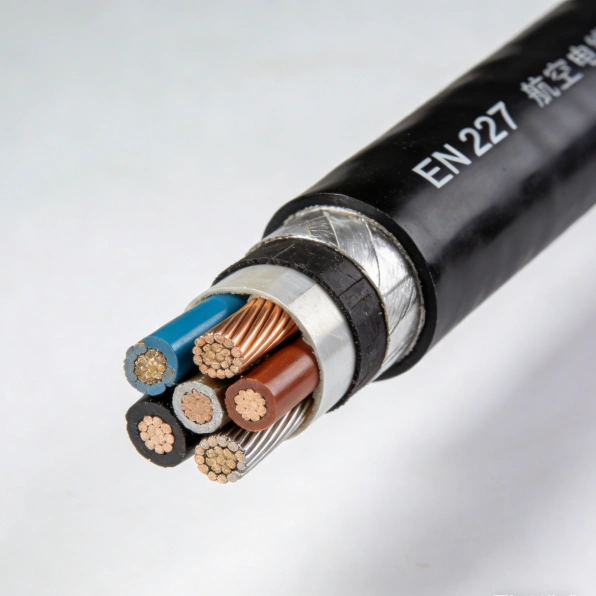
EN 2267is the European standard for general-purpose electrical cables in aircraft, designed for a wide temperature range of –65 °C to +260 °Cand voltages up to 600 V.
Key Insight:EN 2267 defines the conductor and insulation system. To be truly suitable for 1000BASE-T, these cables must be integrated into a cable assembly that also meets Ethernet-specific performance and flammability standards.
📜 Understanding the EN 2267 Standard
EN 2267 is a family of standards. The key documents include:
EN 2267-002:General requirements for the entire family.
EN 2267-009 / -010:Current-generation, arc-tracking resistant wires.
-009:Unshielded twisted multi-core (DR family).
-010:Single-core unshielded (DR family).
EN 2267-011 / -012:For 115/200 VAC and 230/400 VAC networks in low-pressure areas.
-011:DZA family, single and multi-core.
-012:DZ family, single UV laser printable.
EN 2267-007 / -008:For retrofit and inkjet/CO₂ laser printable applications.
Construction & Performance Highlights
Conductors:Typically high-strength, nickel-plated copper alloy for high-temperature performance.
Insulation:PTFE or PTFE/ polyimide tape construction provides excellent dielectric properties and arc resistance.
Arc Tracking Resistance:A key feature, preventing current from “tracking” along the cable’s surface and causing failures.
Environmental Resistance:Excellent resistance to aircraft fluids and a wide operational temperature range.
🔗 The ANSI/NEMA WC 27500 Standard
While EN 2267 focuses on European aerospace, ANSI/NEMA WC 27500is the widely adopted American National Standard for aerospace and industrial cables. It defines requirements for finished cables used in commercial and military aircraft.
WC 27500-2020:The current active version.
WC 27500-2025:The next iteration, expected to be published around 2025-2026, will incorporate the latest material and performance data.
Key Insight:For a cable to be specified in a global aerospace program, it often needs to demonstrate compliance with both EN 2267 and WC 27500, or be part of a system certified to both.
💡 Designing a 1000BASE-T Cable to Meet Both Standards
Creating a 1000BASE-T cable that meets both EN 2267 and WC 27500 involves a systems-level approach:
Start with EN 2267-Compliant Conductors:Use wires from the EN 2267 family (e.g., DRA/DR/DZA/DZ) as the core.
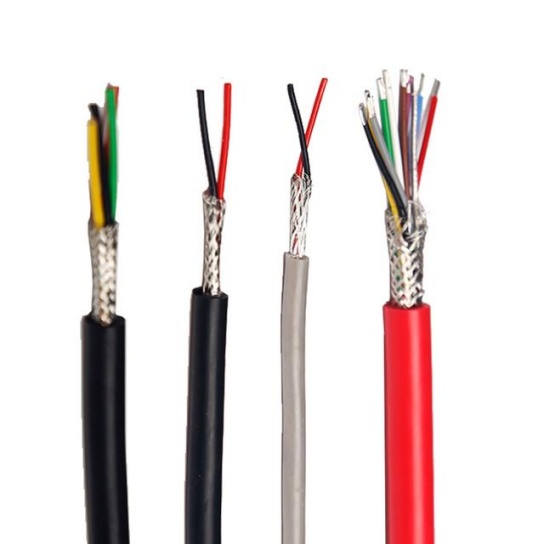
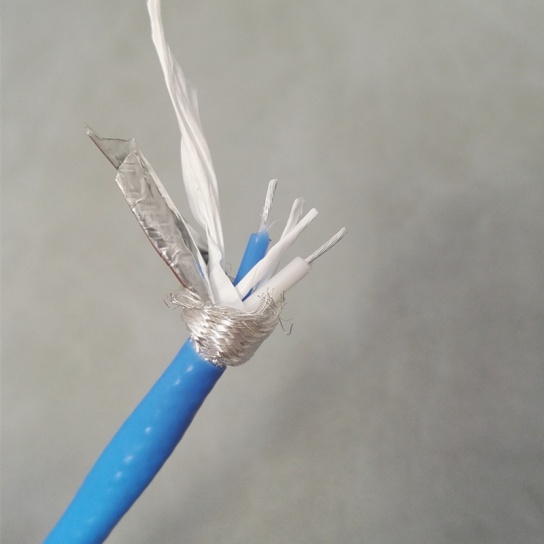
Apply Ethernet-Specific Geometry:Employ precise pair twisting, shielding (braid/foil), and a low-permittivity jacket to control impedance (typically 100 Ω differential) and crosstalk.
Ensure Fire Safety:The cable must pass stringent flammability tests (e.g., FAR/JAR 25.869) and meet low-smoke, low-toxicity requirements. EN 2267’s inherent fire resistance is a strong foundation.
Validate with WC 27500 Tests:The finished cable must pass WC 27500’s comprehensive suite of tests for electrical, mechanical, and environmental performance.
🚀 The 2026 Outlook: Key Considerations
As the industry moves towards WC 27500-2026, design teams should consider the following:
Holistic System Approach:Focus on the entire cable assembly, not just the wire. Document conformance to both EN 2267 and WC 27500.
Leverage EN 2267’s Strengths:Utilize its proven arc-tracking resistance and wide temperature range for demanding avionics environments.
Plan for Dual Certification:For new programs, design with a “WC 27500-first” mindset while ensuring the construction can also meet EN 2267 requirements for European projects.
✅ Practical Takeaways
Match the Right Standard:Use EN 2267 wires where high temperature, arc resistance, and fluid exposure are critical.
Verify Ethernet Performance:Don’t assume compliance. Request test data for impedance, return loss, and crosstalk.
Confirm Fire Safety:Ensure the cable meets the specific flammability and smoke density requirements of your aircraft platform.
Plan for the 2026 Transition:Engage with your suppliers early to understand their roadmap for WC 27500-2026 compliance.
By understanding the synergy between EN 2267and WC 27500, and planning for the 2026 update, you can ensure your avionics cabling is robust, safe, and future-proof.
When it comes to aviation safety and performance, every component must meet the highest standards—especially electrical systems. High-Temp Resistant Aviation Electrical Cables are engineered to deliver unparalleled durability and reliabi.
Premium Aviation Cables for Aircraft Systems: Elevating Safety and Performance
In the demanding world of aviation, reliability and precision are non-negotiable. Premium Aviation Cables for Aircraft Systems are engineered to meet the r.
From commercial airliners to military drones, aviation cables are the unsung heroes ensuring reliable power, data, and signal transmission in the skies. These specialized cables are engineered to withstand extreme conditions—think turbule.
Product Overview: aviation cable
Machine vision cables are specialized components designed to ensure high-speed, stable data transmission and signal integrity in automated imaging systems. Key features include:
Technical Specifica.
Designed to meet the rigorous demands of modern aviation and defense systems, Lightweight MIL-SPEC Aviation Wiring Cables represent the pinnacle of reliability, durability, and performance. Engineered to comply with stringent military sp.