2026 Breakthrough: Next-Gen eVTOL Aviation Power Cables Boost Flight Efficiency by 20%
The promise of urban air mobility (UAM) is rapidly moving from concept to reality. eVTOLs are no longer just prototypes; they are being certified and entering early commercial service. In China alone, the low-altitude economy is projected to soar from 500 billion yuan in 2023 to 1.5 trillion yuan by 2025, with eVTOLs as a central pillar.
However, a critical bottleneck remains: the eVTOL aviation power cable and interconnect system. As power levels, voltages, and flight durations increase, the cables that transmit electricity and data are becoming a decisive factor for range, payload, safety, and cost.
Recent engineering studies and product launches indicate that next-generation eVTOL power cables are on track to improve overall flight efficiency by approximately 20%. This article explores how this gain is achieved, the technologies involved, and what it means for the future of eVTOL design.
Why eVTOL Aviation Power Cables Are a System-Level Bottleneck
eVTOLs are electrically intensive machines. Their distributed electric propulsion systems require high-current DC power to be routed from centralized or distributed battery packs to multiple motors and inverters spread throughout the airframe.
This creates several challenges:
- High Currents, Heavy Cables: To deliver hundreds of kilowatts, currents can reach hundreds of amperes. In conventional aircraft, power cables can account for nearly 1% of the total weight of a 5,000 lb. craft. In eVTOLs, where batteries are already heavy, this weight is a major penalty on range and payload.
- High-Voltage, High-Frequency Stress: To reduce current (and thus cable weight), eVTOLs are moving to 800V–1,500V DC architectures. This subjects cables and connectors to intense electric fields, increasing the risk of partial discharge, corona, and long-term insulation aging.
- Harsh Dynamic Environment: Cables on eVTOLs experience constant vibration, bending, and temperature cycling. Connectors must maintain a secure, gas-tight contact under these conditions to prevent arcing or intermittent failures.
- EMI and Signal Integrity: High-current switching inverters create strong electromagnetic interference (EMI). Power cables must be designed to minimize EMI radiation while high-speed data cables must be shielded to maintain signal integrity for autonomous flight.
In short, the cable harness is no longer just a wiring job; it is a high-performance subsystem that directly impacts flight performance and economics.
The 20% Efficiency Gain: Breaking Down the Number
The “20% boost” figure represents a systems-level improvement, not just a cable upgrade. It results from the combined effect of several factors:
- Reduced Conductor Mass: Higher voltage operation allows for smaller-diameter conductors, directly reducing copper or aluminum weight.
- Lower Conduction Losses: Advanced conductor materials and optimized geometries reduce resistive (I²R) losses in the cables.
- Improved Thermal Performance: New insulation and shielding materials allow for better heat dissipation, enabling higher current density and reducing the need for oversizing.
- System-Level Optimization: The cable is part of a larger optimization that includes the DC bus voltage, inverter efficiency, and battery management system (BMS). A holistic approach yields the best overall efficiency.
A 2025 study on optimal DC-link voltage for eVTOLs demonstrated that increasing the voltage from 400V to around 800V—while accounting for inverter losses—can reduce total system losses by roughly 15–25% for a typical mission profile. A significant portion of these gains comes from reduced current in the power cables and busbars.
In practical terms, this translates to 10–20% more usable range or payload for the same battery capacity, or the ability to use a smaller, lighter battery pack for the same mission.
Key Technology Pillars of Next-Gen eVTOL Power Cables
1. Conductor and Stranding Innovations
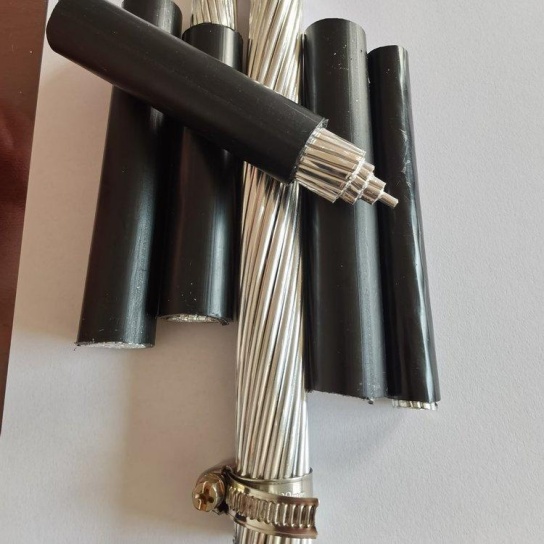
- High-Conductivity Alloys: Research into aluminum and advanced copper alloys aims to reduce weight while maintaining conductivity.
- Optimized Stranding: New stranding techniques minimize AC losses from skin and proximity effects at high frequencies, which are more pronounced in eVTOL motors due to fast switching.
2. Advanced Insulation and Semi-Conductive Layers
- Next-Gen Polymers: Fluoropolymers and other high-performance materials offer superior thermal stability, flexibility, and resistance to partial discharge.
- Controlled Conductivity: Semi-conductive layers help manage the electric field gradient, preventing hot spots and extending cable life.
- Partial Discharge-Free Design: New cable families are engineered to operate reliably at high voltages and altitudes without initiating partial discharge, a key life-limiting factor.
3. Lightweight, Compact, and Mechanically Robust Designs
- High Power-to-Weight Ratio: New aerospace-grade cables can be up to 20 times more power-dense than standard aircraft cables, handling 600V to 6,000V with minimal mass.
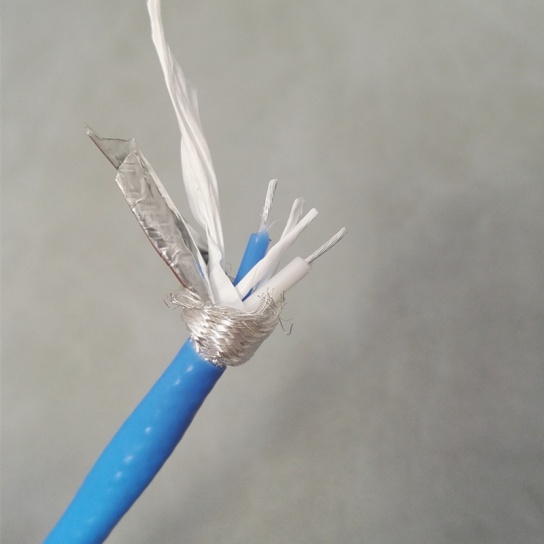
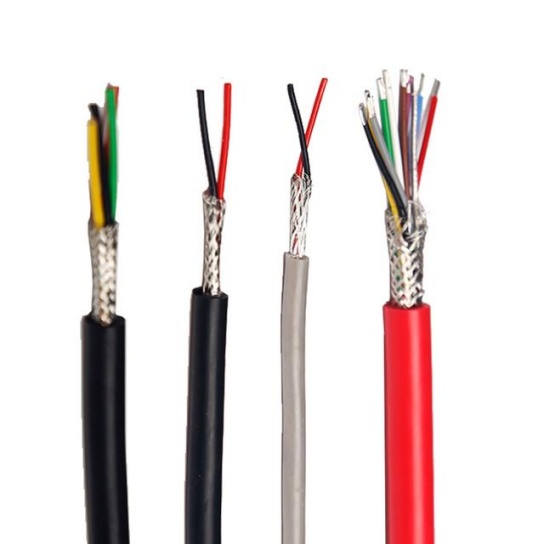
- EMI Shielding: Braided shields and optimized geometries protect against interference while keeping weight low.
- Mechanical Durability: Cables are designed to withstand tight bend radii, vibration, and flexing, especially in rotor and tilt mechanisms.
4. Smart Integration with the Power Architecture
- Reconfigurable DC Bus: Some architectures dynamically adjust the DC bus voltage based on flight phase (takeoff, cruise, landing) to balance efficiency and cable losses.
- Integrated Sensing: Embedding temperature and partial discharge sensors allows for real-time health monitoring and predictive maintenance.
Market Landscape: From Prototypes to Production
The shift is already underway. Major players are moving from R&D to supplying production-intent solutions.
- Nexans: Their new high-voltage aerospace cables are designed for 600V–6,000V operation and are significantly more power-dense than legacy systems.
- TE Connectivity: Their eVTOL solutions emphasize lightweight, high-density interconnects, with products that can reduce component weight and volume by up to 50% compared to conventional designs.
- Chinese Suppliers: Domestic companies like Baosheng, Saifei, and Feida are actively developing eVTOL-specific power cables and EWIS solutions, leveraging experience from commercial aviation and new energy vehicles.
The global aircraft cable market is projected to grow steadily, with a CAGR of 5.9% through 2034. The UAM segment is a key driver, with power transfer identified as the fastest-growing application.
Implications for eVTOL Designers and Manufacturers
For those developing or procuring eVTOLs, the message is clear: treat the cable and interconnect system as a core performance asset, not a commodity.
- Adopt a Systems View: Optimize the entire power path—battery, cables, connectors, and inverters—as one system.
- Engage Early with Specialists: Suppliers with deep aerospace and EV experience can provide invaluable guidance on voltage selection, routing, and weight budgets.
- Plan for Certification: Ensure your chosen cables and connectors have a clear path to compliance with DO-160, DO-254, and other relevant standards.
- Consider the Lifecycle: Factor in weight, reliability, and maintenance when comparing cable options. A slightly more expensive cable that lasts longer and reduces battery capacity needs can offer a better total cost of ownership.
The Road Ahead: eVTOL Aviation Power Cables in 2030
Looking forward, we can expect eVTOL power cables to evolve further:
- Higher Voltages: 1,500V–3,000V DC systems may emerge for larger eVTOLs, enabled by advances in insulation and SiC/GaN devices.
- Integrated Smart Cables: Cables with embedded sensors for real-time health monitoring will become standard.
- Sustainable Materials: The industry will increasingly adopt recyclable and low-emission materials to meet sustainability goals.
The 20% efficiency improvement is not a one-time gain. As next-gen eVTOL aviation power cables mature, they will continue to unlock new possibilities for cleaner, quieter, and more efficient flight.