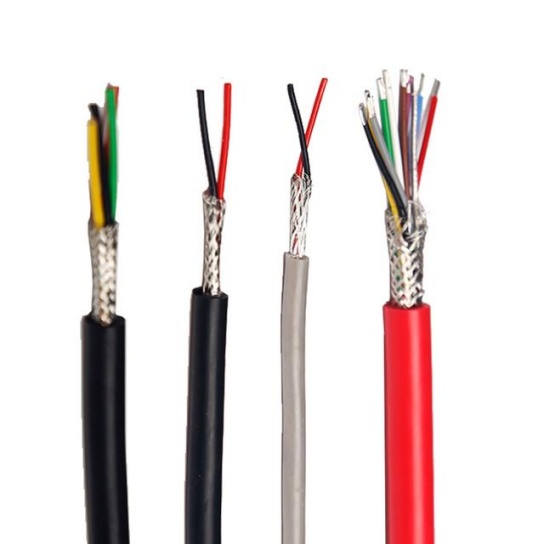
2026 Aviation Cable Upgrade: 1000 Base-T Ethernet Cables Meet Airbus & Boeing Strict Standards
The demand for higher bandwidth in aircraft—for in-flight entertainment, avionics, and connected systems—is pushing a significant shift in cabling. Traditional 1000BASE-T (1000 Mb/s over 4-pair copper) is no longer just for ground networks; it is now a critical part of next-generation aircraft digital backbones. However, these environments demand more than just speed. Cables must be smaller, lighter, and far more robust than their commercial-grade counterparts.
This article explores how modern aviation Ethernet cable 1000 Base-Tsolutions are being engineered to meet the stringent requirements of Airbus and Boeing programs, with a focus on standards, performance, and practical design considerations for 2026 and beyond.
📈 Why 1000 Base-T Remains Central in 2026 Aircraft Networks
1000BASE-T, standardized in 1999 as IEEE 802.3ab, is a proven technology that delivers 1 Gbit/s over four twisted pairs. It remains highly relevant in 2026 for several reasons:
Mature Ecosystem: It is supported by a vast ecosystem of mature, low-cost PHYs, switches, and controllers.
Sufficient Bandwidth: For many IFEC (In-Flight Entertainment and Connectivity) and avionics links, 1 Gbit/s is ample, especially with efficient video compression.
Proven Reliability: Its long history in harsh environments makes it a trusted choice for critical systems.
The real change is in the packaging. The industry is moving from bulky Cat5e/6A cables to high-performance aerospace Ethernet cables that deliver 1000BASE-T or 1000BASE-T1 performance in smaller, lighter, and more flexible forms.
🔧 1000BASE-T vs. 1000BASE-T1: Key Differences for Aviation
Understanding the difference between these two standards is crucial for aircraft system design.
Feature
1000BASE-T (Commercial Standard)
1000BASE-T1 (Automotive/Aerospace)
Pairs Used
4 twisted pairs
1 twisted pair
Cable Type
Unshielded or shielded twisted pair (UTP/STP)
Shielded single twisted pair
Max Distance
100 meters
~40 meters (with up to 4 in-line connectors)
Standard
IEEE 802.3ab
IEEE 802.3-2022, 1000BASE-T1 Type B
Key Advantage
Ubiquitous, low cost
Drastically reduced weight and size
For aircraft, 1000BASE-T1 (Single Pair Ethernet)is revolutionary for reducing weight and bulk in IFEC and cabin networks. However, for backbone links exceeding 40-50 meters, 4-pair 1000BASE-Tsolutions are still widely used, often in smaller, more flexible aerospace-qualified Cat5e/6A cables .
✈️ Airborne Applications for 1000 Base-T Ethernet Cables
Modern aircraft utilize 1000 Base-T (both 4-pair and 1-pair) in various systems:
In-Flight Entertainment (IFE): High-definition video to passenger seats, supporting HDMI/USB-C, and backhaul from wireless access points.
Cabin Management Systems (CMS): Connecting lighting, environmental controls, and passenger service units to a central controller.
Avionics & Flight Control: Linking sensors, displays, and mission computers where high reliability and EMI resistance are paramount.
Ethernet Backbone: Providing a unified IP-based network infrastructure for data, voice, and control traffic .
The industry is trending towards consolidating these functions over IP networks, increasing the demand for high-performance Ethernet cables throughout the aircraft .
🏆 Meeting Airbus & Boeing Standards
Selecting a cable that merely meets 1000BASE-T electrical specs is insufficient. It must pass a gauntlet of aerospace-specific requirements.
1. Flammability, Smoke, and Toxicity (FST)
Cables must comply with standards like FAR 25.853and ABD0031, ensuring they are low-smoke and low-toxicity in a fire. Aerospace-grade jackets are typically made from specialized fluoropolymers (e.g., FEP, ETFE) that offer excellent flame resistance and chemical inertness .
2. Mechanical and Environmental Rigor
Aircraft cables must withstand extreme conditions, validated by standards like EN 3475-512for flexure endurance. Key requirements include :
Wide Temperature Range: From -65 °C to +200 °C.
High Flex Life: Resistance to millions of flex cycles for cables routed near moving parts.
Abrasion and Chemical Resistance: Protection against chafing and exposure to fuels or hydraulic fluids.
3. Electromagnetic Compatibility (EMC)
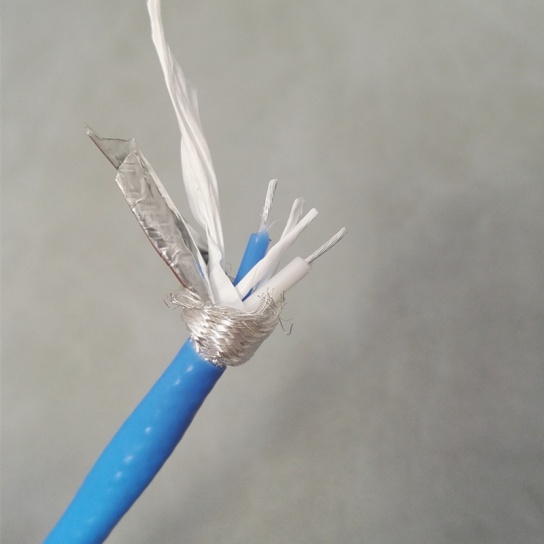
To prevent interference with critical avionics, cables feature robust shielding. Designs often include a silver-plated copper conductor, FEP dielectric, an aluminum/polyester foil shield, and a silver-plated copper braid, achieving high shielding effectiveness. This is vital for meeting Airbus and Boeing EMI/EMC specifications .
4. Deterministic Performance
Cables must maintain signal integrity over long distances and complex routing. Key parameters include:
Impedance: 100 Ω ± 10 Ω
Capacitance: ~42–45 pF/m
Velocity of Propagation: ~80%
Attenuation: Must be low enough to support 1 Gbit/s over the required distance, even after installation losses .
Performance: Meets IEEE 802.3-2022 1000BASE-T1 Type B. Up to 42.6 m reach with four in-line connectors.
Benefits: ~50% weight and space savings vs. 4-pair cables, ideal for IFEC and CMS .
2. Four-Pair 1000BASE-T / 10GBASE-T Cable
Example: CarlisleIT MX10G-24-ALW
Specs: 24 AWG, 100 Ω, supports 1–10 Gbit/s. Round aluminum shield for a smaller, lighter design.
Performance: 1 Gbit/s up to 100 m. Complies with FAR 25.853 and ABD0031.
Benefits: Suitable for Ethernet backbones and high-speed data trunks where distance is a factor .
🛠️ Design Considerations for 2026 Upgrades
When planning a cable upgrade, consider the following:
Map the Network Topology: Identify where 1 Gbit/s is sufficient and where 10 Gbit/s might be needed for future-proofing.
Choose the Right Topology: Use 1000BASE-T1 SPEfor short, weight-sensitive runs (e.g., under-seat IFE). Use 4-pair 1000BASE-Tfor longer backbone or mixed-signal links.
Plan for Connectorization: Ensure your chosen connector (e.g., ARINC 854-compliant) is qualified for the cable and meets the aircraft’s EWIS requirements.
Simulate the Installation: Account for routing complexity, bends, and connectors in your link budget. Use installation simulators if available.
Factor in Lifecycle Costs: While aerospace cables have a higher upfront cost, their weight savings, reliability, and reduced maintenance can lead to significant long-term savings .
🚀 The Road Ahead: 2026 and Beyond
The transition to Single Pair Ethernet (SPE)is a major trend, driven by standards like ARINC 854for cabin networks. SPE is expected to become the default for new narrow-body aircraft and major retrofits, carrying not just data but also power (PoE) over the same cable .
For higher speeds, Cat6A/8and fiber opticcables will continue to play a role in backbone and high-bandwidth applications. However, for the next few years, 1000 Base-T (1 Gbit/s) over qualified copperwill remain the workhorse for most aircraft systems, balancing performance, weight, and cost .
By understanding the technical requirements and leveraging the latest cable technologies, you can ensure your 2026 aircraft network is robust, efficient, and compliant with the highest standards.
Product Overview: aviation cable
Machine vision cables are specialized components designed to ensure high-speed, stable data transmission and signal integrity in automated imaging systems. Key features include:
Technical Specifica.
Designed to meet the rigorous demands of modern aviation and defense systems, Lightweight MIL-SPEC Aviation Wiring Cables represent the pinnacle of reliability, durability, and performance. Engineered to comply with stringent military sp.
Premium Aviation Cables for Aircraft Systems: Elevating Safety and Performance
In the demanding world of aviation, reliability and precision are non-negotiable. Premium Aviation Cables for Aircraft Systems are engineered to meet the r.
From commercial airliners to military drones, aviation cables are the unsung heroes ensuring reliable power, data, and signal transmission in the skies. These specialized cables are engineered to withstand extreme conditions—think turbule.
When it comes to aviation safety and performance, every component must meet the highest standards—especially electrical systems. High-Temp Resistant Aviation Electrical Cables are engineered to deliver unparalleled durability and reliabi.